
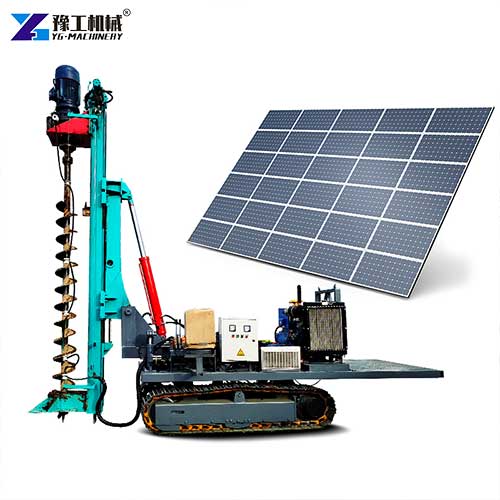
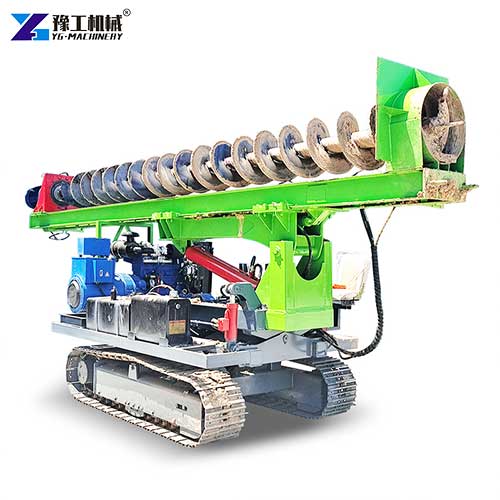
Global solar energy deployment continues to accelerate at an unprecedented pace, driving strong demand for reliable foundation construction equipment. A photovoltaic pile driver is the most critical piece of machinery for solar farm projects, responsible for installing the steel piles that support solar panels. Choosing the right solar pile driver machine directly impacts project timelines, construction quality and overall operational efficiency.
Two primary types of solar piling machine dominate the market today: hydraulic photovoltaic pile drivers and crawler photovoltaic pile drivers. Each design offers distinct performance characteristics that make it better suited for different project environments. While solar pile driver price is an important consideration for many buyers, matching the equipment to your specific project requirements will deliver the greatest long-term value and ensure your construction runs smoothly.
This guide provides an objective comparison of the two most common types of solar pile driver machine across five core dimensions. We will examine their terrain adaptability, piling performance, operational flexibility, reliability and ideal application scenarios, using precise technical data to help you make an informed decision for your next solar project.
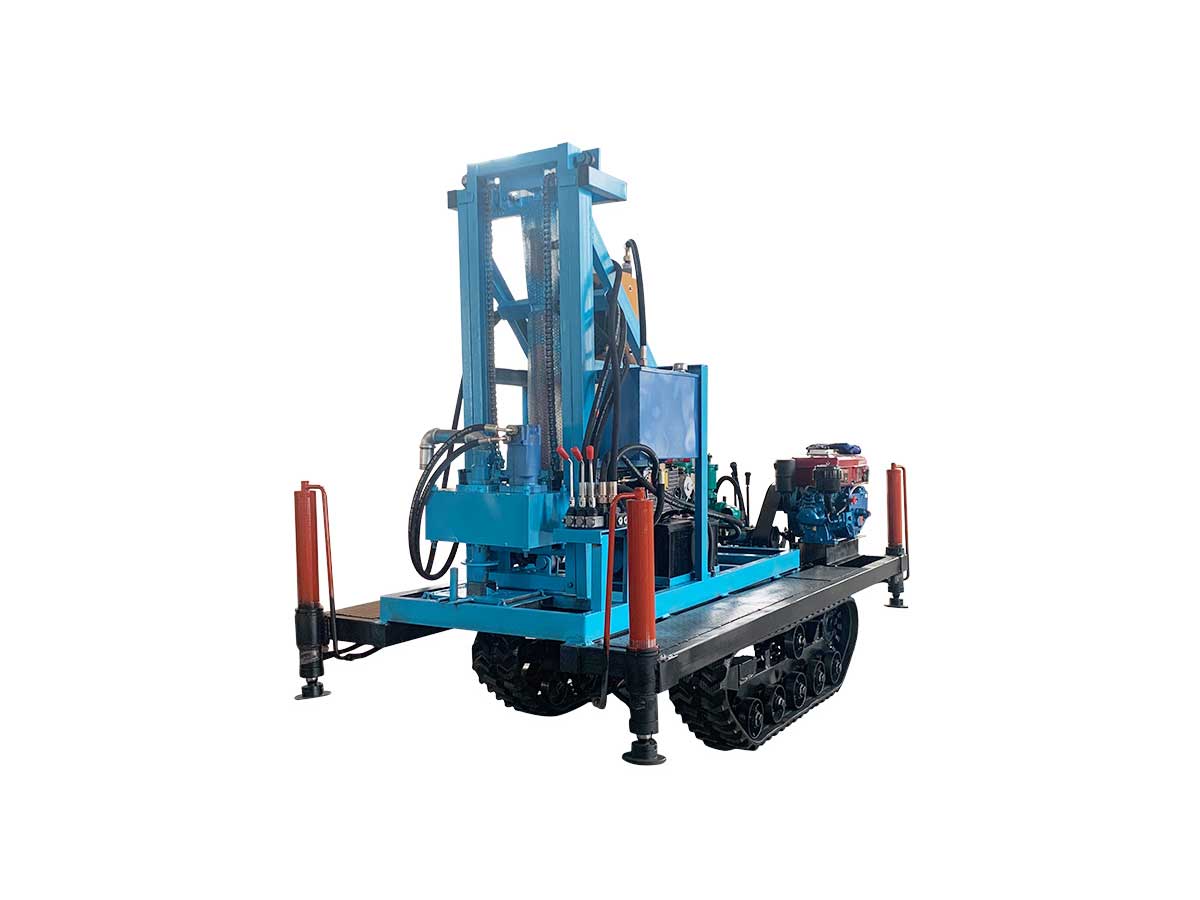
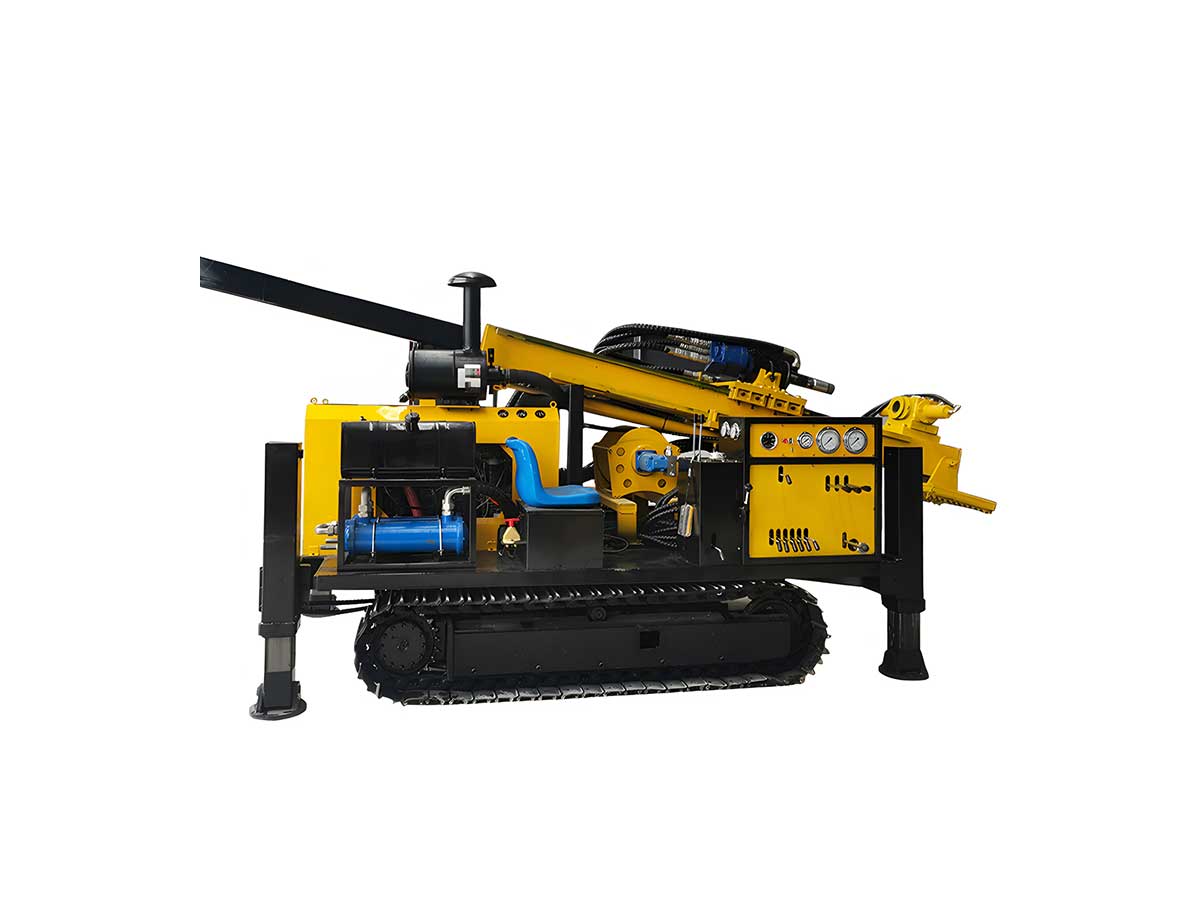
YG Photovoltaic Pile Driver Technical Parameters
| Hydraulic photovoltaic pile driver | |||
| Overall dimensions | 4700*2100*2800mm | Drill pipe rotational speed | 180r/min |
| Track shoe width | 400mm | gradability | 30° |
| motor | 4108 | rock hardness | 6-20F |
| Drilling diameter | 80-500mm | Slide tilt angle | 120° |
| Drilling depth | 0-6m | Drill arm swing angle | left and right150° |
| Reducer torque | 13000n.m | Slide swing angle | left and right40° |
| Mainstream pump | triple pump | Driving speed | 0-3km/h |
| oil pump | 40/40/32 | ||
| Crawler photovoltaic pile driver | |||
| Overall dimensions | 4700*2200*2800mm | Hydraulic hammer flow | 50-110L/min |
| Track shoe width | 400mm | Impact frequency | 350-800BMP |
| motor | 4108 | Hydraulic system pressure | 25mpa |
| Generator power | 88kw Motor | Strong wind for heat dissipation | yes |
| Drilling depth | 0-6m | oil pump | 40/40/32 |
| Drilling diameter | 80-600mm | Driving speed | 3km/h |
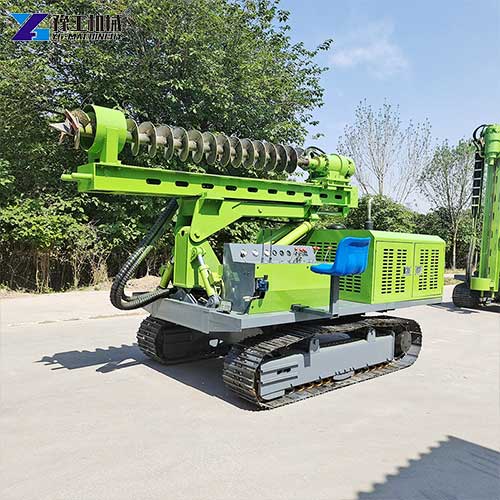
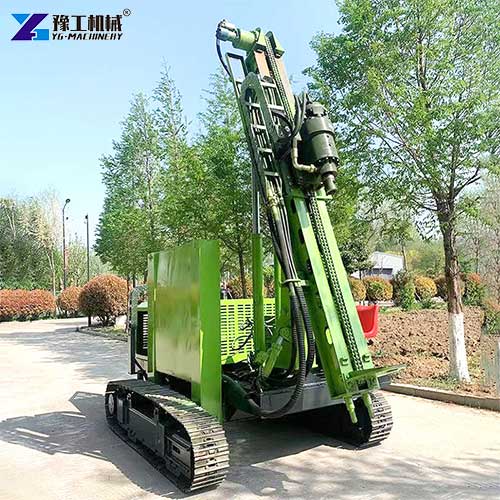
Hydraulic vs Crawler Type Comparison
1. Terrain Adaptability
Terrain conditions are the first factor to consider when selecting a solar pile driver machine.
- Hydraulic models feature a compact, low-profile design with a low center of gravity. They excel on flat and gently sloping terrain with firm, compacted ground. Their smaller footprint simplifies transportation between multiple distributed solar sites.
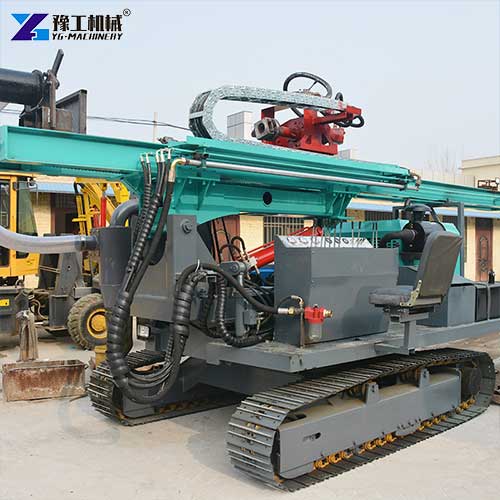
- Crawler models use 400mm wide track shoes that distribute weight evenly, providing excellent traction on soft soil, mud and uneven ground. Most importantly, they can climb slopes up to 30°, making them indispensable for mountainous and hilly solar projects. They navigate small obstacles without extensive site preparation, saving earthworks time and cost.
Neither type is universally superior. Hydraulic models shine on prepared flat sites, while crawler models are essential for challenging topography.
2. Core Drilling and Piling Performance
Both types deliver reliable performance, but their designs suit different geological conditions.
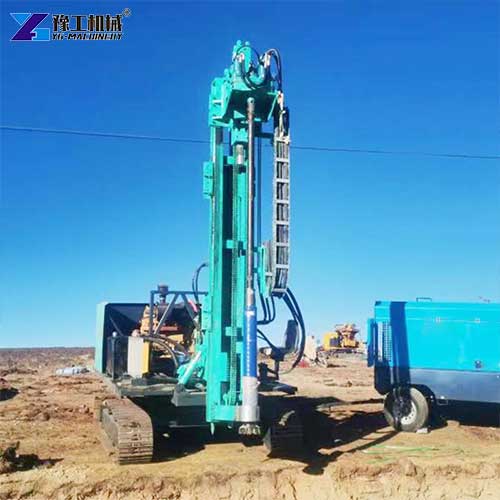
- Hydraulic models are optimized for rotary drilling in hard rock. They offer 80- 500 mm drilling diameter and 0- 6 m depth, covering most solar pile requirements. Equipped with a 13000N.m torque reducer and 180r/min rotational speed, they penetrate 6-20F hardness rock formations efficiently, reducing drill bit wear. Their triple pump system (40/40/32 configuration) allows independent operation of different functions, improving stability and cycle speed.
- Crawler models combine rotary drilling with impact piling capabilities. Their hydraulic hammer operates at 50-110L/min flow and 350-800BMP impact frequency, working effectively across a wider range of soil types from soft clay to moderately hard rock. They offer 80- 600 mm drilling diameter for larger pile sizes, and their 25MPa hydraulic system delivers consistent impact force for faster driving in most conditions.
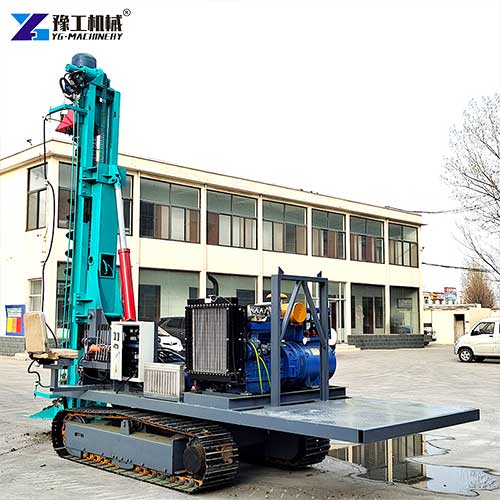
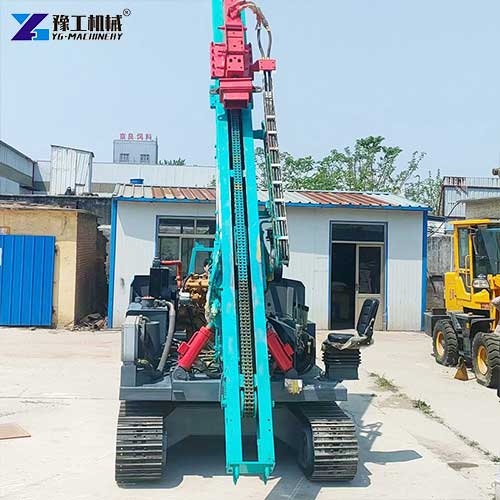
3. Operational Flexibility and Maneuverability
Flexibility directly affects daily productivity and the ability to meet tight deadlines.
- Hydraulic photovoltaic pile drivers offer an exceptional adjustment range for precise pile placement. The slide tilts up to 120° and swings 40° left/right, while the drill arm swings 150° left/right. This allows operators to drill angled batter piles without repositioning the machine, ideal for projects requiring lateral stability in windy or seismic areas. They also access tight spaces near obstacles or property boundaries easily.
- Crawler models feature a tracked chassis that enables in-place turning and superior maneuverability on uneven terrain. They navigate complex project layouts and limited access roads effectively. Their tracked design minimizes ground surface damage, making them suitable for agricultural solar installations that require minimal site disturbance.
4. Operational Stability and Reliability
Reliability prevents costly downtime on tight construction schedules.
- Hydraulic models’ triple pump system provides inherent reliability. If one pump has an issue, the others continue operating, allowing task completion before maintenance. This reduces the risk of complete breakdowns and unplanned downtime.
- Crawler models include a strong wind heat dissipation system that effectively cools the hydraulic system during continuous operation. This is critical for projects in hot climates, preventing overheating-related performance loss and component wear. They can operate at full capacity for extended periods even in temperatures above 35°C.
Both types use reliable 4108 engines known for durability and fuel efficiency, with widely available spare parts. Crawler models also include an 88kW generator to power auxiliary equipment, making them self-sufficient on remote job sites without external power.
5. Ideal Application Scenarios
Different project scales and locations require different solar piling machine types.
- Hydraulic models are ideal for small to medium distributed solar projects (1MW to 5MW), including ground-mounted systems on flat land, commercial arrays and residential farms. Their compact size and easy transportation make them perfect for contractors who work on multiple quick-turnaround projects in urban and suburban areas.
- Crawler models are better suited for large-scale utility solar projects (50MW and above) that require installing tens of thousands of piles. Their superior terrain adaptability makes them essential for projects in mountainous, hilly or remote areas. They also handle mixed soil types and hard rock formations consistently, delivering the productivity needed for high-volume work.
Quick Selection Guide
Choose a hydraulic photovoltaic pile driver if:
- Your site has flat or gently sloping terrain (<15°)
- You primarily work with 6-20F hard rock formations
- You specialize in small to medium distributed solar projects
- You frequently move between different job sites
- You need access to tight spaces
Choose a crawler photovoltaic pile driver if:
- Your site has steep slopes (15-30°) or uneven terrain
- You work with varied soil types from soft clay to moderately hard rock
- You are building large-scale utility solar projects
- You operate in hot climates with continuous work requirements
- Your project needs minimal site preparation
If you have any relevant photovoltaic projects, please contact us today. Our team can provide detailed technical specifications and answer any questions about the solar pile driver price and availability. We will help you find the perfect solution for your solar construction needs.