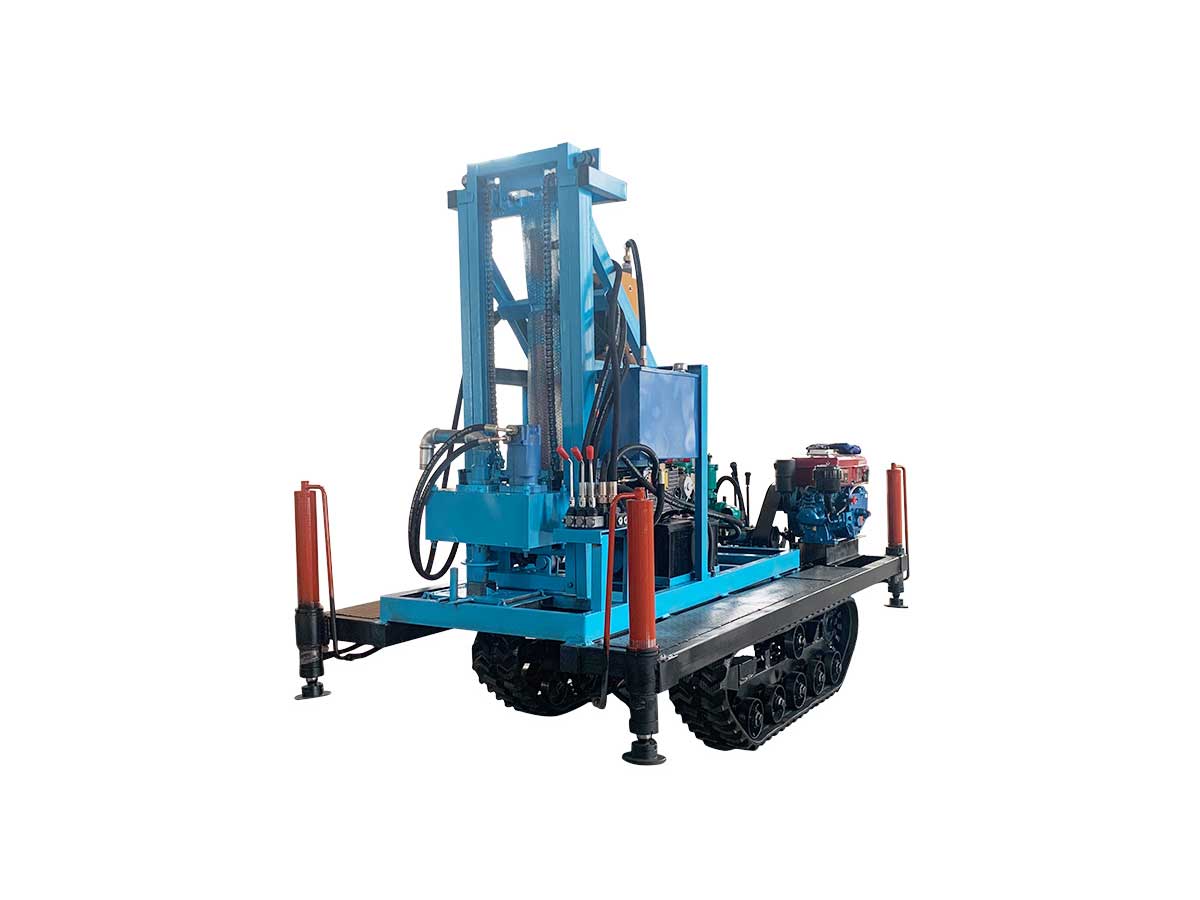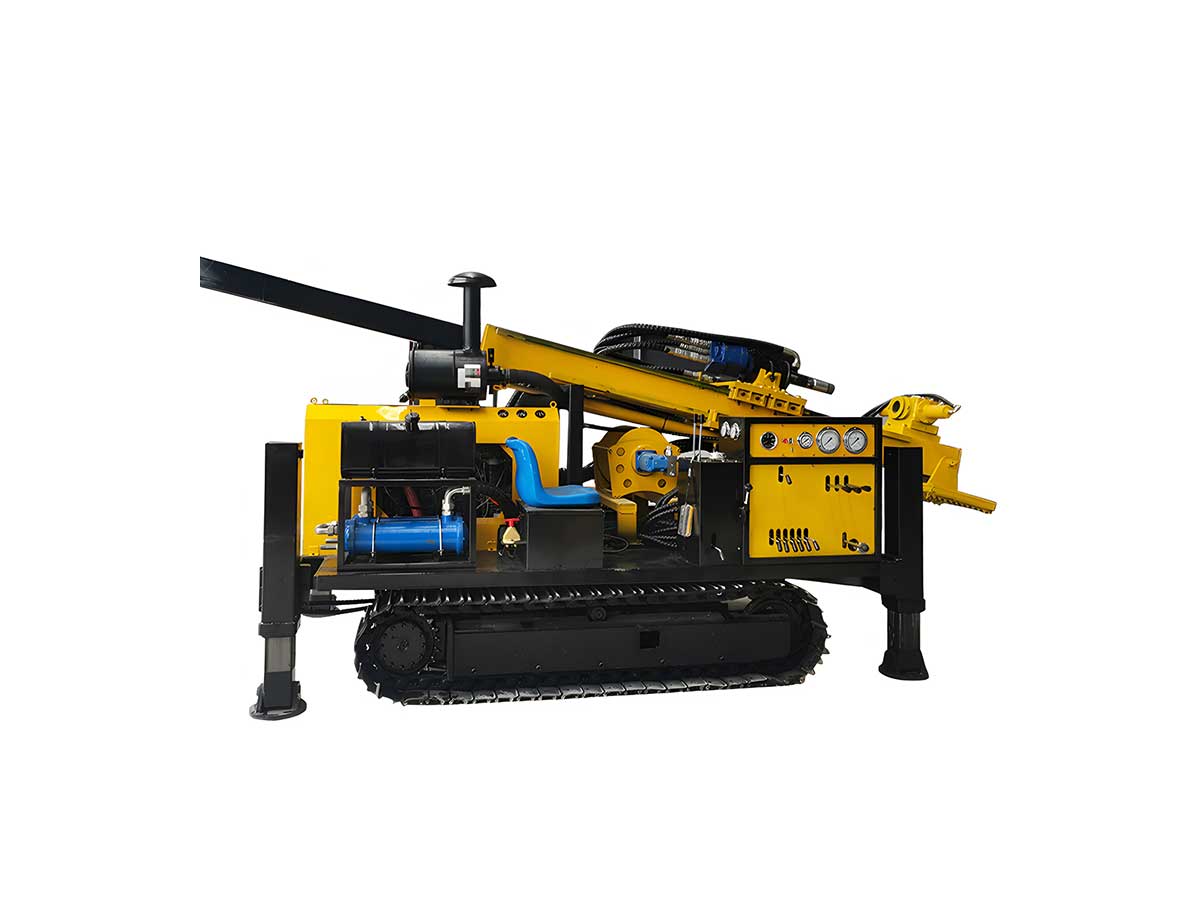

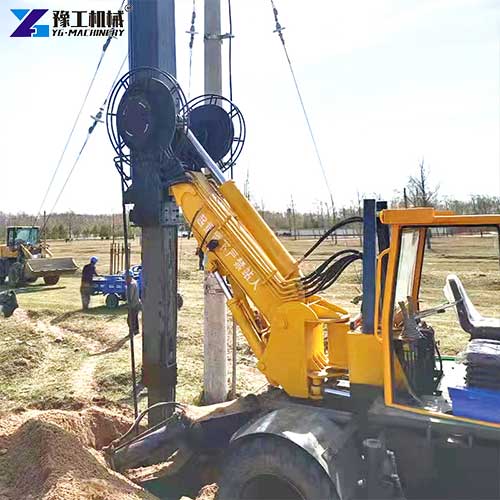
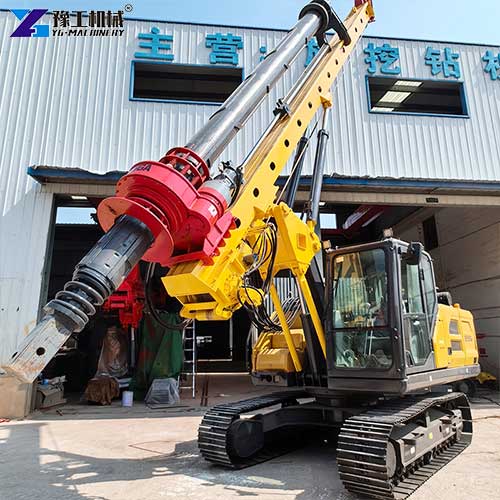
A rotary piling machine is the cornerstone of modern foundation construction. It creates deep, stable boreholes for concrete piles that support buildings, bridges, roads and other infrastructure projects. Unlike traditional manual digging or impact drilling methods, this equipment delivers unmatched precision, speed and safety, eliminating the risks associated with deep excavation and reducing project timelines by up to 70%.
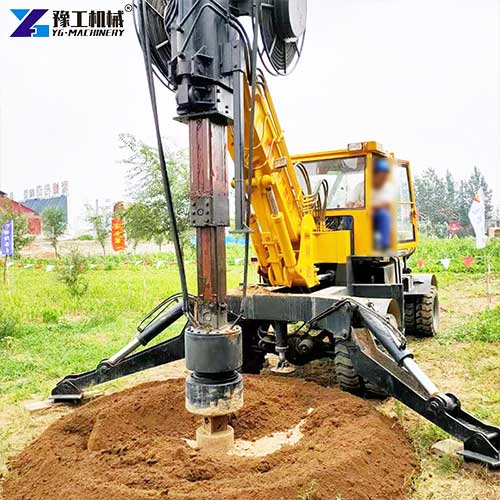
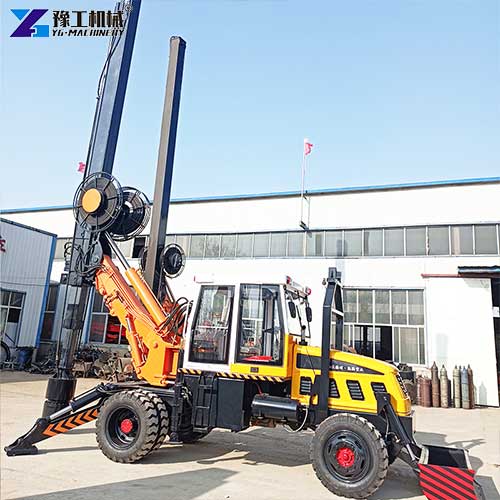
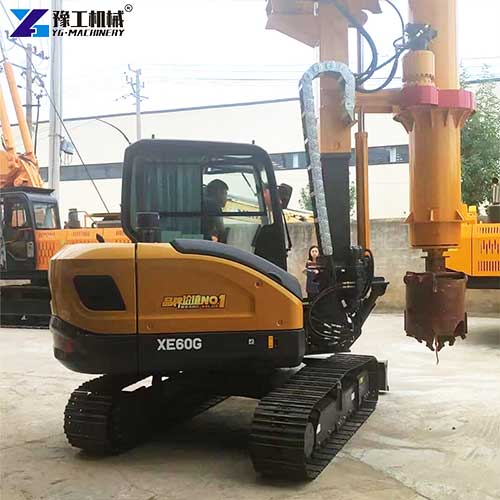
YG’s rotary piling machine delivers reliable performance for small to medium-sized construction projects. We designed this model based on feedback from hundreds of contractors working in diverse geological conditions, balancing power, mobility and ease of maintenance. The machine’s compact footprint and high mobility make it suitable for both tight urban job sites and remote rural locations, where larger equipment cannot access. Beyond hydraulic rotary rig, YG also offers solar pile drivers, down-the-hole drills, full hydraulic core drills and reverse circulation drills to meet all your construction and drilling needs.
Rotary Piling Machine Technical Parameter
| Dimensions (mm) | 7900*2260*3100 |
| Vehicle mass (kg) | 8000 |
| Wheelbase (mm) | 3150 |
| Wheelbase (mm) | Front 1400 After 1060 |
| Drilling depth (m) | 13 |
| Drilling diameter (mm) | 600-1600 |
| Rotation angle | 180 degree |
| Walking speed (km/h) | 50 |
| Gear pump model | CBJT2080 |
| Hydraulic system working pressure (Mpa) | 20-25 |
| Hydraulic system displacement (ml/r) | 80 |
| engine model | 4108 |
| Engine power (kW) | 88 |
12 Core Components of a Rotary Piling Machine
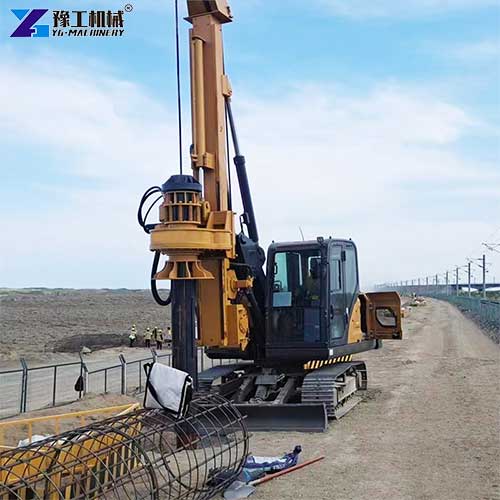
Understanding the key components of your equipment helps you operate it safely and perform routine maintenance effectively. The hydraulic system powers all critical functions of a hydraulic rotary piling rig, ensuring smooth and consistent operation even under heavy load.
- Drill mast: Supports the drill string and provides precise vertical guidance. Regular lubrication of the mast rails prevents excessive wear and ensures smooth movement.
- Drill pipe: Transmits torque and axial force from the power head to the drill bit. Inspect pipes for cracks before each use to avoid breakage during drilling.
- Power head: Generates rotational force for drilling. The sealed design protects internal components from dust and moisture, extending service life.
- Drill tool: Breaks and removes soil and rock from the borehole. Using the correct tool for your geology is the single biggest factor in drilling efficiency.
- Operator cabin: Houses the controls and provides a safe, comfortable working environment. The ergonomic layout reduces operator fatigue during long shifts.
- Travel system: Enables the machine to move between drilling positions. The heavy-duty tracks provide excellent traction on uneven ground.
- Rotary platform: Allows 180-degree rotation for flexible positioning. This feature is especially useful when working near existing structures.
- Counterweight: Balances the machine during drilling operations. Never operate the machine without the proper counterweight installed.
- Power system: Provides energy for all machine functions. The 4108 engine is widely used globally, with easy access to spare parts.
- Winch system: Lifts and lowers the drill string. Regular inspection of the winch cable prevents dangerous failures.
- Electrical system: Controls and monitors all machine operations. The simplified wiring design makes troubleshooting quick and easy.
- Hydraulic system: Powers the rotation, feeding and lifting functions. The 20-25MPa working pressure ensures consistent performance in all conditions.
9-Step Rotary Piling Machine Construction Process
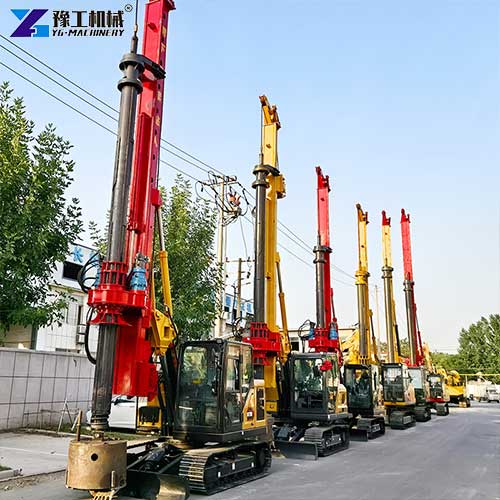
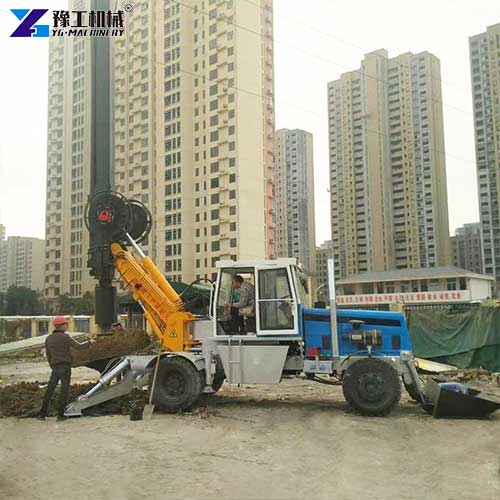
Following this standard workflow ensures your hydraulic rotary rig operates safely and efficiently, while producing high-quality foundation piles. Each step plays a critical role in preventing construction defects and ensuring project success.
- Mark and verify pile positions: Use surveying equipment to mark exact pile locations. Double-check all measurements before starting drilling to avoid costly rework.
- Position and level the machine: Move the machine to the marked position and use the hydraulic leveling jacks to ensure it is perfectly horizontal. A level machine produces straight, vertical piles.
- Drill preliminary hole: Drill a 2-3 meter deep pilot hole to stabilize the surface and guide the drill string. This step prevents the drill from wandering off course.
- Install steel casing: Press the casing into the ground using the machine’s hydraulic force. The casing prevents hole collapse in loose soil and keeps groundwater out of the borehole.
- Continue drilling to the required depth: Advance the drill string while continuously removing excavated material. Adjust drilling speed based on soil conditions to maintain efficiency.
- Inspect hole quality: Once you reach the required depth, check the hole depth, diameter and verticality. Any deviations must be corrected before proceeding.
- Lower reinforcement cage: Carefully lower the prefabricated steel cage into the borehole. Use spacers to ensure the cage is centered in the hole.
- Pour concrete: Insert the concrete delivery pipe and pour concrete continuously from the bottom up. This process displaces any remaining water or sediment from the hole.
- Extract casing: Remove the casing slowly and carefully before the concrete sets completely. This ensures the concrete forms a solid, uniform pile.
Geology Adaptation & Drill Bit Matching Guide
Different soil and rock formations require different drilling techniques and tools. Using the wrong drill bit can slow down progress by 50% or more, increase wear and tear, and even cause catastrophic hole collapse. We provide matching drill bits with every rotary drilling rig for sale to ensure optimal performance in various geological conditions.
- Clay soil: High plasticity can cause drill bit sticking and balling. Use spiral drill bits with sharp cutting teeth to reduce adhesion, and clean the bit frequently to prevent buildup.
- Silty soil: High water content can lead to hole shrinkage and sloughing. Use rotary drill buckets with proper venting to maintain hydrostatic pressure and stabilize the hole walls.
- Sand and gravel soil: Loose structure causes easy collapse and severe tool wear. Use sand buckets with reinforced edges to remove loose material efficiently, and keep the hole full of drilling fluid at all times.
- Moderately weathered rock: High hardness requires high torque and impact energy. Use core drill bits with roller cones to break hard rock effectively, and reduce drilling speed to extend bit life.

Rotary Piling Machine Price—Factory Direct Price
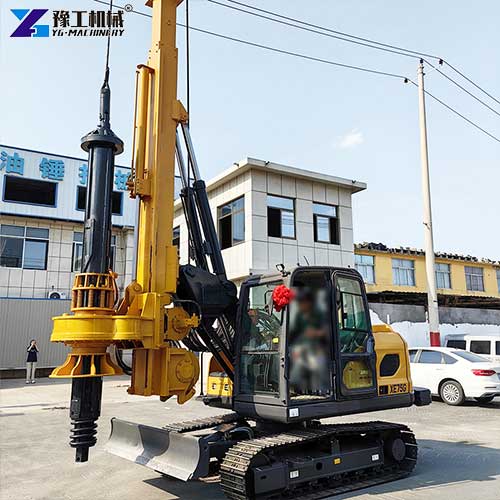
If you need a durable and efficient foundation drilling solution for your upcoming projects, YG has the right hydraulic rotary piling rig for you. Our machines are built to withstand harsh working conditions and deliver consistent performance day after day. Contact us today to get a free quote for the rotary drilling rig for sale that best fits your project requirements. We will work with you to understand your specific geology, project scope and budget, and provide a customized solution that meets all your needs.