
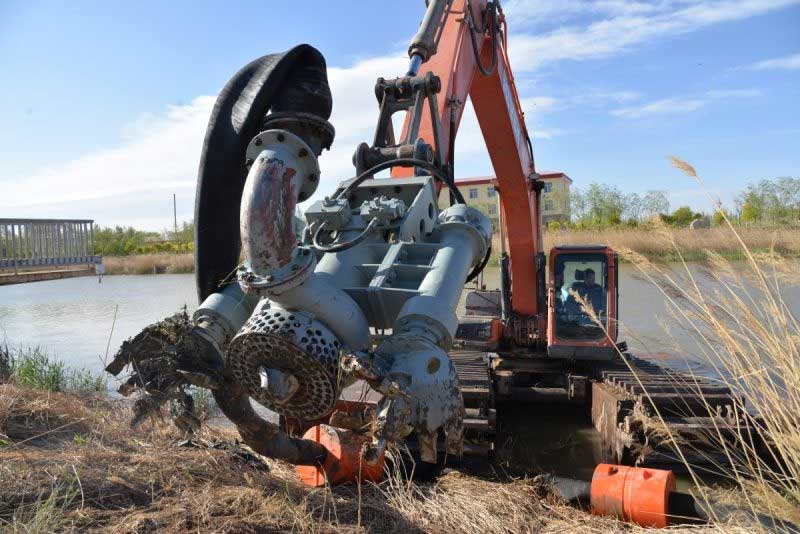
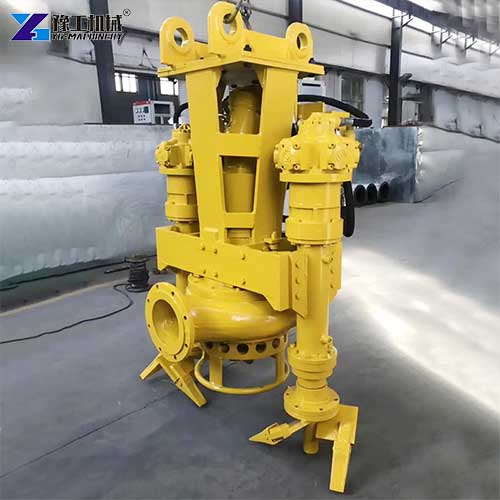
Dredging teams often face frustrating downtime caused by pump clogging, which slows down project progress and increases labor costs. A hydraulic dredging pump solves this problem effectively with its powerful hydraulic drive and built-in agitator design. Also known as excavator-mounted dredge pumps, it is a hydraulic dredging attachment that mounts directly on your excavator arm. You don’t need to buy additional power equipment — it uses your excavator’s existing hydraulic system as the power source. YG provides 9 different models of this equipment, with flow rates from 150m³/h to 400m³/h and lifting heads from 10m to 40m, which can meet the needs of different scales of dredging and desilting projects.
Hydraulic Dredging Pump Technical Parameters
| Serial No. | Model | Flow m3/h | Lift(m) | Matching Agitator | Stirrer Torque | Excavator Tonnage |
| 1 | YG200-15 | 200 | 15 | 5.5KW | 1556 | 10T-20T |
| 2 | YG150-30 | 150 | 30 | |||
| 3 | YG300-20 | 300 | 20 | |||
| 4 | YG400-10 | 400 | 10 | 7.5KW | 1946 | 20T-30T |
| 5 | YG500-15 | 500 | 15 | |||
| 6 | YG250-35 | 250 | 35 | |||
| 7 | YG300-30 | 300 | 30 | 15KW | 2433 | 30T-40T |
| 8 | YG400-30 | 400 | 30 | |||
| 9 | YG400-40 | 400 | 40 |

3 Common Dredge Pump Clogging Problems And How To Fix Them
Clogging is the number one problem that dredging teams encounter during work. It not only reduces work efficiency but also may damage the pump impeller and shorten equipment life. Most clogging problems are not caused by poor equipment quality, but by wrong operation or inappropriate model selection. You can avoid and solve most clogging problems through the following methods:
1. Clogging caused by large particles and debris
Cause: If there are large gravel, branches, plastic waste and other debris in the sediment, they can easily get stuck in the pump impeller or inlet, causing clogging. This is especially common in river dredging and municipal desilting projects.
Solution: Install a protective grille at the pump inlet to filter out large debris. You can also choose a pump model with a larger flow channel, which can pass larger particles without clogging.
Our pumps are designed with wide flow channels and are equipped with high-torque agitators that can break up small gravel and agglomerated sediment, which greatly reduces the chance of clogging.
2. Clogging caused by high-concentration sediment deposition
Cause: When the sediment concentration is too high, the sediment will deposit inside the pump body and pipeline after the pump stops working. When you restart the pump next time, the deposited sediment will cause clogging. This problem often occurs in high-concentration sand pumping projects.
Solution: After finishing work, let the pump run for 2-3 minutes with clean water to flush out the sediment inside the pump and pipeline. Do not stop the pump directly when it is pumping high-concentration sediment.
You can also choose a model with a higher-power agitator. The agitator can stir the sediment into a uniform slurry before it enters the pump, which reduces deposition and clogging.
3. Clogging caused by unreasonable model selection
Cause: If you choose an excavator dredge pump attachment with too low a head or too small a flow for your project, the actual working efficiency will be too low, and the sediment will easily deposit in the pipeline and cause clogging. Many people choose a model that is too small to save money, which leads to frequent clogging problems.
Solution: Choose the appropriate pump model according to your actual dredging depth, conveying distance and sediment type. Reserve a 10-20% margin for flow and head to ensure the pump works in the best efficiency range.
If you are not sure which model is suitable for your project, you can tell us your dredging depth, conveying distance and sediment type, and we will recommend the most suitable model for you. High-quality excavator-mounted dredge pumps with a reasonable configuration can reduce clogging problems by more than 80% and greatly improve your work efficiency.
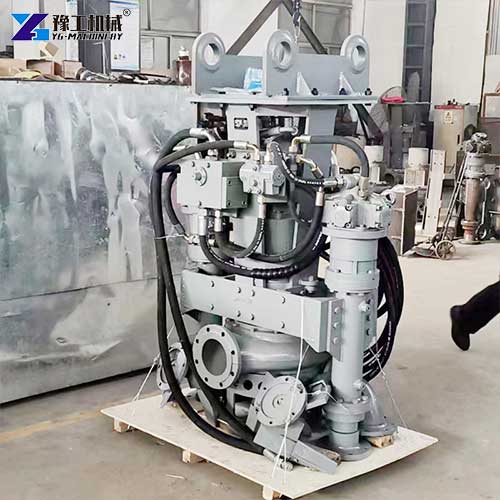
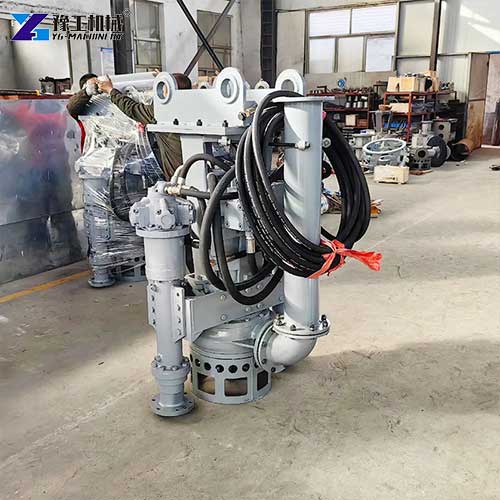
What Types Of Sediment Can A Hydraulic Dredging Pump Handle?
Many first-time buyers ask this question: What kind of sediment can this pump handle? Different types of sediment have different hardness, particle size and viscosity, and the requirements for the pump are also different. A hydraulic dredging pump can handle most common types of sediment, and different models are suitable for different scenarios:
1. Fine sand and soft silt
This is the most common type of sediment in river dredging, pond desilting and reservoir cleaning projects. The pump can handle this type of sediment very easily, with high efficiency and low wear. Even high-concentration fine sand slurry will not cause clogging problems.
For this type of sediment, you can choose a model with a smaller agitator power, which is more cost-effective.
2. Medium-coarse sand and small gravel
For medium-coarse sand and small gravel with particle sizes below 5cm, the pump can also handle it well. The high-torque agitator can stir and disperse the gravel and agglomerated sand, so that they can enter the pump evenly without clogging.
If your project has a lot of gravel, you can choose a model with a higher agitator torque and wear-resistant pump body material, which has a longer service life.
3. Tailings and industrial slag
The hydraulic dredging pump is also suitable for tailings pond cleaning, industrial slag transportation and other projects. It can handle various types of mineral tailings and industrial slag, and help enterprises meet environmental protection requirements for tailings treatment.
For tailings projects with high abrasiveness, we recommend choosing a pump with a wear-resistant impeller and pump body, which can greatly extend the service life.
4. Sediment mixed with a small amount of weeds and domestic waste
If the sediment is mixed with a small amount of weeds, plastic bags and other domestic waste, you can install a protective grille at the pump inlet to filter out this debris. The pump can still work normally, but you need to clean the grille regularly to avoid clogging.
If there is a lot of debris in the sediment, we do not recommend using a conventional dredge pump. You can contact us for a customized solution. Different models of excavator-mounted dredge pumps are suitable for different sediment types. Choosing the right excavator dredge pump attachment model can not only improve work efficiency but also extend the service life of the equipment.


YG Excavator Dredge Pump Price – Factory Price
If you need a hydraulic dredging pump for your excavator, contact us today. The factory-direct excavator dredge pump price is also very competitive, which can save you a lot of procurement costs. You just need to tell us your excavator tonnage, dredging depth, conveying distance and sediment type, and we will recommend the most suitable model for you and provide a detailed quotation. We can also provide you with installation guidance and spare parts supply services to help you start construction quickly.