

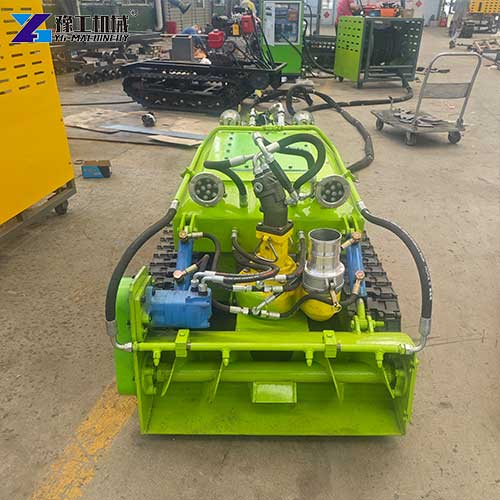
A tank cleaning robot is a hydraulically driven submerged work unit built to remove sludge, sediment and settled solids from enclosed or semi‑enclosed liquid‑filled spaces. It handles heavy‑duty cleaning tasks inside industrial storage tanks, sedimentation pools, sewer chambers and other hard‑to‑access sites where human entry carries major safety risks. Instead of draining tanks or halting facility operation for manual cleaning, this robotic unit submerges directly into liquid environments to carry out excavation and slurry transfer.
Many industrial operators struggle with persistent sediment buildup inside process tanks and containment pools. Traditional cleaning workflows force full shutdowns, liquid draining and human entry into confined spaces loaded with toxic or corrosive substances. A remote control dredging robot removes the need for personnel to step into high‑risk underwater zones, while an underwater dredging robot expands usable scenarios across ponds and reservoir structures. For project teams sourcing industrial equipment, a dredging robot for sale presents a practical alternative to slow, labor‑intensive manual removal workflows.
Tank Cleaning Robot Technical Specifications:
| Model | YG-500 | YG-600 | YG-700 | YG-800 | YG-900 | YG-1200 |
| Robot dimensions | 1500*500*650mm | 1500*600*650mm | 1600*700*650mm | 1600*850*700mm | 1650*960*750mm | 1900*1200*750mm |
| Dredging width | 500mm | 600mm | 700mm | 800mm | 900mm | 1200mm |
| Track travel speed | 3-15m/s | 3-15m/s | 3-15m/s | 3-15m/s | 3-15m/s | 3-15m/s |
| Robot weight | 320kg | 350kg | 380kg | 400kg | 420kg | 500kg |
| Pump output diameter | 3inch | 3inch | 4inch | 4inch | 4inch | 4inch |
| Pump flow rate(cubic meters/ hour) | 100 m³ | 100m³ | 200m³ | 200m³ | 200m³ | 200m³ |
| Hydraulic station dimensions(mm) | 2200*1200*1700 | 2200*1200*1700 | 2200*1200*1700 | 2200*1200*1700 | 2200*1200*1700 | 2120*1240*1200 |
| Main motor power | 22kw | 22kw | 30kw | 30kw | 30kw | 45kw |
| Hydraulic system pressure | 0-16Mpa | |||||
| Particle size | 15mm | 15mm | 38mm | 38mm | 38mm | 60mm |
| Reeling system speed | 0-10r/min | |||||
| Hydraulic hoses | 50m (Standard configuration) | |||||
| Control system | Wireless remote control | |||||
| Lighting system | Underwater LED lights *2 | |||||

Working Principle of Tank Cleaning Robot
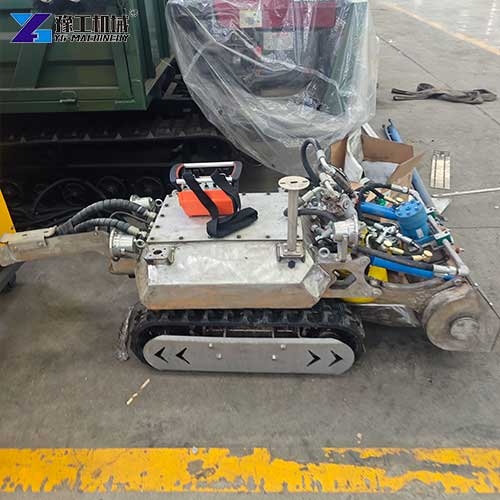
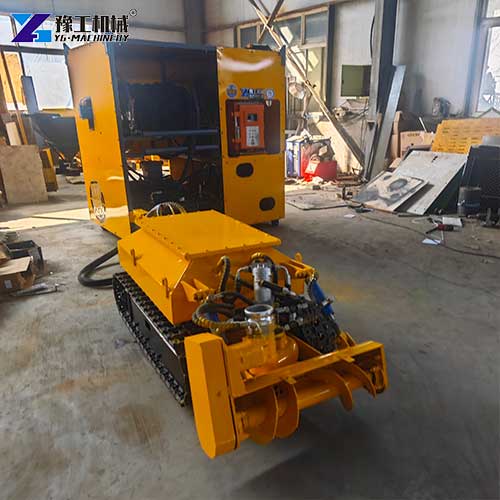
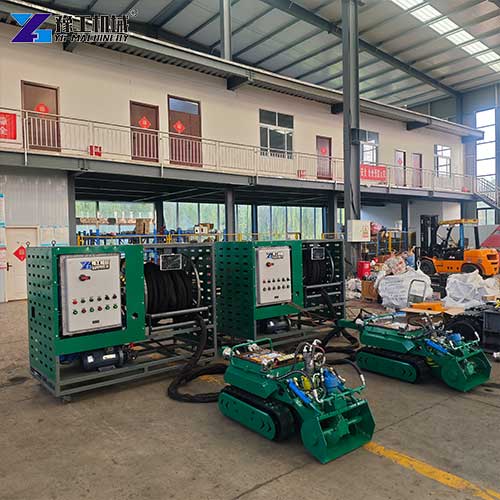
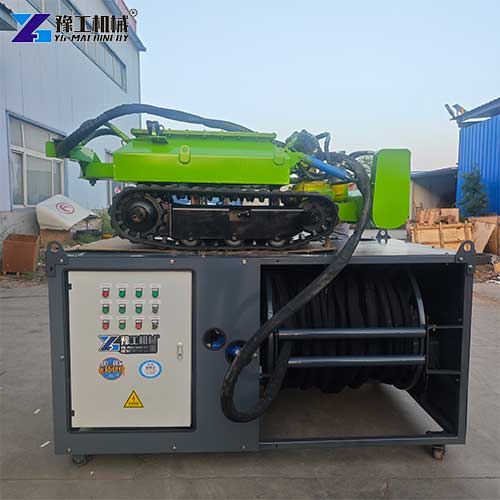
The whole system consists of two core assemblies: the above‑ground hydraulic power station and the submersible robotic crawler unit, connected by standard 50‑meter hydraulic hoses. When onsite work starts, operators position the power station on stable ground close to the work site. After system inspection, they lower the crawler‑equipped robot into the liquid‑filled enclosure.
Hydraulic power flows through hoses to drive onboard crawler tracks and a rotating suction head. The crawler tracks enable flexible forward, backward and lateral movement across tank bottoms and pool floors. The rotating suction head agitates compacted sediment, breaking up consolidated sludge and solid deposits. A built‑in slurry pump transfers the mixed sludge medium through pipeline routes to ground‑based receiving containers. Underwater LED lights fitted to the robot deliver clear visual feedback for operators during low‑visibility submerged assignments. The unit maintains continuous movement across target zones to complete full‑coverage dredging cycles. Operating depth ranges from 30 meters up to 90 meters, and processing capacity reaches 100‑300 cubic meters per hour depending on selected model configuration.
6 Applications of Underwater Dredging Robot
The YG series tank cleaning robot serves multiple industries with specific cleaning requirements:
- Petroleum and Petrochemical Storage Tanks. Crude oil, refined products, and chemicals accumulate sludge at the bottom of storage tanks. The robot removes this sludge without requiring workers to enter the tank, eliminating confined space hazards.
- Chemical Processing Tanks. Reactors, mixers, and storage vessels in chemical plants accumulate residues that must be removed periodically. The robot cleans these tanks while workers remain safely outside.
- Wastewater Treatment Plants. Settling tanks, clarifiers, and aeration basins accumulate sludge over time. The robot removes this sludge without disrupting plant operations.
- Food and Beverage Processing. Tanks and vessels in food processing plants require regular cleaning for sanitation. The robot cleans these tanks while workers avoid confined space entry and chemical exposure.
- Municipal Water Storage. Water storage tanks and reservoirs accumulate sediment that must be removed. The robot cleans these tanks without draining them.
- Industrial Ponds and Lagoons. Settling ponds, evaporation ponds, and tailings ponds accumulate sludge and sediment. The underwater dredging robot removes this material without requiring dewatering or draining.
The robot also handles the cleaning of pipelines, box culverts, and other confined spaces where manual entry is hazardous or impossible.
6 FAQs About YG Tank Cleaning Robot
A: The robot cleans petroleum storage tanks, chemical reactors, wastewater tanks, food processing vessels, water storage tanks, and industrial ponds. The robot’s tracked design and compact dimensions allow it to navigate most tank floor configurations.
A: The YG series operates at depths from 30 to 90 meters. The standard configuration includes 50 meters of hydraulic hoses. Additional hose length is available for deeper applications.
A: Pump flow rates range from 100 to 250 cubic meters per hour depending on the model. Higher flow rates mean faster cleaning and shorter tank downtime.
A: The remote control dredging robot is controlled wirelessly from outside the tank. The operator can be located at a safe distance, away from the tank opening and any potential hazards.
A: Maximum particle size ranges from 15mm on the YG-500 and YG-600 to 60mm on the YG-1200. Heavier sludge and larger debris require models with higher particle capacity.
A: Cleaning time depends on the tank size, sludge depth, and pump flow rate. A tank cleaning robot typically completes cleaning much faster than manual methods, reducing tank downtime significantly. For example, robotic tank cleaning has been shown to reduce tank cleaning time by 33% compared to manual cleaning: from 1.5 hours to 1 hour per tank.
Dredging Robot For Sale-Factory Price
If you need a tank cleaning robot for industrial tank cleaning, the YG series provides reliable, proven performance. Contact us with your project requirements—tank size, sludge type, and operating conditions. We will recommend the right model for your operation. Get a free quote for your dredging robot for sale today.