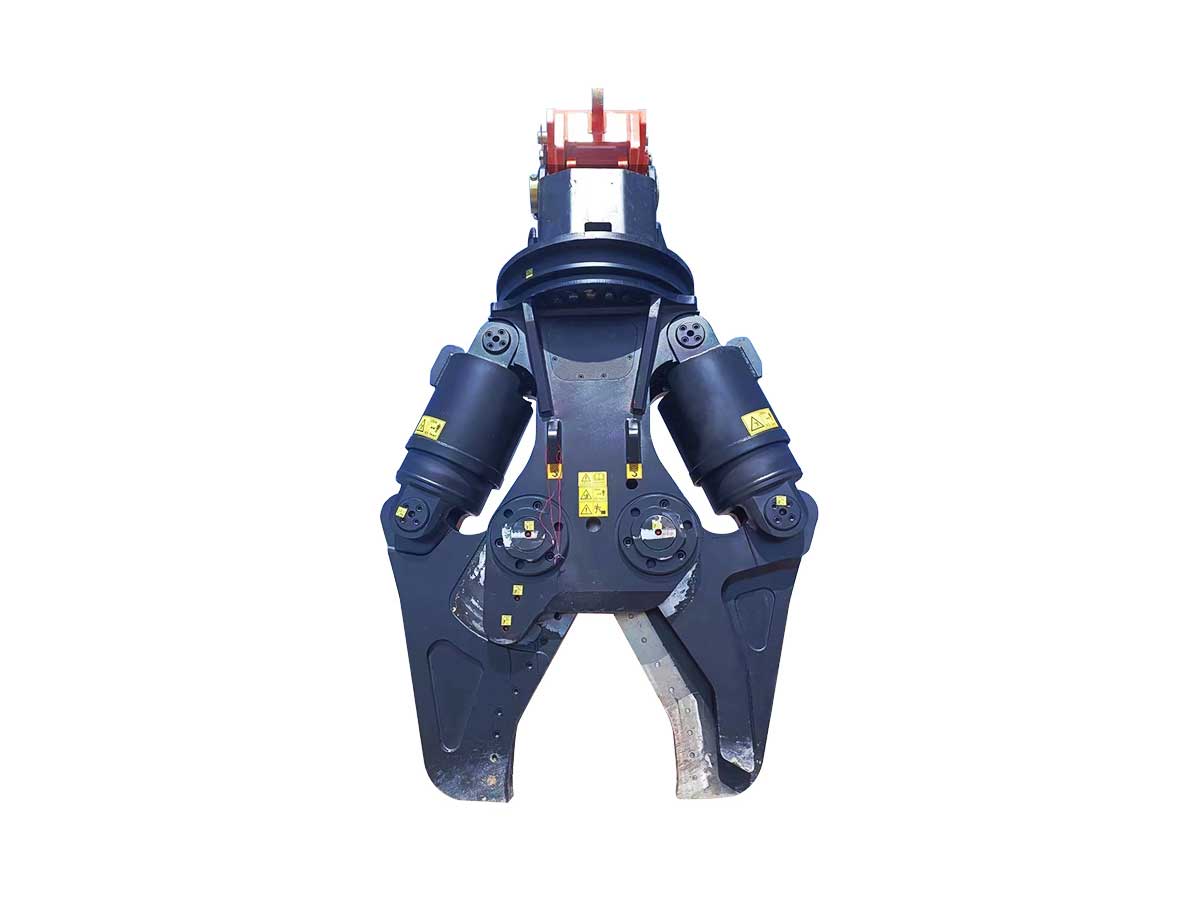


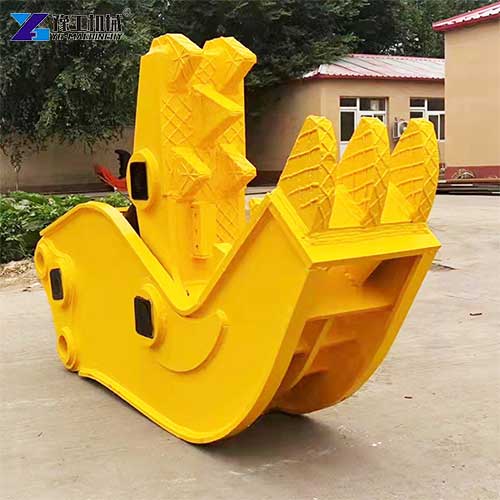
Demolition work eats up time and labor when you rely on traditional breaking methods. A concrete pulverizer attachment speeds up the process by crushing concrete and cutting rebar in one smooth operation, right from your excavator arm. Instead of breaking concrete with impact and then separately cutting or pulling out steel reinforcement, this tool handles both jobs simultaneously. The jaw closes around structural concrete, pulverizing it into manageable pieces while sharp blades shear through embedded rebar cleanly. The result is faster demolition, cleaner material separation, and less manual work on the ground.
An excavator pulverizer attachment mounts to the boom of your machine using the same pin connections as a bucket or breaker. It draws power from the excavator hydraulic system, so no additional power source is needed. Contractors use these attachments on everything from selective interior demolition to full building teardowns and bridge removal projects.
Concrete Pulverizer Attachment Parameters:
| Model | Unit | YG400 | YG600 | YG800 | YG1000 | YG1700 |
| Total length | mm | 1642 | 1895 | 2168 | 2218 | 3150 |
| Total width | mm | 1006 | 1275 | 1376 | 1598 | 2100 |
| Blade length | mm | 120 | 150 | 180 | 200 | 240 |
| Max Opening Height | mm | 587 | 718 | 890 | 1029 | 1400 |
| Upper Jaw Width | mm | 215 | 280 | 290 | 380 | 400 |
| Lower Jaw Width | mm | 458 | 586 | 588 | 720 | 812 |
| Max Shear Force | kn | 380 | 650 | 1650 | 2250 | 2503 |
| Working Pressure | Bar | 280 | 320 | 320 | 320 | 320 |
| Weight | kg | 670 | 1350 | 1750 | 2750 | 4709 |
| For Excavator Weight | ton | 6-9 | 10-15 | 18-26 | 26-30 | 50-80 |
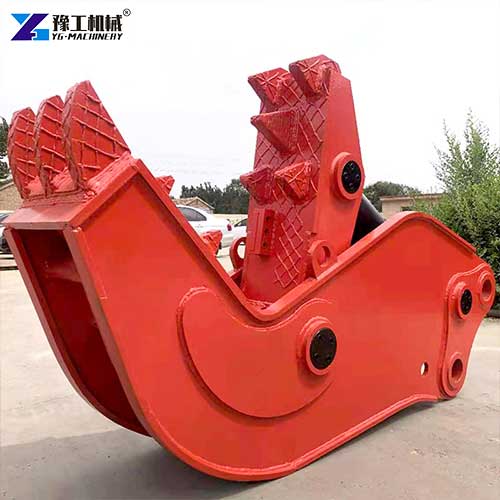
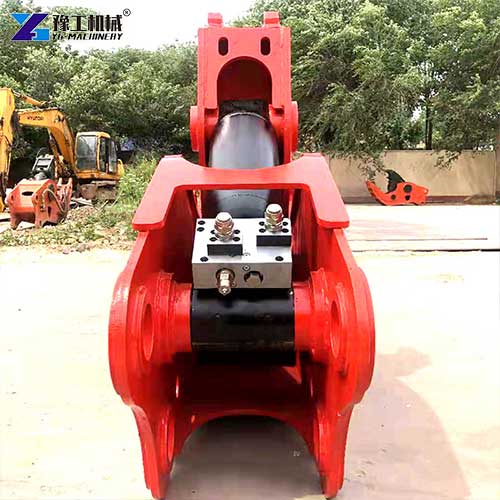
How a Concrete Pulverizer Attachment Works?
- At its core, the excavator pulverizer attachment has two jaws — a fixed upper jaw and a moving lower jaw. A hydraulic cylinder drives the lower jaw open and closed. When the operator activates the cylinder from the cab, the jaw closes with tremendous force.
- The crushing teeth on both jaw faces do the concrete-breaking work. As the jaws close, these teeth press into the concrete, creating cracks and breaking the material into smaller pieces. The concrete crumbles and falls away as the jaws continue to close.
- Meanwhile, sharp cutting blades positioned near the pivot point shear through any rebar or wire mesh caught between the jaws. These blades work like giant scissors, slicing cleanly through steel reinforcement as the jaw reaches full closure.
- The cycle repeats — open the jaw, grab a section of concrete, close to crush and cut, release, and move to the next piece. Skilled operators develop a rhythm that maximizes production rate while minimizing wear on the attachment.
- Working pressure typically ranges from 280 to 320 bar, depending on the model. Larger attachments deliver higher shear force — up to 2503 kilonewtons on the biggest models — for heavy structural concrete.
Concrete Pulverizer Attachment vs. Hydraulic Concrete Breaker: Which to Use?
Both pulverizer attachment for excavators and hydraulic breakers serve important roles in demolition work, and many contractors keep both tools on hand for different situations. Neither is universally better — each excels in specific applications.
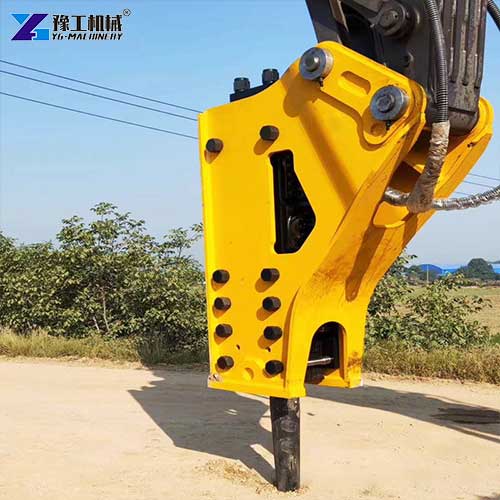
- Hydraulic breakers deliver high-impact force through a chisel point. They excel at breaking very thick mass concrete, hard rock, and heavily reinforced structures where you need to crack material from the outside in. Breakers also work well for initial breaking of oversized concrete elements that are too thick for a pulverizer jaw to grab.
- Pulverizers work through crushing and cutting rather than impact. They shine when you need to separate rebar from concrete and produce clean, recyclable materials. Because they generate less vibration and noise than breakers, they are often preferred on urban job sites or projects near occupied buildings.
- On projects with significant rebar content, a pulverizer attachment for excavator offers clear efficiency gains. It crushes concrete and cuts steel in one pass, eliminating the need for separate rebar cutting with torches or saws. The rebar comes out straight and clean, ready for recycling at a higher scrap value.
- On very thick or hard concrete, many contractors use both tools in sequence. The breaker makes the initial break to create access, then the pulverizer takes over for secondary processing and rebar separation. This combination approach often delivers the fastest overall production.
- Cost profiles differ as well. Breakers generally have a lower upfront cost but consume more wear parts like chisels and bushings. Pulverizers cost more initially but tend to have lower ongoing wear expenses when used on the right type of work.

5 FAQ About Concrete Pulverizer Attachment
A: Match the attachment to your excavator weight class first. Smaller units fit 6 to 9 ton machines, mid-size models work on 10 to 26 ton excavators, and the largest models require 26 to 80 ton carriers. Also consider your typical work — heavier structural demolition calls for a larger model with more crushing force, while selective interior work benefits from a smaller, more maneuverable attachment.
A: In most cases, yes, as long as your excavator falls within the recommended weight range for the model you choose. You also need to verify that your machine’s hydraulic system can deliver the required operating pressure, typically 280 to 320 bar, depending on the model.
A: Blade life depends on the type of work, how much rebar you cut, and operator technique. In a typical building demolition, blades last through many hours of use before they need resharpening or replacement. Replaceable blade design means you can refresh cutting performance without replacing the entire jaw.
A: Yes, the blades cut through wire mesh, light-gauge steel, and standard rebar sizes found in most concrete construction. Heavier reinforcement requires a larger model with a higher shear force for clean, efficient cutting.
A: No, installation is straightforward. The excavator pulverizer attachment uses standard pin connections, similar to swapping a bucket or breaker. You connect the hydraulic lines to your excavator auxiliary circuit, and you are ready to work. Most operators are comfortable using a pulverizer after a short familiarization period.


Concrete Pulverizer For Sale – YG Machinery
We also offer hydraulic concrete breakers and other demolition attachments, so you can equip your fleet with the right tools for every job. Whether you are looking for a concrete pulverizer for sale to add to your lineup or upgrading to a larger model, we help you choose equipment that improves productivity and profitability. If you have questions about specifications, sizing, or how a pulverizer would fit into your demolition operation, reach out. We will walk you through the options and help you find the right match.