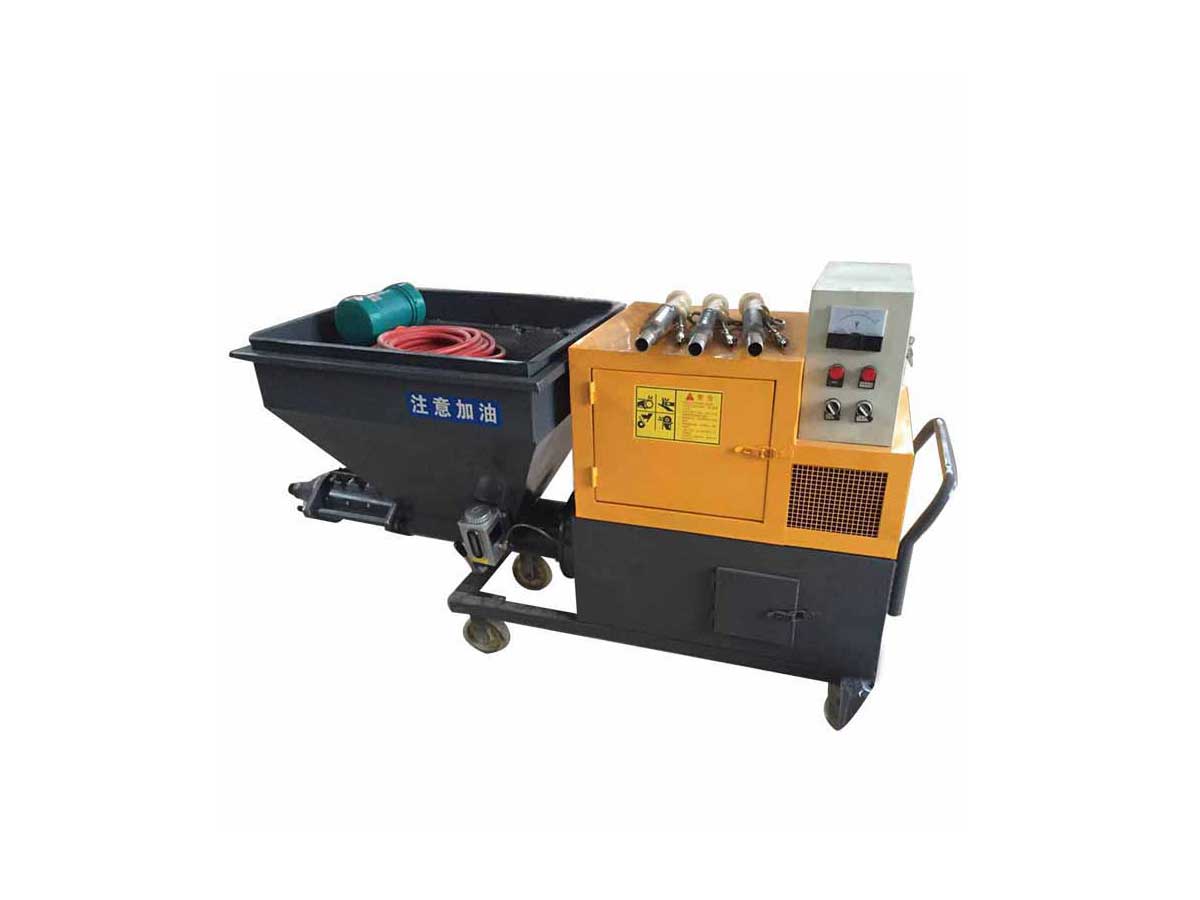

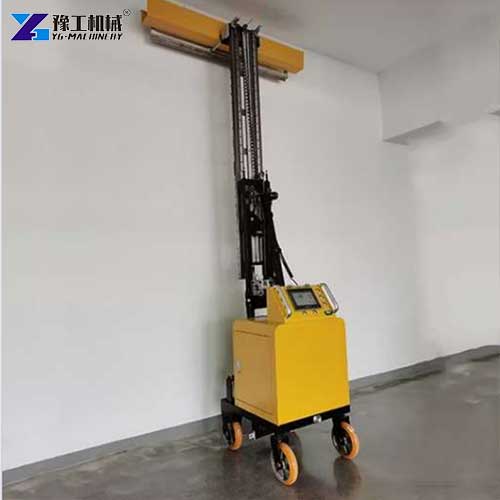
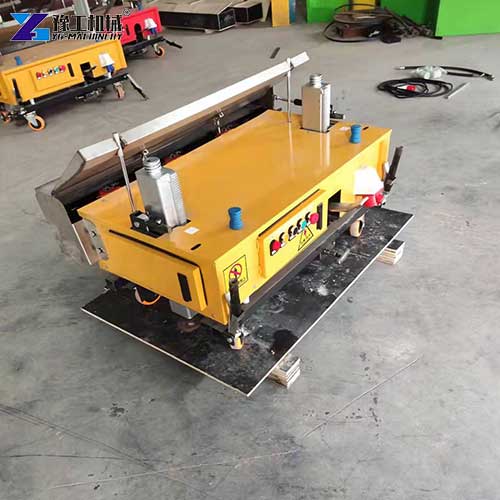
A wall cement plaster machine is a professional construction equipment designed for automatic wall cement plastering work. It replaces traditional manual plastering, greatly improving construction efficiency and wall flatness. The equipment can be used together with mortar spraying machines to form a complete wall construction process: first spray the mortar evenly on the wall, then use this machine to level and polish, which further improves overall construction efficiency and finish quality. It is suitable for interior and exterior wall plastering of various buildings, and is a very cost-effective wall plaster equipment for small and medium-sized construction teams and self-built house owners.
Wall Cement Plaster Machine Parameter:
| Model | YG-800 | YG-1000 |
| Plastering height | Below 4 meters | Below 5 meters |
| Weight | 270 kg | 290 kg |
| Plastering thickness | 2~30 mm | 2~30 mm |
| Power | 1.5 KW | 1.5 KW |
| Plastering efficiency | 500 CBM/8H | 550 CBM/8H |
| Voltage | 220 v/380 v optional | 220 v/380 v optional |
How Much Time Can You Save On 100㎡ Wall Plastering?
For most construction projects, the construction period is one of the core concerns. Many people wonder how much efficiency improvement this equipment can bring compared with manual plastering. We calculate based on actual construction data. For a standard 100 square meters interior wall:
Manual plastering: 2 skilled plasterers need 2 full days to complete all plastering work, including leveling, polishing and defect repair. The final flatness will have certain differences due to different worker skills.
Machine plastering: An automatic cement plaster machine can complete the same 100 square meters of plastering work within 3-4 hours with only 2 workers (one responsible for feeding materials, one responsible for operating the equipment). The subsequent simple trimming work only takes half a day.
That is to say, using a wall cement plaster machine can shorten the single wall plastering construction period by more than 70%. For a 1000-square-meter small building project, manual plastering requires 20 working days, while machine plastering only takes 5-6 working days, which greatly shortens the overall construction period and reduces labor costs. For construction teams, higher efficiency means they can take on more projects within the same time, and for self-built house owners, a shorter construction period also means earlier move-in time and lower labor cost.
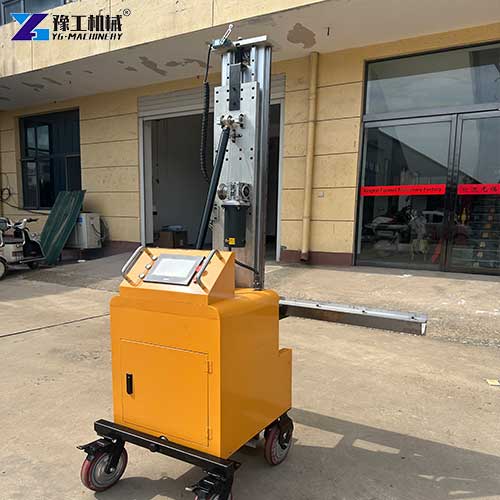
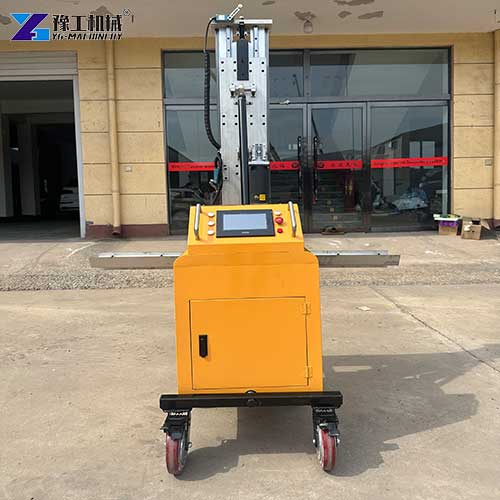
Wall Cement Plaster Machine Applications
This automatic wall plastering machine is suitable for various wall plastering scenarios, covering almost all common building types:
- Residential buildings: Interior and exterior wall plastering for residential buildings, apartments and rural self-built houses
- Commercial buildings: Wall plastering for office buildings, shopping malls, hotels and other commercial places
- Industrial buildings: Wall plastering for factories, warehouses and workshops
- Public facilities: Wall plastering for schools, hospitals, gymnasiums and other public buildings
- Renovation projects: Wall renovation and re-plastering for old building renovation projects
- It is suitable for various wall materials, including cement wall, brick wall, concrete wall and aerated block wall, with strong adaptability.
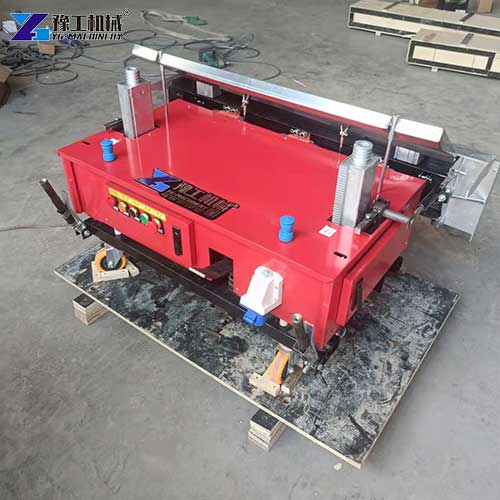

Why Does Machine Plastering Have Better Quality Than Manual Plastering?
Many users worry that the quality of machine plastering is not as good as manual plastering, but in fact, machine plastering is more stable and of better quality in most aspects:
- Higher flatness consistency: Manual plastering quality depends entirely on the worker’s skill level, and different walls may have large differences in flatness. This automatic wall plastering machine adopts automatic leveling control, which can ensure consistent flatness for every wall, and the error is controlled within 1mm, which is far higher than the standard of manual plastering.
- Lower hollowing and cracking rate: Manual plastering is easy to have uneven force, resulting in hollowing and cracking of the plaster layer. The machine applies uniform pressure during plastering, so the mortar has better adhesion to the wall, and the hollowing rate is more than 80% lower than that of manual plastering.
- Thicker one-time plastering: Manual plastering usually needs to be done in 2-3 times to avoid falling off, while the machine can complete 1- 3 cm thick plastering at one time, which reduces the number of construction procedures and shortens the construction period.
- Less material waste: Manual plastering will produce a lot of mortar falling to the ground during construction, while the machine plastering process has less material waste, which can save about 10-15% of mortar materials.
- In general, wall plaster equipment not only has higher efficiency, but also has more stable and controllable quality, which avoids the quality problems caused by worker skill differences.
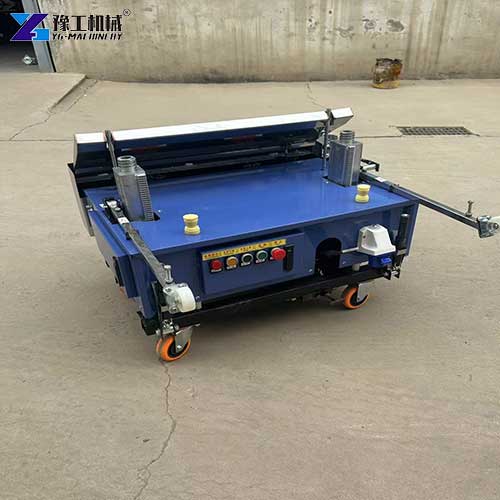
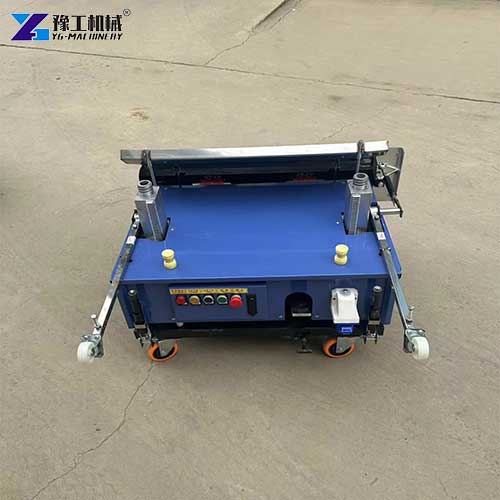
6 Features of YG Wall Cement Plaster Machine
Our wall cement plaster machine is designed according to the actual needs of construction sites, with reliable performance and easy operation:
- Automatic leveling design: Built-in automatic leveling system, no need for manual repeated leveling, the wall flatness is high and consistent.
- Adjustable plastering thickness: This automatic cement plaster machine supports adjustable plastering thickness from 5mm to 30mm; you can adjust it according to different construction requirements.
- Simple operation: The operation panel features a straightforward, user-friendly layout. Average construction workers can learn to operate the machine after just one to two hours of training and do not need professional technicians for operation.
- Wide adaptability: Suitable for various wall materials and different wall heights, meeting the needs of most construction projects.
- Mobile and flexible: The machine comes fitted with moving wheels. You can shift it effortlessly between different rooms and construction sites, making it ideal for scattered construction jobs.
- Low failure rate: Simple structure, durable parts, low failure rate, easy daily maintenance, and can work continuously for a long time on construction sites.