
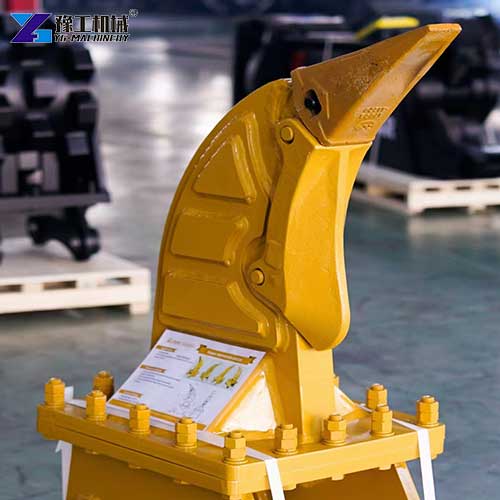

Every job site has a middle ground. The ground is too hard for a standard bucket—teeth wear out fast, penetration is slow, and the machine struggles to make progress. But it is not hard enough to justify a hydraulic breaker—the noise, vibration, fuel consumption, and maintenance costs are overkill. This is where an excavator ripper attachment comes in. It is the tool that bridges that gap. A ripper concentrates the excavator’s breakout force onto a single, hardened point. It tears through frozen ground, compacted soil, shale, and weathered rock without the fuel-guzzling impact of a breaker.
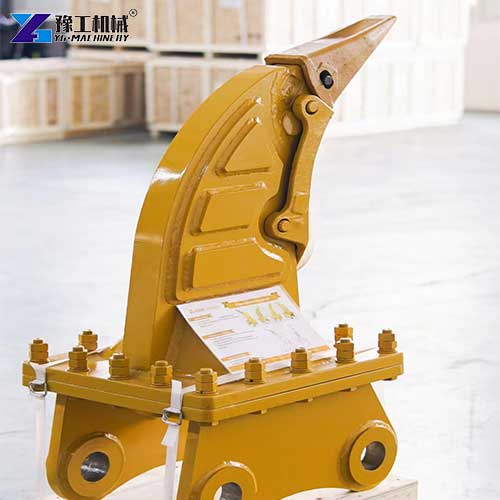
The YG series mini excavator ripper offers 11 models covering excavators from 1 to 90 tons. Every model features a single, heavy-duty curved tooth made from wear-resistant steel.
Excavator Ripper Attachment Parameters:
| Category | Unit | YG-00 | YG-01 | YG-02 | YG-04 | YG-06 | YG-08 | YG-08S | YG-10 | YG-14 | YG-17 | YG-20 |
| Total Length A | mm | 523 | 523 | 656 | 656 | 885 | 1080 | 1080 | 1290 | 1290 | 1500 | 1550 |
| Width B | mm | 130 | 130 | 180 | 180 | 240 | 345 | 345 | 400 | 400 | 465 | 465 |
| Thickness F | mm | 36 | 36 | 55 | 55 | 80 | 90 | 90 | 90 | 110 | 110 | 110 |
| Carrier | Ton | 1-2 | 3-4 | 4-6 | 6-9 | 12-16 | 20-23 | 23-26 | 26-30 | 30-40 | 40-52 | 50-90 |
| Weight | kg | 30 | 40 | 80 | 85 | 185 | 400 | 410 | 600 | 760 | 1030 | 1200 |
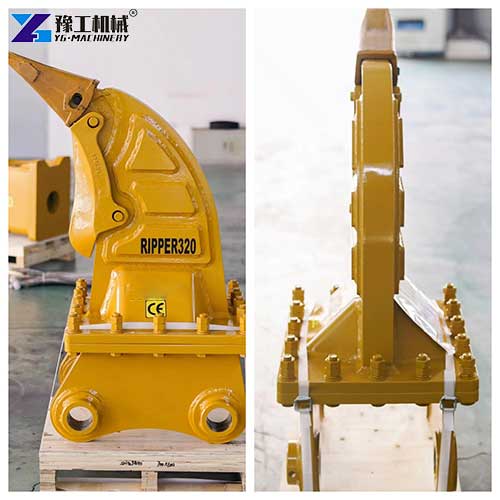
Why Choose an Excavator Ripper Attachment Over a Breaker?
The difference between a mini excavator ripper and a hydraulic breaker is not just about how they work. It is about fuel, maintenance, speed, and noise.
1. Fuel Consumption
Operating a hydraulic breaker in hard clay or frozen ground requires the machine to run at maximum RPM and maximum hydraulic pressure. This means maximum fuel consumption. A ripper, however, uses no hydraulic power of its own. It simply concentrates the machine’s breakout force onto a single point. The result is 50% less fuel consumption compared to a breaker and zero hydraulic maintenance costs. In layered or medium-hardness terrain, a ripper can also be 3-5 times more productive than a hammer, operating in a continuous sweeping motion rather than the stop-start firing cycle of a breaker.
| Factor | Hydraulic Breaker | Excavator Ripper Attachment |
| Power Source | Hydraulic impact (internal piston + nitrogen) | Excavator breakout force (leverage) |
| Fuel Consumption | Very high | 50% less |
| Hydraulic Maintenance | High (seals, nitrogen, greasing every 2 hours) | Zero (no moving parts, no hydraulics) |
| Noise Level | Loud (impact) | Quiet (static tearing) |
| Vibration | High (stress on excavator, operator fatigue) | Low |
| Underwater Use | Requires modification | Works seamlessly |
| Wear Parts | Seals, bushings, nitrogen chambers | Replaceable tooth only |
2.No Daily Greasing, No Nitrogen Checks
A hydraulic breaker requires greasing every 2 hours of operation, periodic replacement of internal seals, and regular nitrogen checks to maintain pressure. A static ripper has no internal moving parts, no hydraulics, and no nitrogen seals. The only wear part is the replaceable tooth. The maintenance cost difference over a year of operation is substantial.
3. Less Noise, Less Vibration
For urban job sites, noise restrictions are a critical factor. An excavator ripper attachment is significantly quieter than a breaker, making it the preferred choice for noise-sensitive city demolition. It produces less vibration, reducing wear on the excavator and discomfort for the operator.
4. Underwater Capability
Unlike standard breakers that require expensive modification kits for underwater use, rippers work seamlessly underwater. This makes them suitable for marine construction, dredging, and underwater excavation projects.
How Does a Mini Excavator Ripper Work?
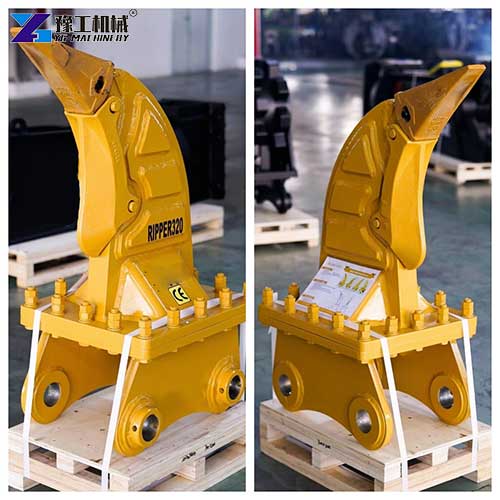
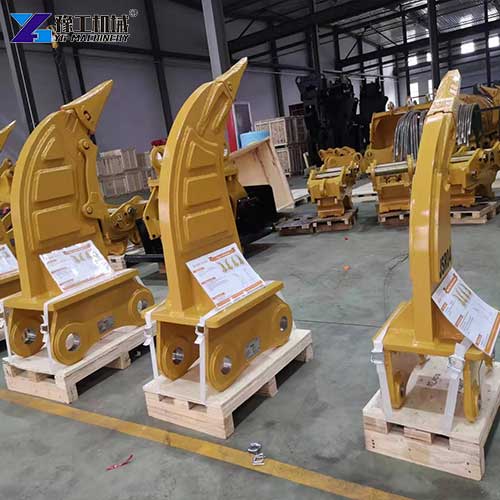
An excavator ripper attachment is a single-point tool that uses the excavator’s breakout and crowd force to rip, tear, and lever through hard materials. Unlike a hydraulic breaker that pounds the surface with repeated impacts, a ripper concentrates force onto a single, curved tooth. The tooth penetrates the material, and the excavator’s arm movement creates leverage that splits and tears the ground apart.
The YG series excavator root ripper is built with a robust shank and a replaceable wear-resistant tip. The curved geometry focuses force at the point of contact, maximizing penetration with minimal effort. The tip is designed to be replaced when worn, extending the service life of the shank and reducing replacement costs.
The ripper works by initiating cracks along existing planes of weakness or creating new ones. It opens joints, loosens blocks, and exposes edges that can then be processed with other tools. This makes it ideal for preparatory work—breaking ground before excavation, exposing utilities, or loosening material for a bucket to remove.
What Materials Can an Excavator Ripper Attachment Handle?
The YG series excavator ripper for sale is designed for specific ground conditions. Understanding what the attachment can and cannot handle is essential for getting the best results.
- Frozen Ground and Frost: Frost ripper teeth are specifically designed to penetrate and break frozen soil, enabling construction to continue in winter conditions. The single-point design concentrates force to crack through layers of ice-hardened ground.
- Hard Soil and Compacted Ground: When standard buckets struggle to penetrate compacted soil, a ripper tears through it efficiently. This is the “intermediate ground” where a bucket wears out too fast and a breaker burns too much fuel.
- Shale and Limestone: In layered, medium-hard rocks with compressive strength below 50 MPa—such as shale, limestone, and sandstone—a ripper is highly effective. It opens cracks along bedding planes and separates rock layers. In these conditions, a ripper can be 400% more productive than a hammer.
- Roots and Stumps: The sharp, curved tooth cuts through and pulls out tree roots and stumps. This is a common application for mini excavators in landscaping and site clearing.
- Asphalt and Pavement: The ripper penetrates and breaks up asphalt layers for road repair and demolition.
What It Cannot Handle: Rippers are not suitable for solid, massive rock like granite or basalt. Such ground requires a hydraulic breaker. The ripper targets “rippable” layered ground, not solid, non‑fractured rock.
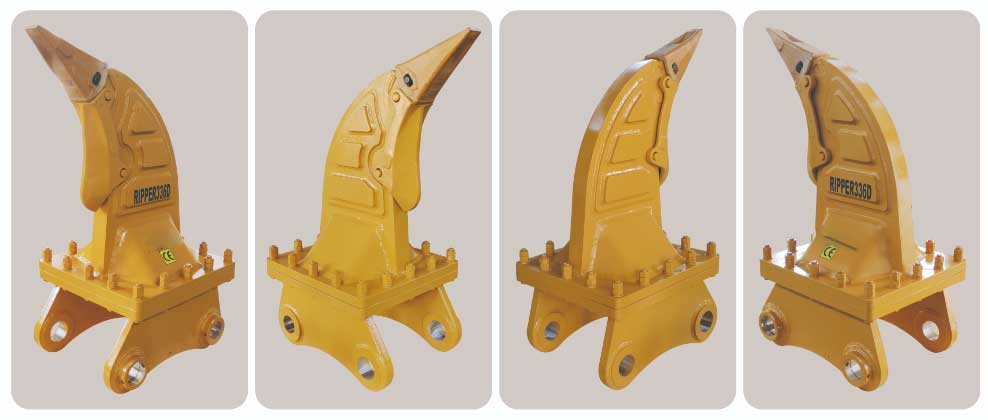
Excavator Ripper For Sale
YG manufactures and exports excavator attachments to markets worldwide, providing technical support and spare parts availability for international customers. If you need an excavator ripper for sale that breaks ground efficiently without the cost of a breaker, the YG series provides proven performance. Contact us with your excavator model and typical ground conditions. We will recommend the right model for your operation. Get a free quote for your excavator root ripper today.