

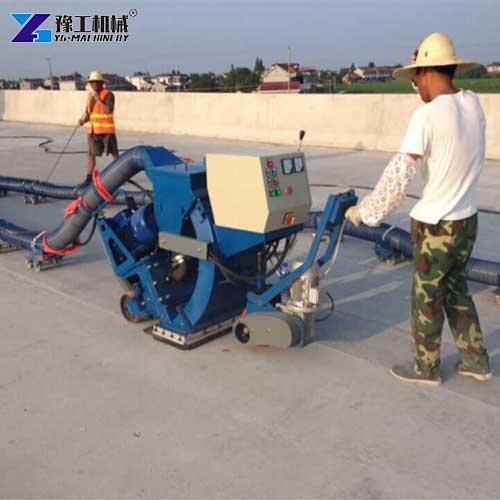
Before any coating goes down, the surface must be ready. Paint, epoxy, rubber deposits, laitance, and curing compounds all prevent new materials from bonding. Remove them improperly and the coating fails. Remove them slowly and the project falls behind. A floor shot blaster solves both problems. It propels steel shot at high velocity onto the surface, cleaning and profiling in one pass. The machine recycles the shot automatically and captures dust through an integrated vacuum system. No chemicals, no water, no secondary cleanup.
The YG series floor shot blaster offers three models with working widths from 270mm to 800mm. Cleaning efficiency on concrete ranges from 180 to 600 square meters per hour. For contractors, maintenance crews, and infrastructure teams looking for a floor shot blasting machine that delivers consistent results, the YG series provides reliable, production-ready equipment.
Floor Shot Blaster Technical Specifications:
| Model | YG-270(Single) | YG550/600(Double) | YG-850(Double) | |
| Shot Blasting Wheel Diameter | 200mm | |||
| Working width | 270 mm | 550/600 mm | 800 mm | |
| Walking speed | 0.5~20 m/min | 0.5~33 m/min | ||
| Concrete surface cleaning efficiency | ≥180 m2/h | ≥400 m2/h | ≥600 m2/h | |
| Steel plate surface cleaning efficiency | 15-25 m2/h | 75-100 m2/h | 100-160 m2/h | |
| Dust connection pipe diameter | 120 mm | 150 mm | ||
| Suggest the diameter of steel balls | 1.2-1.5 mm | 1.5-1.8 mm | ||
| Steel pill consumption | 10 g/m2 | |||
| Supporting dust collector | Seven-core automatic backflush vacuum cleaner | Eight-core automatic backflush vacuum cleaner | ||
| Shot wheel motor | Power consumption | 11 kW | 11*2 kW | 15*2 kW |
| Input Current | ≤ 15 A | ≤ 22*2 A | ≤ 28*2 A | |
| Walking motor | Power consumption | 0.5 kW | 1.5 kW | |
| Input Current | 1 A | 3 A | ||
| Size (mm) | 1000*300*1100 | 1950*720/775*1400 | 1950*1020*1550 | |
| Weight | 150 kg | 570 kg | 700kg | |
| Power connection requirements | Supporting the dust collector | |||


What the Floor Shot Blaster Removes?
A floor shot blaster removes multiple types of surface contaminants in a single pass.
- Laitance and Surface Impurities: Laitance is the weak, dusty layer that forms on top of concrete during finishing. It prevents coatings from bonding. The shot blaster removes it completely, exposing sound concrete.
- Old Coatings: Paint, epoxy, sealers, and adhesives are removed down to the bare surface. The YG series removes coatings efficiently, leaving the surface ready for recoating or overlay application.
- Rubber Deposits and Tire Marks: Airport runways and parking garages accumulate rubber from tires. The shot blaster removes these deposits, restoring surface friction. The treatment range includes removing tread rubber and markings, restoring and increasing surface roughness, and improving the friction coefficient.
- Road Markings and Lines: Municipal roads and paved surfaces require marking removal for resurfacing. The floor shot blasting machine cleans old markings efficiently, restoring the road’s original appearance and improving roughness and friction coefficients.
- Rust and Mill Scale: Steel surfaces accumulate rust and mill scale over time. The shot blaster removes these contaminants, providing a clean surface for subsequent coatings.
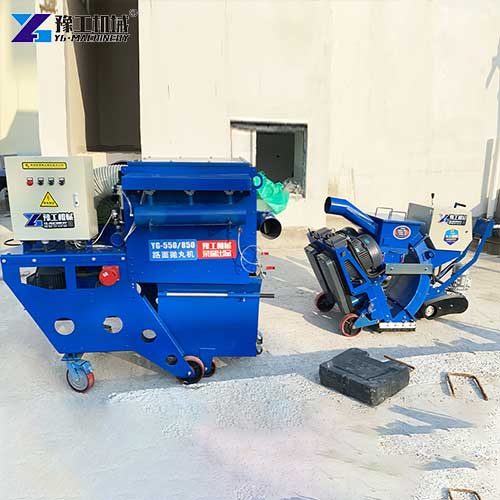

What’s Inside the Floor Shot Blaster: Key Components
Understanding the internal components helps operators maintain the machine and troubleshoot issues.
- The Shot Blasting Wheel. This is the core component. The motor drives the wheel at high speed. Steel shot enters the center of the wheel and is thrown outward by centrifugal force, striking the surface at high velocity.
- The Control Cage and Directional Sleeve. Located at the center of the wheel, the control cage distributes the shot onto the blades. The directional sleeve controls the direction of the shot stream, determining the blast pattern. Both components require careful installation and regular inspection. Worn components reduce efficiency and affect results.
- Wear Plates and Liners. The blasting chamber is lined with replaceable wear plates: left, right, top, and center liners. These protect the machine housing from the abrasive action of the shot. They are consumable parts that require periodic replacement.
- The Dust Collection System. The vacuum system captures dust, debris, and spent shot during operation. The YG-270 uses a seven-core automatic backflush vacuum cleaner. The YG550/600 and YG-850 use an eight-core system.
- The Magnetic Seal System. Magnets at the bottom of the machine create a seal against the surface, preventing shot and dust from escaping. The gap between the magnets and the surface should be maintained at 8- 10 mm for optimal performance.

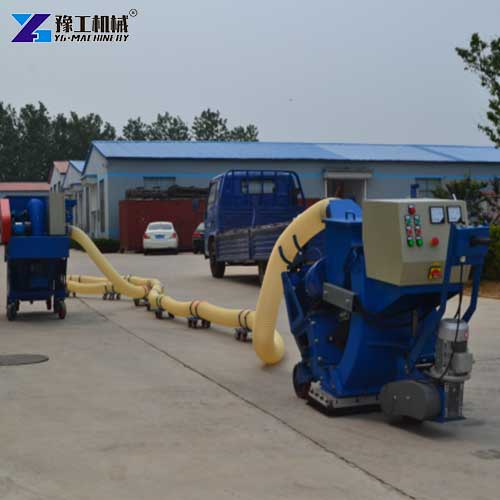
Before You Start: The 6 Pre-Operation Checklist
A road shot blasting machine requires proper preparation before each use. Following a pre-operation checklist prevents equipment damage and ensures consistent results.
- Electrical System: Confirm the power supply meets requirements: 400V, 50Hz, 100A with a CEE socket. Check for loose connections and burnt cables. Replace any damaged wiring immediately. Only qualified electricians should perform electrical work.
- Mechanical Connections: Verify that all bolts and fasteners are tight. Loose bolts cause vibration and noise. Check the blast wheel, wear plates, and sealing systems for secure attachment.
- Shot Supply and Valves: Ensure there are no foreign objects in the shot system or valves. Check the shot quantity in the hopper. The shot should be free-flowing and at the correct level.
- Sealing Systems: Check the magnetic seal and rubber seals for wear. The gap between the magnets and the surface should be 8- 10 mm. Replace worn seals to prevent shot leakage.
- Dust Collector: Empty the dust collection bin before starting. Check the filter cartridges for blockages. Poor suction affects performance and can cause shot to remain on the surface.
- Safety Systems: Verify that all safety guards are in place. Check the emergency stop function. Ensure the operator is wearing proper protective equipment—safety glasses, work shoes, and protective clothing.


7 Common Problems and How to Fix Them
1. Abnormal Vibration.
If the machine vibrates excessively, the shot blasting wheel is likely worn and needs replacement. Check for worn blades or an unbalanced wheel. Replace the wheel immediately to prevent further damage.
2. Unusual Noise.
Excessive noise often indicates foreign objects in the blasting system. Stop the machine and inspect. Loose bolts also cause noise—check all fasteners. If the wheel bearings are worn, replace them. If the motor is seized, it requires professional attention.
3. Weak Blasting Performance.
When the floor shot blasting machine fails to remove material effectively, check multiple causes. The shot supply may be blocked or insufficient—add shot and clear any blockages. The feed valve may be faulty—inspect and adjust. Operators must replace the blast wheel and directional sleeve once wear exceeds tolerance. If you start the machine too rapidly, shut it down, restart, and slowly open the feed valve. Walking speed may be too fast—slow down to allow adequate surface contact.
4. Shot Leakage.
When shot escapes from the machine, the magnetic seal height is likely incorrect—adjust to 8- 10 mm from the surface. The magnetic seal itself may be worn—replace it. The blast wheel may be worn, causing erratic shot patterns. The wheel direction or directional sleeve angle may be incorrect—adjust to the proper setting.
5. Shot Contamination.
Contaminated shot reduces blasting efficiency. The dust collector may lack sufficient suction—check hoses and filter cartridges. Clean or replace filters as needed.
6. Blast Motor Won’t Start.
If the blast motor fails to start, a protective device may have tripped—reset it. Check the electrical connections and the motor itself.
7. Machine Won’t Travel.
If the road shot blasting machine does not move, the travel circuit may be open. Have a qualified electrician inspect the system.
Concrete Shot Blaster For Sale
YG provides detailed operation manuals, maintenance guidance, and troubleshooting support. The modular design allows quick disassembly and convenient replacement of wear parts. Common wear parts—shot wheels, directional sleeves, wear plates, and filter cartridges—are stocked and available for quick shipment.
If you need a floor shot blaster for surface preparation, the YG series provides reliable, proven performance. Contact us with your project requirements—surface type, area size, and coating specification. We will recommend the right concrete shot blaster for sale for your operation. Get a free quote today.