

Reinforcing bar connections are everywhere in modern construction. Bridges, high-rise buildings, tunnels, and foundation piles all rely on mechanical splices to connect rebar lengths. The quality of those connections determines the structural integrity of the entire project. Weak connections fail under load. Poor threads compromise the splice. And slow threading holds up the entire construction schedule. A rebar threading machine solves these problems. It uses a cold-forming process to create precise threads on rebar ends without cutting away material. The resulting thread is stronger than the parent bar, with continuous grain flow and superior fatigue resistance. For contractors looking for a thread rolling machine price that delivers reliable performance, the YG series offers a range of models to fit different project scales.
Rebar Threading Machine Parameters:
| Model | YGS-40 | YGT-40 | YGA-40 |
| Processing diameter range | 16-40mm | ||
| Thread rolling length | 0-80mm | 0-80mm | 0-100mm |
| Power voltage | 4kw/380v 50hz | 4kw/380v 50hz | 7.5kw/380v 50hz |
| Working efficiency | 15s/forming | 8s/forming | One-touch auto forming |
| Machine weight | 320kg | 350kg | 400kg |
| Machine size | 115*50*106cm | 110*60*130cm | 126*70*106cm |
| Type | Standard type | Upgrade type | Fully automatic type |

Why Rebar Threading Machines Are Essential for Modern Construction?
Traditional rebar splicing used lap splices or welding. Both have significant drawbacks that have pushed the industry toward mechanical threading.
Lap splices require overlapping bars and tying them together. This approach consumes extra steel, creates congestion in heavily reinforced sections, and produces joints that are weaker than the parent bar. In seismic zones, lap splices are often prohibited because they cannot reliably transfer tension forces.
Welded splices require skilled welders, create heat-affected zones that weaken the steel, and introduce fire hazards on site. In many countries, welding rebar is restricted or prohibited in critical structural applications.
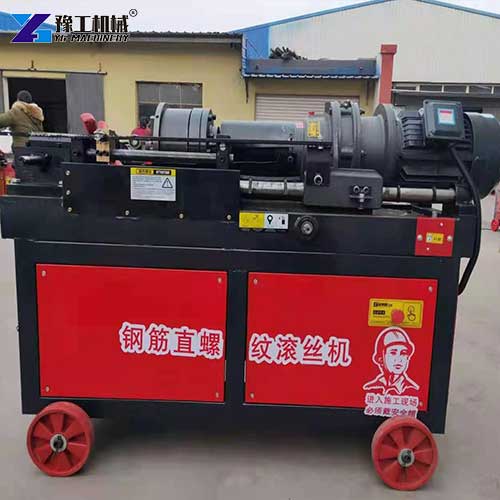
Threaded mechanical splices are the modern standard. A rebar threading machine creates threads that engage with couplers, producing connections that develop the full tensile strength of the bar. The splice fails in the bar—not in the thread. The connection is faster to make (about one minute per joint with a wrench), requires no heat or open flames, and works in any weather condition.
How Does a Rebar Threading Machine Work?
The YG series rebar threading machine follows a proven two-step process that delivers consistent, high-quality threads.
Step 1: Rib Peeling. The rebar is clamped in the machine. The peeling blades remove the transverse ribs from the bar end. This step is essential because the ribs would otherwise create an uneven thread profile. The peeling process is integrated into the machine’s operation—the operator clamps the bar once, and the rebar threader machine handles both steps.
Step 2: Thread Rolling. After peeling, the rolling dies form the thread profile. The dies press the steel into the thread form without cutting away material. The cold-working process work-hardens the thread surface, increasing hardness and fatigue resistance. The result is a full, uniform thread with continuous grain flow.
The YG series rebar threader machines feature an automatic opening and closing mechanism for the peeling blades and rolling dies. This design reduces operator effort and ensures consistent results across thousands of threads. The blades and rollers are made from high-strength materials for extended service life.

5 Features of Steel Threading Machine
These practical functional advantages directly solve real‑world headaches that reinforcement crews meet every day on busy construction sites.
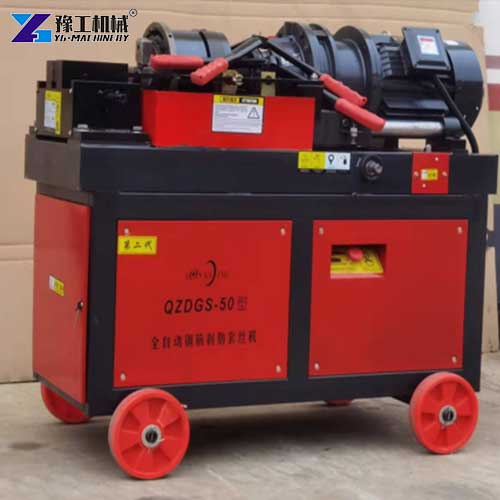
- Integrated one‑clamping workflow completes both rib removal and thread rolling in a single setup, which removes alignment errors caused by repeated repositioning of steel bars. The built‑in automatic cutter opening and closing structure keeps operation smooth and stable for long shifts of continuous processing.
- Dual thread direction compatibility lets operators produce both right‑hand and left‑hand threads on one unit, matching diverse connection design requirements from different engineering drawings without extra equipment swaps.
- Non‑cutting rolling processing preserves the metallic grain structure of the rebar itself. Final thread sections show 20%‑30% higher tensile strength, 40%‑60% improved fatigue resistance and 50%‑200% better corrosion performance compared to raw rebar stock.
- Site‑friendly structural details include thickened machine bodies and rubber walking wheels, so crews move the unit between foundation zones, beam fabrication areas and reinforcement yards quickly without heavy lifting gear.
- Standard 380V 50Hz power compatibility fits common industrial power supplies on construction sites worldwide, with no custom voltage conversion hardware required for regular operation.


Key Hardware Design That Cuts Down Unplanned Downtime
Construction sites carry heavy dust, vibration and frequent start‑stop cycles. Poor hardware design leads to frequent breakdowns and costly work interruptions. Critical component design directly defines how much continuous runtime you can get from each unit.
- One‑piece integrated machine head. Many low‑cost machines assemble separate split‑type heads. Clearance gaps appear after hundreds of working hours, which bring uneven thread depth and dimensional drift. The integrated head eliminates assembly gaps, keeps precise positioning even under heavy vibration, and holds stable accuracy over long‑term continuous runs.
- Industrial‑grade reducer paired with pure‑copper motor. Fluctuating site power and heavy‑load startup place high stress on drive parts. Pure‑copper windings deliver stable torque and resist overheating during non‑stop batch processing. Matched branded reducer absorbs impact load; it avoids tooth damage that often happens on cheap cast gear sets.
- Hardened wear‑resistant clamping jaws. Repeated clamping of tough deformed rebar wears ordinary jaws rapidly. Worn jaws allow bar slippage, which creates tilted, off‑axis threads. Hardened jaws maintain firm clamping force for longer working cycles, and they reduce frequent part replacement work for site operators.
- Thickened welded machine frame. Continuous rolling generates strong vibration. Thin‑walled frames deform gradually, which shifts the alignment of internal moving assemblies. Thickened frame absorbs vibration energy, protects internal transmission parts, and extends the service life of wearing dies and cutter components.
Thread Rolling Machine Price
If you need a rebar threading machine for rebar splicing, the YG series provides proven performance. Contact us with your rebar diameter, thread length, and production volume. We will recommend the right model for your operation. Get a free quote for your steel threading machine today.