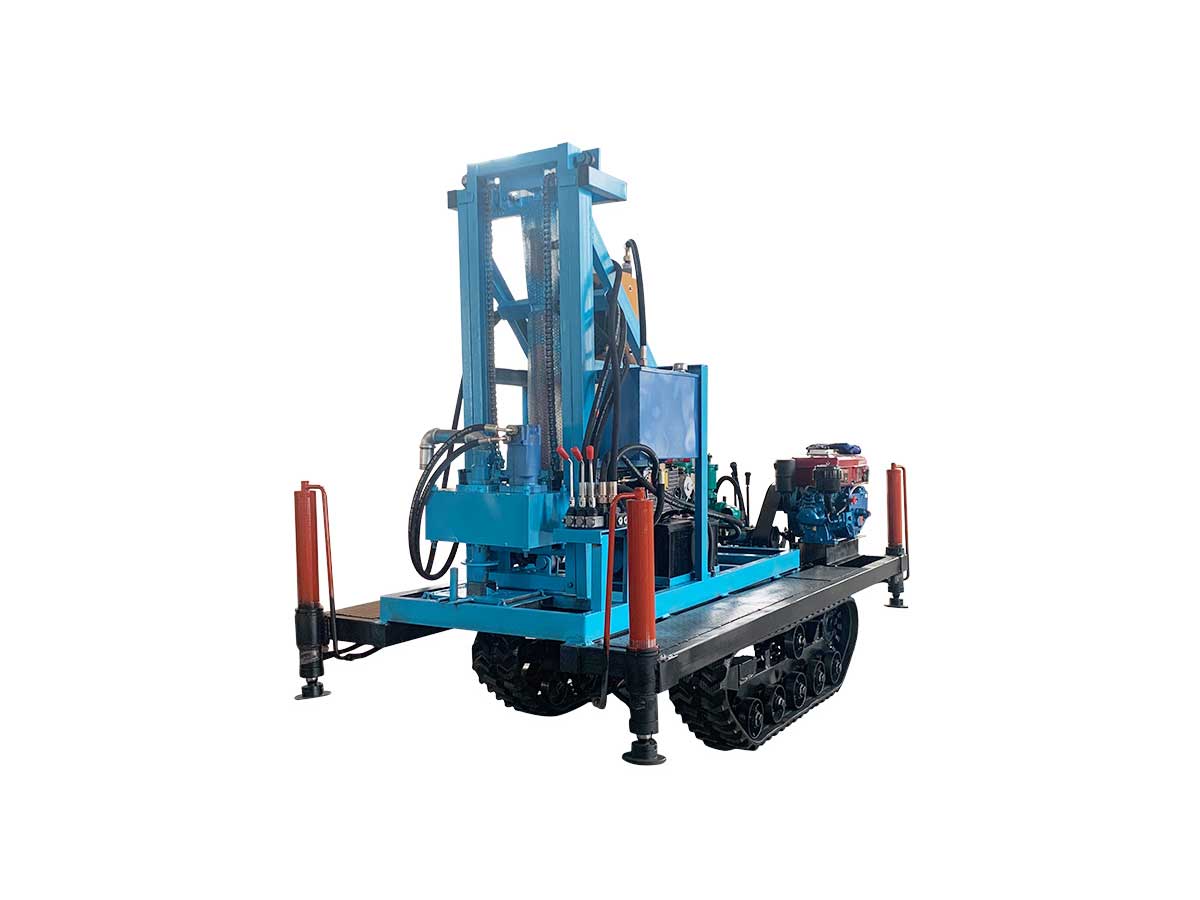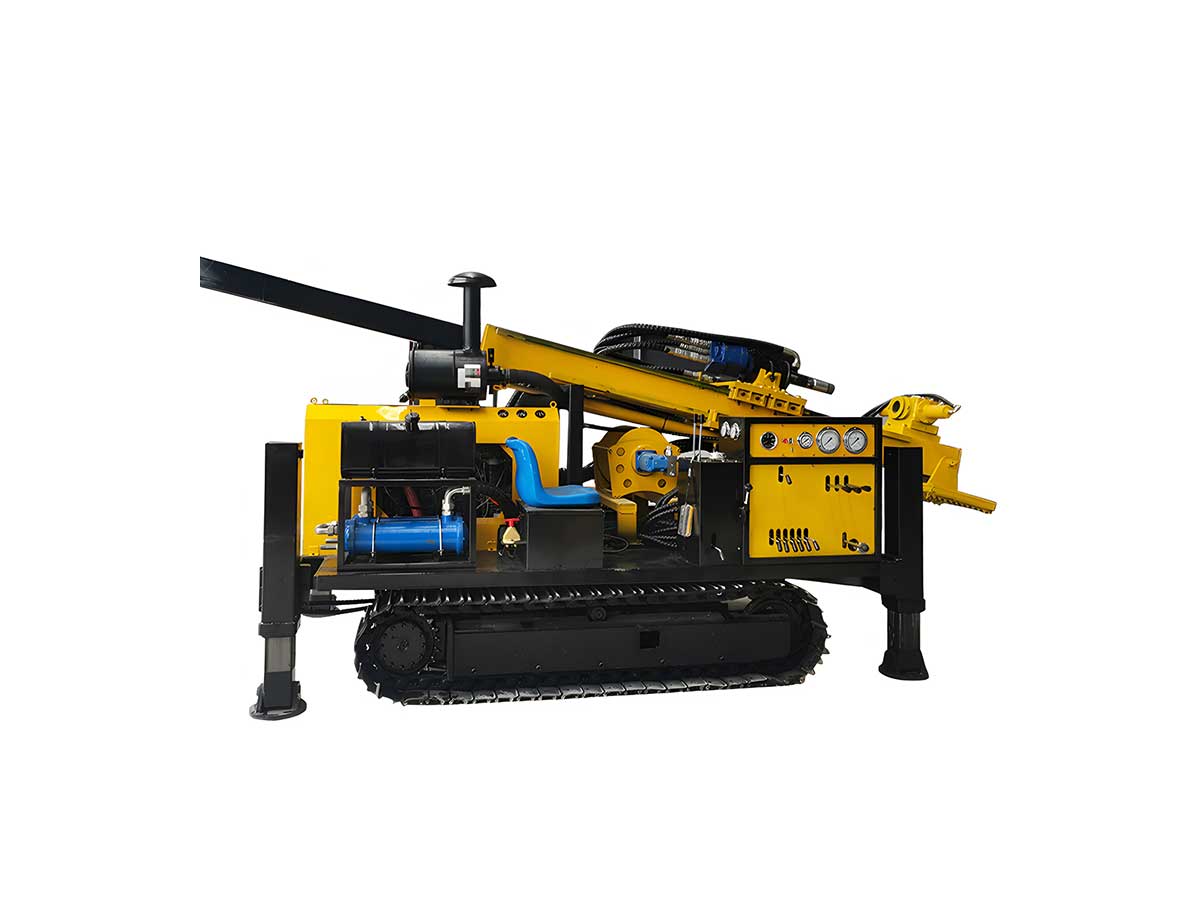


A pile foundation drilling machine is a professional piling equipment designed for drilling holes in pile foundation projects. It uses hydraulic drive and rotary drilling technology to quickly drill holes in soil, soft rock and other geological layers, and is the core equipment for modern pile foundation construction. This hydraulic rotary drilling rig adopts a crawler-type chassis, which has good mobility and can move flexibly on complex construction sites. The drilling depth can reach 10-60 meters, and the maximum drilling diameter can reach 1500mm, which can meet the needs of most conventional pile foundation projects.
This rotary rig machine is widely used in building foundations, bridge piles, highway subgrades, photovoltaic power stations, municipal engineering and other pile foundation projects. Compared with traditional piling methods, it has higher construction efficiency, lower labor intensity and better environmental protection performance, and has become the mainstream equipment for pile foundation construction.
Pile Foundation Drilling Machine Technical Specifications
| Dimensions (mm) | 7900*2260*3100 |
| Vehicle mass (kg) | 8000 |
| Wheelbase (mm) | 3150 |
| Wheelbase (mm) | Front 1400 After 1060 |
| Drilling depth (m) | 13 |
| Drilling diameter (mm) | 600-1600 |
| Rotation angle | 180 degree |
| Walking speed (km/h) | 50 |
| Gear pump model | CBJT2080 |
| Hydraulic system working pressure (MPa) | 20-25 |
| Hydraulic system displacement (ml/r) | 80 |
| engine model | 4108 |
| Engine power (kW) | 88 |
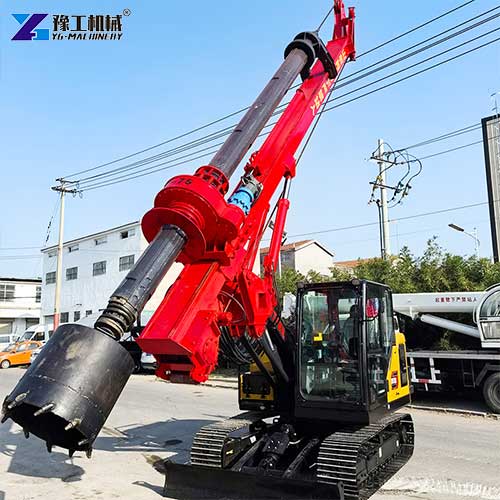
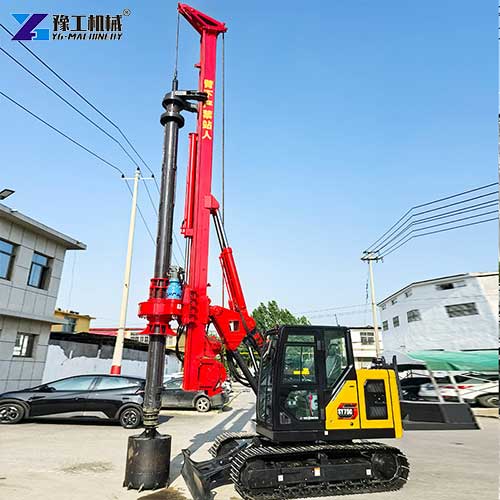
How To Decide If Your Project Needs a Pile Foundation Drilling Machine?
Many project owners will struggle with whether to use professional drilling equipment or traditional piling methods for small and medium-sized projects. You can judge according to the following 4 standards. If you meet more than 2 of them, a pile foundation drilling machine will be a more cost-effective choice for your project.
1. Pile depth requirement
If your project requires a pile depth of more than 10 meters, traditional manual digging or impact drilling will be very inefficient and may even be unable to meet the depth requirement. If your project has a pile depth of more than 10 meters, a rotary pile drilling rig will be more efficient and can ensure construction quality.
2. Project schedule requirement
If your project has a tight schedule and needs to complete the piling work in a short time, professional drilling equipment is essential. Traditional piling methods can only complete 1-2 piles per day, while rotary drilling equipment can complete 5-8 piles per day, which greatly shortens the construction period.
3. Geological condition
If your construction site has soft rock, a dense sand layer or other complex geology, traditional piling methods will have low efficiency and high construction difficulty. The rotary rig machine can adapt to most common geological conditions, and the construction efficiency and quality are more stable.
4. Project scale
If your project has more than 30 piles, the cost of using professional drilling equipment will be lower than hiring manual piling teams. The larger the project scale, the more obvious the cost advantage of using mechanical drilling.
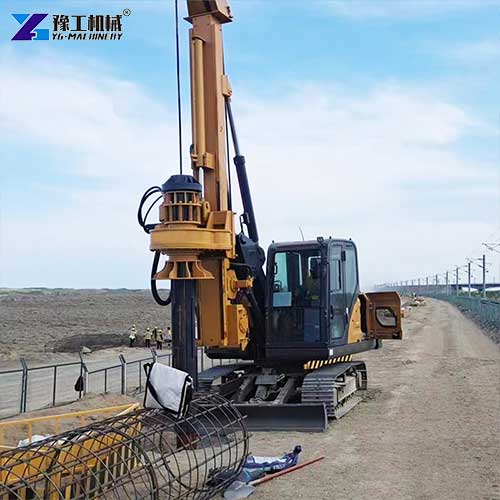
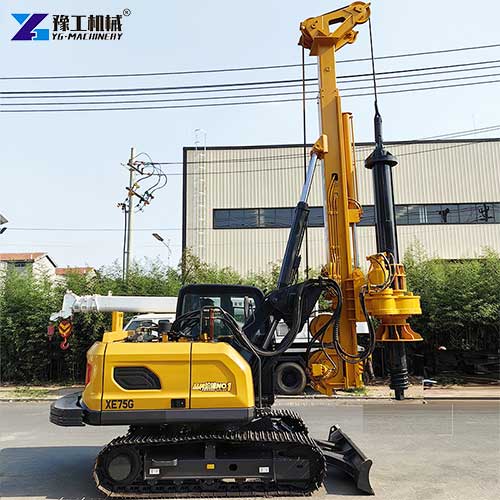
Geological Adaptability Guide: What Soils Can A Rotary Drilling Rig Handle
One of the most frequently asked questions by users before purchasing is: what kind of geological conditions is the drilling rig suitable for? Can it work in rocky soil? In fact, a high-quality hydraulic rotary drilling rig can adapt to most common geological conditions, but the construction efficiency and required drill bits are different for different soil layers.
1. Most suitable soil layers (highest efficiency)
Soft soil, sandy soil, cohesive soil, silty soil and other soft soil layers are the most suitable geological conditions for rotary drilling rigs. In these soil layers, the rotary rig machine can give full play to its advantages of high efficiency and stable quality, and can complete 5-8 piles of 15-20 meters deep every day. No special drill bit is needed, and the ordinary drill bit can meet the demand, with low wear and long service life.
2. Adaptable soil layers (slightly lower efficiency)
Strongly weathered rock, soft rock, moderately weathered rock and other rock layers with lower hardness can also be constructed with rotary pile drilling rigs, but it is necessary to replace the special alloy drill bit, and the drilling speed will be slightly slower. For example, in strongly weathered rock strata, the daily construction volume is about 3-5 piles, which is still much more efficient than traditional impact drilling.
3. Not recommended soil layers (low efficiency and easy to damage equipment)
Hard granite, large-diameter pebble layer, boulder layer and other hard or uneven geological conditions are not recommended for use with ordinary rotary drilling rigs. Construction in these strata will not only be very inefficient but also easily cause damage to the drill bit and even the drill pipe, increasing the construction cost. For this kind of geology, it is more cost-effective to choose professional rock drilling equipment.
4. Selection suggestions for different geologies
If your projects are mainly in soft soil layers, such as rural self-built houses and municipal roads, small and medium-sized drilling rigs are sufficient, with low cost and high cost performance. And if you often encounter soft rock and weathered rock strata, you should choose medium and large drilling rigs with higher power and be equipped with alloy drill bits to ensure construction efficiency.
If you are not sure whether the rotary pile drilling rig is suitable for your project’s geology, you can send us your geological survey report, and we will help you evaluate the adaptability for free and recommend the most suitable model.
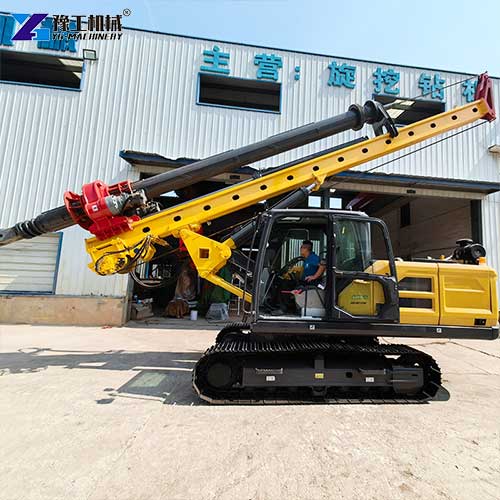
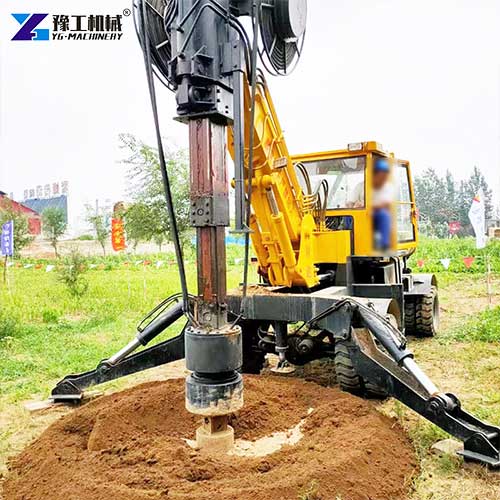
Multi-Function Configurations Of Pile Foundation Drilling Machine
A standard pile foundation drilling machine can be equipped with different functional modules to adapt to various piling and reinforcement projects. Instead of buying multiple pieces of equipment for different work types, you only need to replace the corresponding functional components to switch between different construction modes, which greatly reduces equipment investment costs and helps you take on more types of projects.
1. LDP Rotary Drilling Function
- Working type: Rotary drilling and hole forming
- Core purpose: The drill bucket rotates to cut and take out soil to form pile holes, with high drilling efficiency and good hole forming quality.
- Applicable scenarios: Pile foundation construction of buildings and bridges, suitable for various geological conditions such as clay, sand soil, and rock strata.
2. CFA Long Auger Drilling Function
- Working type: Long auger drilling
- Core purpose: The spiral drill pipe continuously drills and conveys soil upward, and pours concrete synchronously during drilling. It can complete drilling and pouring at the same time, with high construction efficiency.
- Applicable scenarios: Foundation reinforcement, CFG pile construction, suitable for small diameter (400-800mm) and shallow hole (<30m) projects.
3. DP Soil Displacement Pile Function
- Working type: Soil displacement pile forming
- Core purpose: The pile pipe extrudes the soil to form a pile body; no mud is generated during construction, and there is no mud pollution.
- Applicable scenarios: Municipal engineering with high environmental protection requirements, and urban construction sites with strict dust and sewage control.
4. TJ Rotary Jet Grouting Function
- Working type: High-pressure rotary jet grouting
- Core purpose: The high-pressure jet mixes cement slurry with soil to form a reinforced pile body, which can effectively improve the strength and impermeability of the foundation.
- Applicable scenarios: Foundation anti-seepage, slope reinforcement, suitable for foundation reinforcement projects of soft soil layers.
5. SMW Triaxial Drilling Function
- Working type: Triaxial mixing pile construction
- Core purpose: Multiple drill pipes stir and inject grout synchronously to form a continuous water-stop curtain, with good integrity and strong water-stop performance.
- Applicable scenarios: Foundation pit support, underground diaphragm wall construction, suitable for deep foundation pit projects.