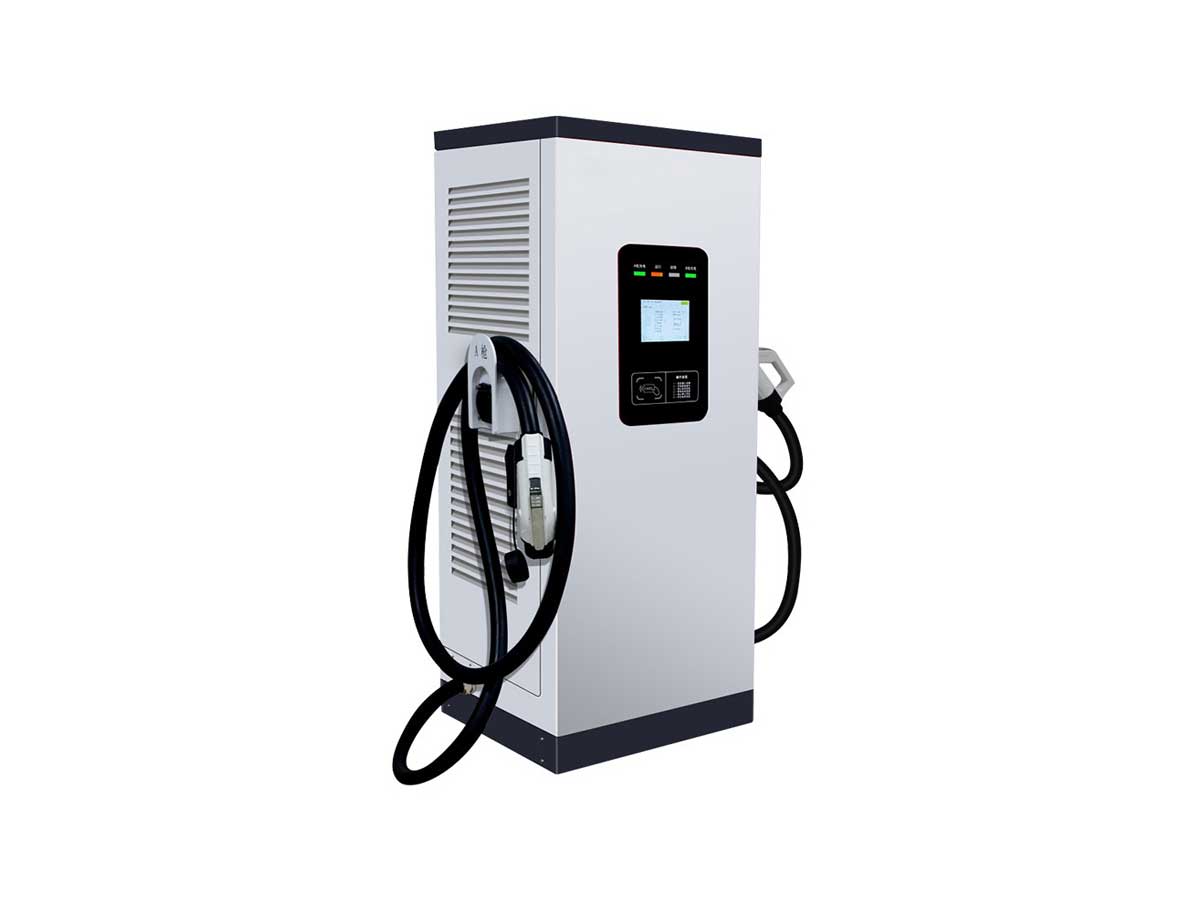

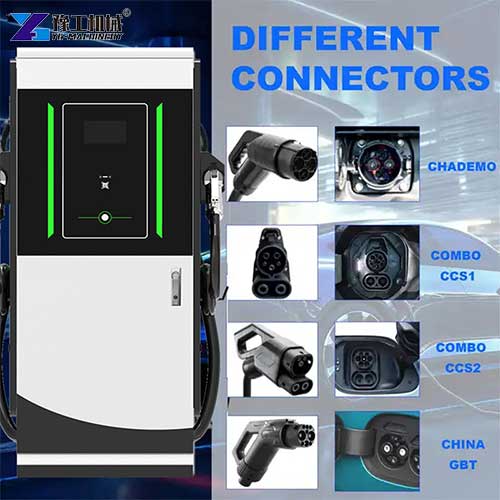
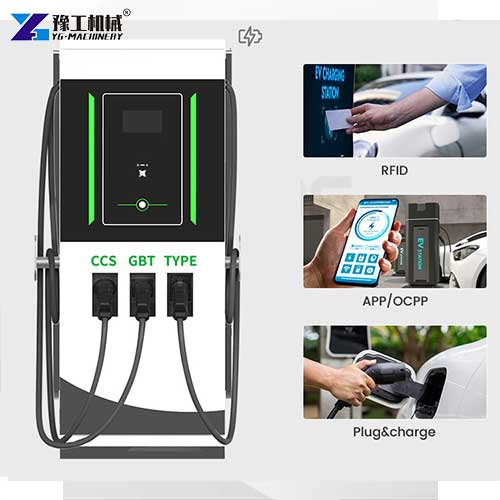
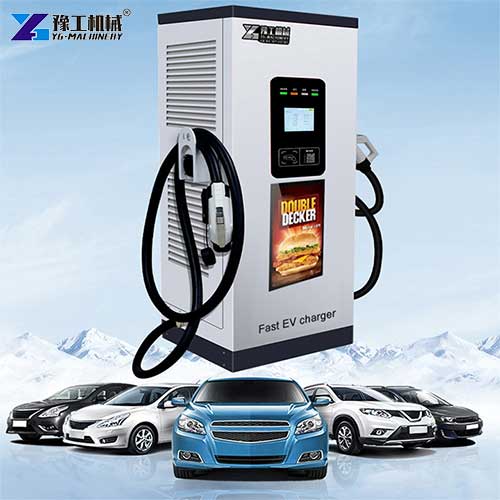
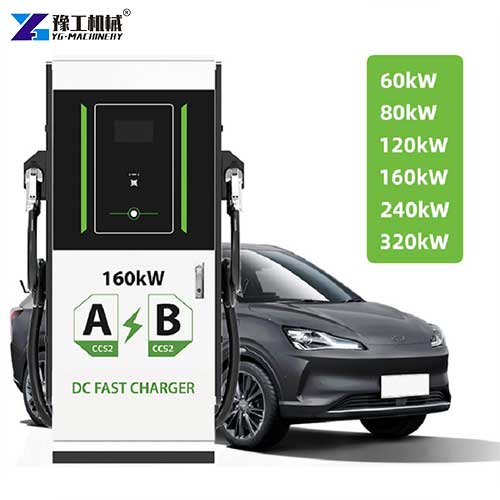
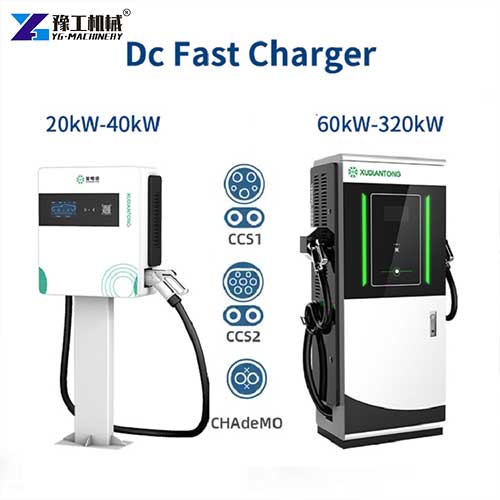
A DC car charging pile is the core equipment for high-speed electric vehicle charging, designed to deliver rapid energy replenishment for commercial and public use. Unlike slow AC chargers that rely on onboard vehicle converters, this DC car charging pile converts AC power directly to DC power inside the unit, bypassing the vehicle’s onboard charger and drastically cutting charging time. It can replenish 60-80% of an EV’s battery in just 30 minutes, making it essential for locations where drivers need quick turnaround times. Our YG series offers three power options: 60KW, 80KW and 120KW, all compatible with all mainstream electric vehicle models on the global market.
DC Car Charging Pile Parameter
| Parameter | YG-60KW | YG-80KW | YG-120KW |
| Rated Power | 60KW | 80KW | 120KW |
| Input Voltage | AC380V±20% | AC380V±20% | AC380V±20% |
| Output Voltage | 200-750VDC | 200-750VDC | 200-750VDC |
| Single Gun Current (500V range) | 0-90A | 0-120A | 0-160A |
| Single Gun Current (750V range) | 0-60A | 0-80A | 0-107A |
| Cable Length | 5m | 5m | 5m |
| Efficiency | ≥94.5% | ≥94.5% | ≥94.5% |
| Protection Level | IP54 | IP54 | IP54 |
Why Invest in a DC Car Charging Pile?
Global electric vehicle adoption is growing exponentially, creating unprecedented demand for reliable fast charging infrastructure. Property owners, gas station operators and commercial businesses that install an electric vehicle charging pile gain a significant competitive advantage by attracting EV drivers who will spend time and money on their premises while charging.
EV charging stations generate dual revenue streams: direct charging fees and increased foot traffic to adjacent retail, food and beverage businesses. Studies show that EV drivers spend an average of 20-30 minutes at charging locations, resulting in 30-50% higher average transaction values compared to regular customers. Installing charging infrastructure also increases property value and meets growing regulatory requirements for new commercial developments. For businesses looking to future-proof their operations, investing in an electric vehicle charging pile is no longer optional but a strategic necessity.
Three Main Types of EV Charging Piles
EV charging equipment is primarily classified by charging method, with three distinct categories serving different use cases and customer needs:
1. AC Slow Charging Stations
AC chargers deliver power ranging from 3.3 kW to 22 kW. They output AC power and rely entirely on the vehicle’s onboard charger to convert it to DC power for battery storage. This results in relatively slow charging speeds, typically taking 6-8 hours to fully charge a vehicle with a 400km driving range.
The main advantages of AC chargers are their simple structure, low upfront cost and easy installation. They are best suited for everyday slow charging scenarios where vehicles will be parked for extended periods, such as home garages, private parking spaces in residential areas and company employee parking lots.
2. DC Rapid Chargers (DC Car Charging Pile)
DC charging piles offer power outputs from 30KW up to 480KW. Their core advantage is rapid energy replenishment, capable of restoring 60-80% of a vehicle’s battery capacity within 30 minutes. Unlike AC chargers, they perform the AC-to-DC conversion internally, delivering power directly to the vehicle’s battery.
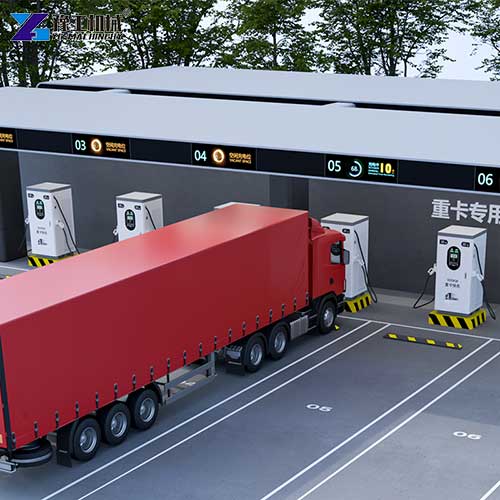
DC car charging piles require connection to 380V three-phase industrial power and feature a more complex structure with higher technical content. They serve as the core component of public EV charging stations, including highway service areas, urban commercial districts and gas station charging networks. They are ideal for long-distance travel, emergency energy replenishment and the efficient turnover needs of commercial vehicles such as ride-hailing and logistics fleets, making them the current “mainstay” model of public charging infrastructure.
3. AC/DC Integrated Charging Pile
This type combines both AC slow charging and DC fast charging functions in a single unit, allowing flexible switching between charging modes according to different vehicle needs. Its multi-gun design maximizes space utilization, enabling multiple vehicles to charge simultaneously from the same equipment.
AC/DC integrated chargers are suitable for diverse charging scenarios such as large public parking lots and logistics parks where both short-stay fast charging and long-stay slow charging are required. However, they have a relatively higher initial cost and more complex maintenance requirements compared to single-mode chargers.
Core Components of a DC Charging Pile
Understanding the core components helps you evaluate the quality and reliability of any charging equipment:
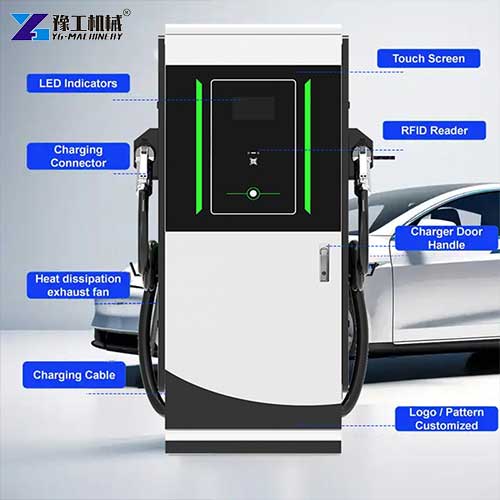
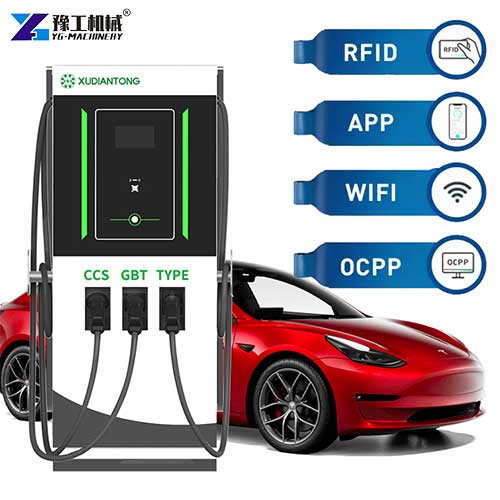
- Power Module: The heart of the system, responsible for converting AC power to DC power. Our units use high-efficiency modules that deliver consistent performance and long service life.
- Intelligent Control System: Manages charging sessions, monitors battery status and ensures safe operation. It automatically adjusts charging current based on the vehicle’s requirements to prevent battery damage.
- Charging Gun and Cable: Designed for heavy daily use with durable insulation and ergonomic handling. All our units come with standard 5-meter cables that provide a flexible parking space layout.
- Human-Machine Interface: Features an easy-to-use touchscreen display that shows charging status, cost and remaining time for drivers.
Model Selection Guide for Different Business Scenarios
YG-60KW: The most economical option, ideal for residential communities, office parks and small retail centers. It delivers 0-90A current at 500V and handles moderate daily traffic efficiently.
YG-80KW: The best-selling balanced model, perfect for urban commercial districts, gas stations and medium-sized shopping malls. It provides 0-120A current at 500V and serves higher traffic volumes with faster charging speeds.
YG-120KW: The high-performance option, designed for highway service areas, logistics parks and large commercial centers. It delivers 0-160A current at 500V and maximizes throughput for peak traffic periods.