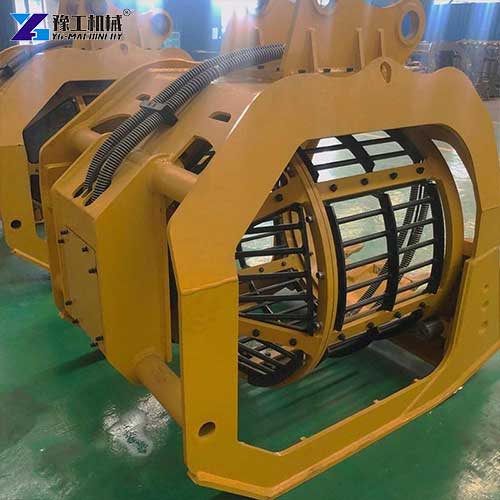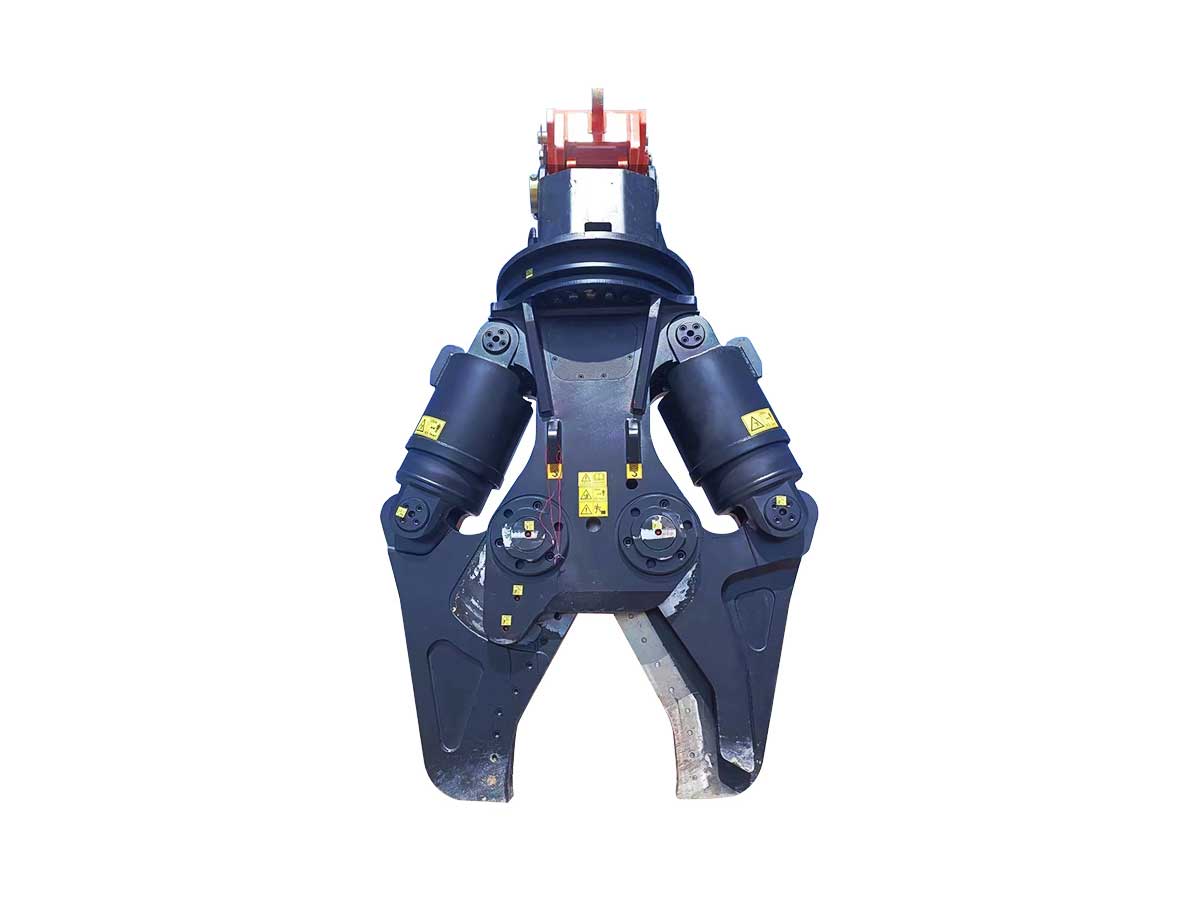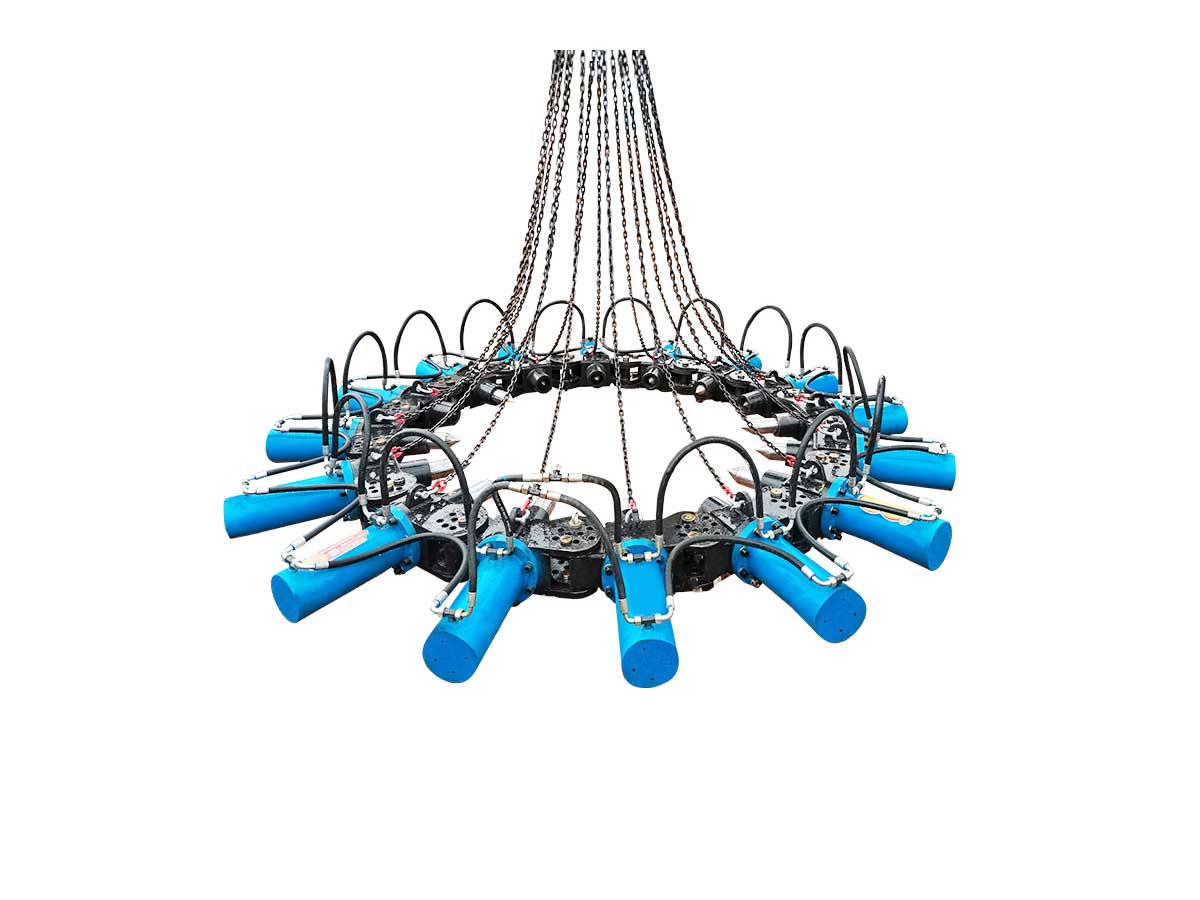

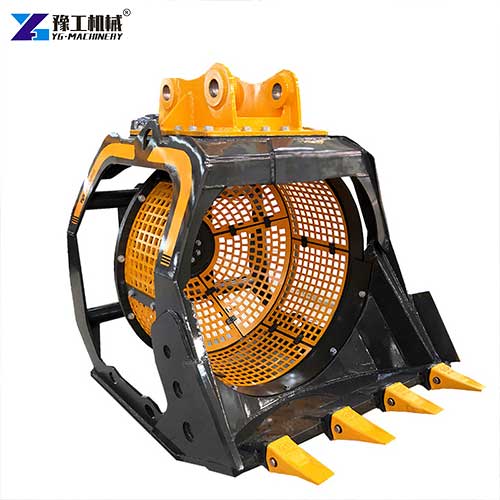

A rotary screening bucket is a professional excavator attachment designed for on-site material screening and grading. It installs directly on the excavator arm, uses hydraulic power to drive the drum rotation, and separates mixed materials by particle size through the screen mesh. It eliminates the need for fixed screening equipment and manual sorting, allowing you to complete material grading directly on the construction site. And it is widely used for soil and rock separation, construction waste sorting, river silt cleaning and other scenarios, compatible with 1 to 50 ton excavators of all mainstream brands. If you are looking for an excavator screening bucket for sale, please feel free to contact the YG team for detailed product information and a free quote.
Rotary Screening Bucket Parameters
| Model Number | Applicable Tonnage of Excavator(T) | Operating Flow(L/min) | Working Pressure(Mpa) | Self Weight(Kg) | Number of Revolutions Per Minute(RPM) |
| YG01 | 1.5-3 | 20 | 10-12 | 158 | 35 |
| YG02 | 3.5-5.5 | 30 | 10-12 | 245 | 60 |
| YG08 | 6-10 | 45 | 12-15 | 530 | 65 |
| YG012 | 11-18 | 65 | 15-18 | 1020 | 65 |
| YG016 | 19-28 | 80 | 18-22 | 1920 | 65 |
| YG018 | 29-38 | 150 | 18-22 | 2430 | 65 |
How Does The Rotary Screening Bucket Work?
The operation of this excavator screening attachment follows a simple and efficient mechanical logic, ensuring stable and continuous screening work without manual intervention:
- First, the operator loads mixed materials into the bucket through the excavator arm, just like using a regular digging bucket. No extra auxiliary feeding equipment is required for the whole process.
- Then, the built-in hydraulic motor drives the entire screening drum to rotate at a constant speed. The spiral guide blades inside the drum drive the materials to roll and turn continuously, which effectively avoids material clogging and ensures all particles can fully contact the screen mesh.
- As the device rotates, particles smaller than the screen mesh aperture drop straight through the holes to the ground. Guide blades move oversized particles and impurities forward and discharge them evenly from the bucket’s front outlet.
- You can adjust the drum rotation speed according to the material type and humidity to achieve the best screening effect for different working scenarios.
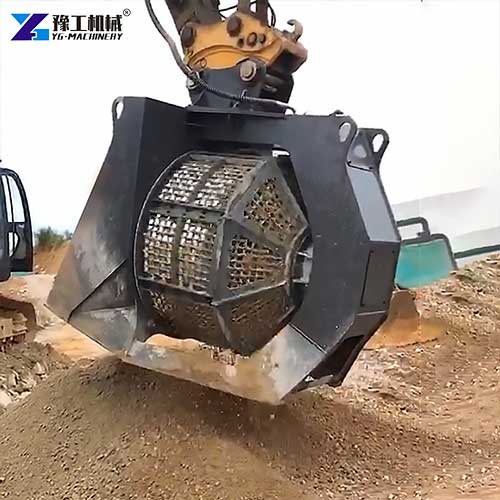

YG Rotary Screening Bucket Application
- Demolition projects: Sort construction waste, separate concrete blocks, bricks and soil for classified recycling
- Earthwork projects: Screen and grade soil and rock mixture, separate usable backfill material directly on site
- River and lake regulation: Clean and screen silt, separate impurities and sediment for ecological restoration
- Landscaping projects: Screen topsoil, remove stones and debris for greening and planting
- Mining and quarrying: Grade crushed ore, separate different particle sizes for subsequent processing
- A rotating screening bucket delivers the most cost-effective option for small and medium-sized projects with frequent material screening needs. Operators can move it to various job sites together with the excavator, so no fixed installation is required. This excavator screening attachment turns your excavator into a mobile screening station, bringing great flexibility to your construction work.
6 Features of Rotary Screening Bucket
We design every rotary screening bucket according to harsh on-site working conditions, with reliable performance and long service life:
- Interchangeable screen mesh with an aperture ranging from 10 mm to 150 mm, you can replace different mesh sizes according to different material grading needs, no need to purchase additional equipment
- Hydraulic-driven rotation system, stable operation and low noise, adjustable rotation speed according to material characteristics
- Main body made of high wear-resistant NM400 steel, reinforced welding at all stress positions, resistant to impact and wear, adapts to long-term heavy load work
- Fully sealed bearing design effectively prevents dust, mud and water from entering, reduces daily maintenance frequency and extends service life
- Fits 1 to 50 ton excavators of all mainstream brands, standard interface, no modification to the excavator is required for installation
- High screening efficiency, can process 20 to 30 cubic meters of material per hour, far exceeding manual sorting efficiency.
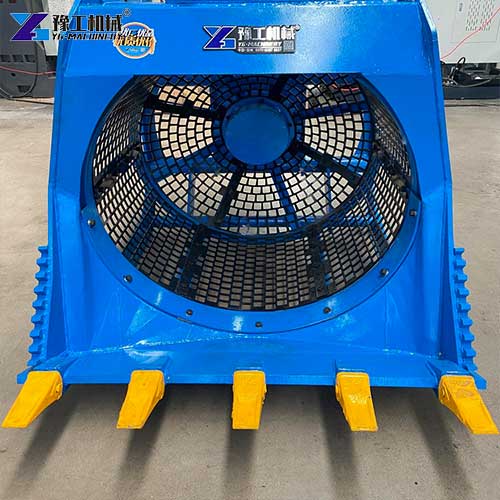

Common Materials You Can Process With A Screening Bucket
Many potential buyers do not fully understand the wide range of applications of this attachment, as it can process almost all common granular materials on construction sites:
On construction and demolition sites, a rotating screening bucket separates concrete blocks, bricks, wood, plastic and soil from construction waste. Workers can recycle most materials directly on site. And for earthwork projects, it can separate rocks, gravel and fine soil, grading materials for different uses such as backfill, road base and landscaping. For river regulation projects, it can separate plastic waste, branches and stones from silt, helping to clean and restore riverbeds efficiently. For mining sites, it can grade crushed ore into different particle sizes, meeting the requirements of subsequent processing links. It can also screen organic waste, branches and stones in agricultural and landscaping projects, providing qualified soil for planting.
4 FAQ About Rotary Screening Bucket
A: Yes, we provide screen meshes of various aperture specifications from 10 mm to 150 mm. You can replace the corresponding mesh according to the particle size you need to separate. The replacement process is simple and fast.
A: We have complete models matching 1-ton mini excavators to 50-ton heavy excavators. We will recommend the most suitable model according to your excavator tonnage.
A: Yes, the optimized drum rotation structure can avoid clogging when screening wet and sticky materials, and you can also adjust the rotation speed to adapt to different material humidity.
A: We have a complete model range covering all common excavator tonnages. You can contact us directly to get the corresponding model parameters and quotation.