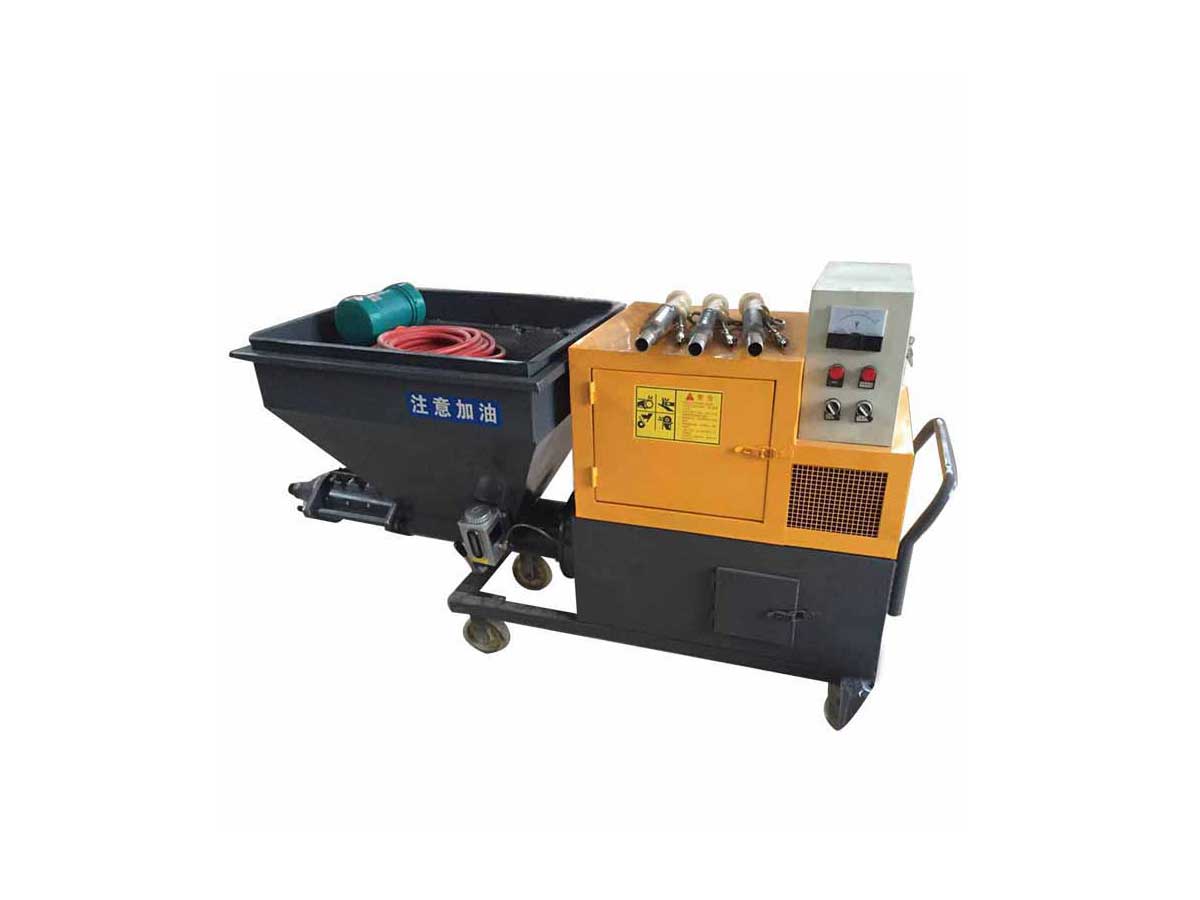


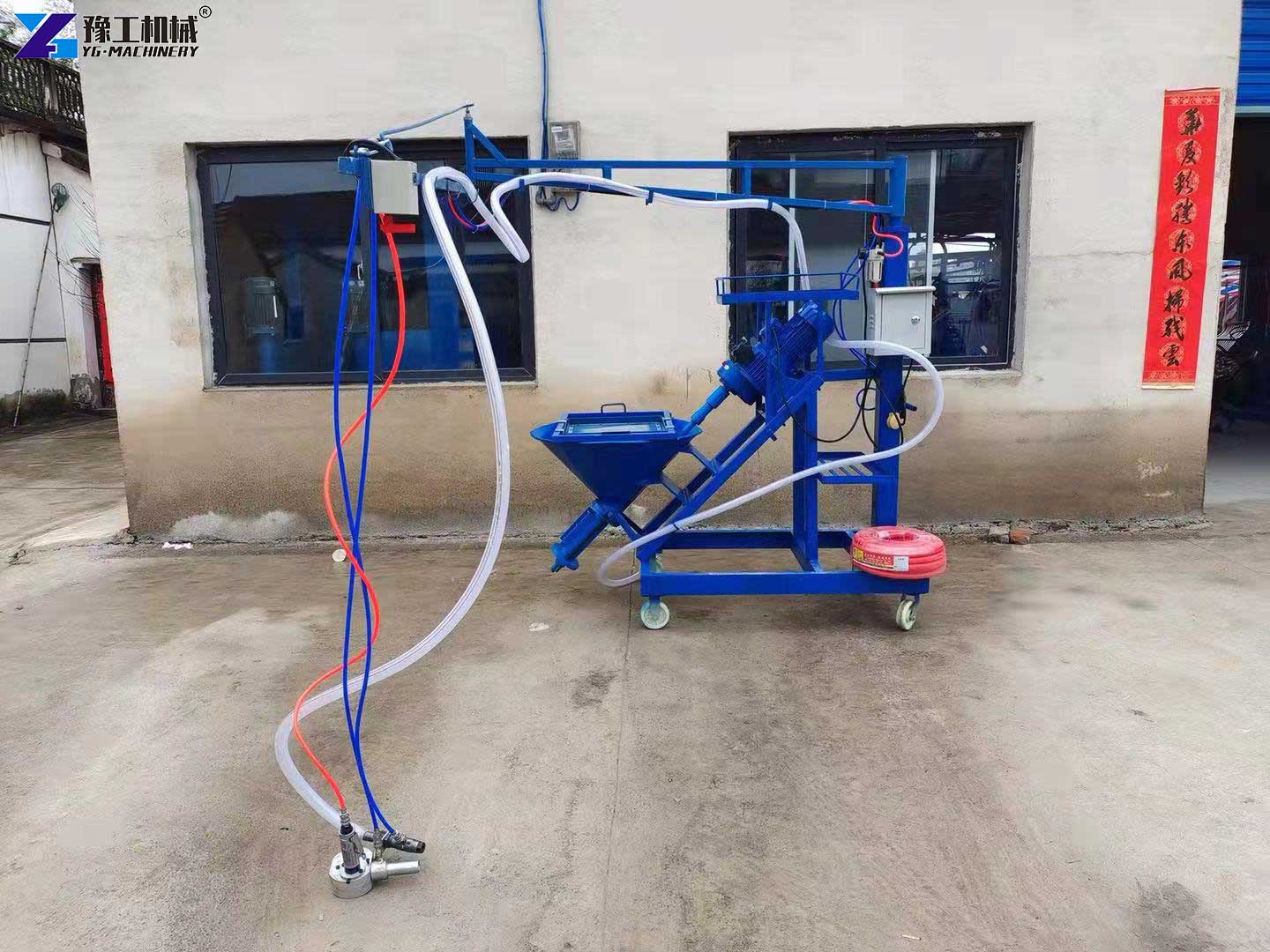
A GRC machine is a professional construction equipment designed for spraying glass fiber reinforced concrete (GRC) mixtures. It replaces traditional manual GRC laying work, greatly improving construction efficiency and product quality. This GRC equipment mixes cement mortar, glass fiber and other additives evenly, then sprays them onto the mold or wall surface through a high-pressure spray gun, forming a uniform and high-strength GRC layer.
A GRC spray machine is widely used in the production of GRC decorative components, exterior wall decoration, landscape sculpture, Roman columns, reliefs and other GRC products. It is essential equipment for GRC processing factories, decoration engineering teams and landscape construction teams. Compared with manual work, it can greatly reduce labor intensity and improve product consistency.
GRC Machine Technical Parameters
| Product name | Glass Fiber Reinforced Concrete GRC Spray Machine |
| Power | 2.2-4.0kw |
| Voltage | 380v 50hz |
| Speed | 20-200r/min |
| Workspace | 4.5m |
| Delivery capacity | 300-1600kg/h |
| Production efficiency | 200-400m2/h |
| Volume | 60L |
| Dimension for the sprayer | 2000*1050*1600mm |
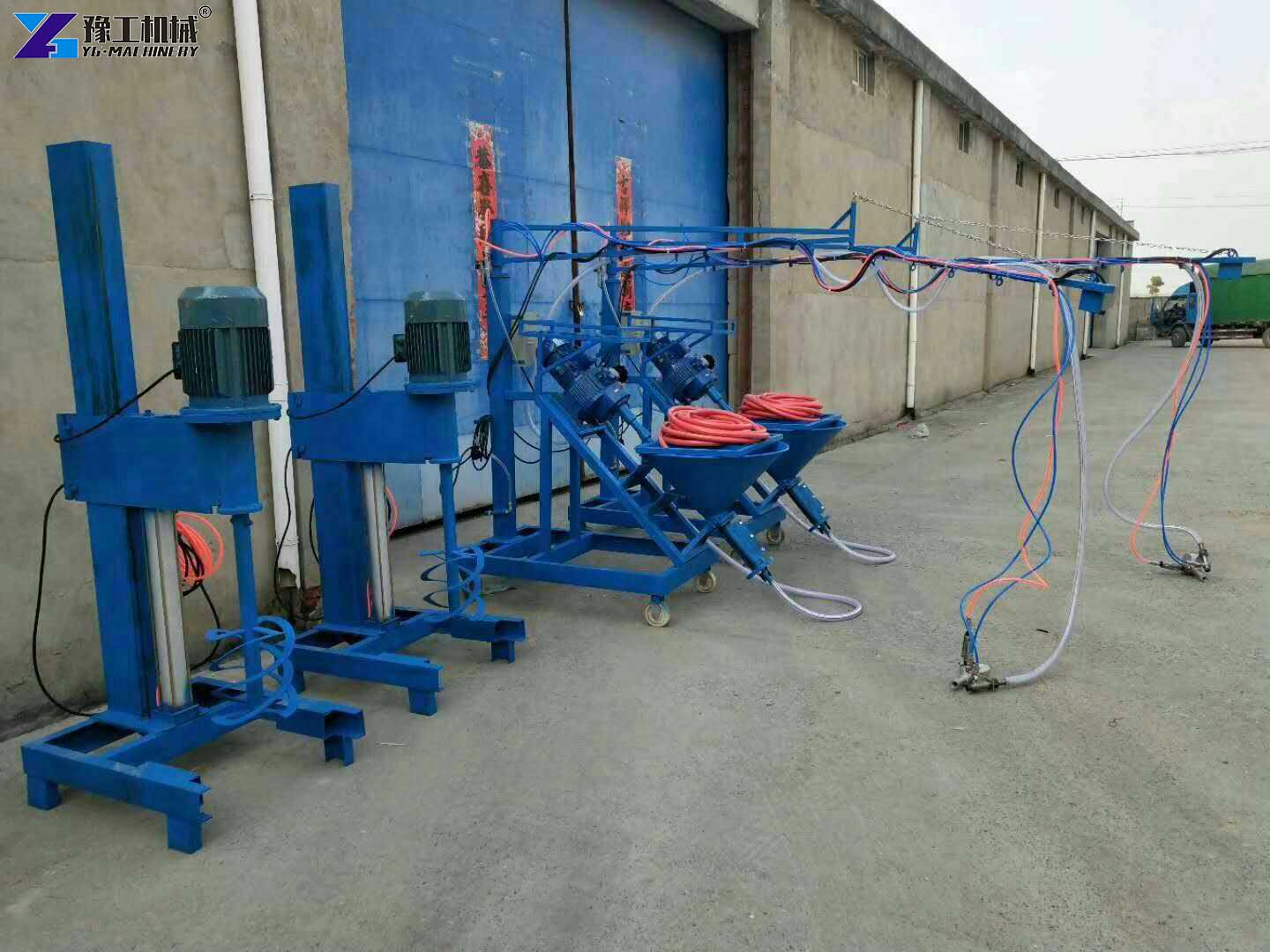
| Dimension for the mixer | 1550*1000*2100mm |
| Total weight | 800kgs |

Why Is the GRC Machine Better Than Manual GRC Laying?
Many GRC manufacturers still use the manual laying method to produce GRC products, but compared with machine spraying, manual work has obvious shortcomings. A GRC Spraying Machine can solve almost all pain points of manual production:
1. Much higher work efficiency
Manual laying requires workers to smear the GRC mixture layer by layer on the mold, which is very slow. A spraying machine can complete the spraying of 1 square meter of GRC layer in just a few minutes, which is 3-5 times faster than manual work. For large-scale GRC projects, the efficiency improvement is even more obvious.
2. More uniform and stable quality
Manual laying relies entirely on worker experience, and the thickness of the GRC layer is easy to be uneven, which affects the strength and appearance of the product. Machine spraying can control the spraying thickness and fiber content very accurately, ensuring that every part of the product has uniform density and strength, and the product qualification rate is much higher than that of manual work.
3. Less material waste
Manual laying often causes material dropping and waste during the smearing process, with a waste rate of about 10-15%. The closed conveying and spraying system of the GRC equipment has almost no material waste, with a waste rate of less than 2%, which can save a lot of raw material costs for long-term production.
4. Lower labor demand
Manual laying requires 3-4 skilled workers to complete a set of GRC product production. The GRC spraying machine only needs 2 workers: one responsible for operating the spray gun, and one responsible for raw material mixing. It reduces the dependence on skilled workers and greatly reduces labor costs.

Workflow of YG GRC Machine-7 steps
When using a GRC machine for spraying work, you can follow this standard 7-step process to ensure stable product quality and smooth equipment operation:
1. Raw Material Preparation & Inspection
First, prepare all raw materials strictly according to GRC production standards, including fine aggregate, cement, mortar and alkali-free glass fiber roving. Filter the mortar to remove large particles that may clog pipelines, and check the fiber thickness to ensure uniform cutting size in subsequent steps.
2. Mortar Dosing & Continuous Delivery
The well-proportioned cement mortar enters the feeding hopper of the GRC machine. The built-in stirring blade keeps the mortar in stable fluidity, supporting long-term continuous production without sedimentation or stratification.
3. Constant-Pressure Screw Pump Conveying
A wear-resistant screw pump transports the mortar steadily through the delivery hose to the spray gun. The pulse-free pumping system ensures even mortar output, with no sudden flow fluctuations that would affect the spraying quality.
4. Automatic Glass Fiber Cutting & Independent Conveying
The independent fiber feeding module cuts long glass fiber rovings into customized short filaments through a high-speed rotary chopper. The chopped fibers are transported to the nozzle through a separate dedicated pipeline, completely separated from the mortar pipeline.
5. Synchronous Mixing At The Nozzle
The cement mortar and chopped glass fibers converge precisely inside the spray gun head. Compressed air atomizes the mixed material evenly, so glass fibers disperse uniformly across the entire sprayed layer without agglomeration.
6. Layered Spraying & Manual Trimming
The operator sprays the wet GRC material layer by layer until reaching the designed product thickness. Workers manually trowel each freshly sprayed layer to eliminate air bubbles, which greatly improves the compactness, tensile strength and flexural strength of the finished product.
7. Full Pipeline Self-Cleaning & Storage
After finishing daily production, inject clean water into the hopper and activate the circulation cleaning function. The water flushes residual mortar out of the pump, hoses and spray gun to avoid blockage. After cleaning, wipe all detachable parts dry and store them properly to prevent moisture damage.
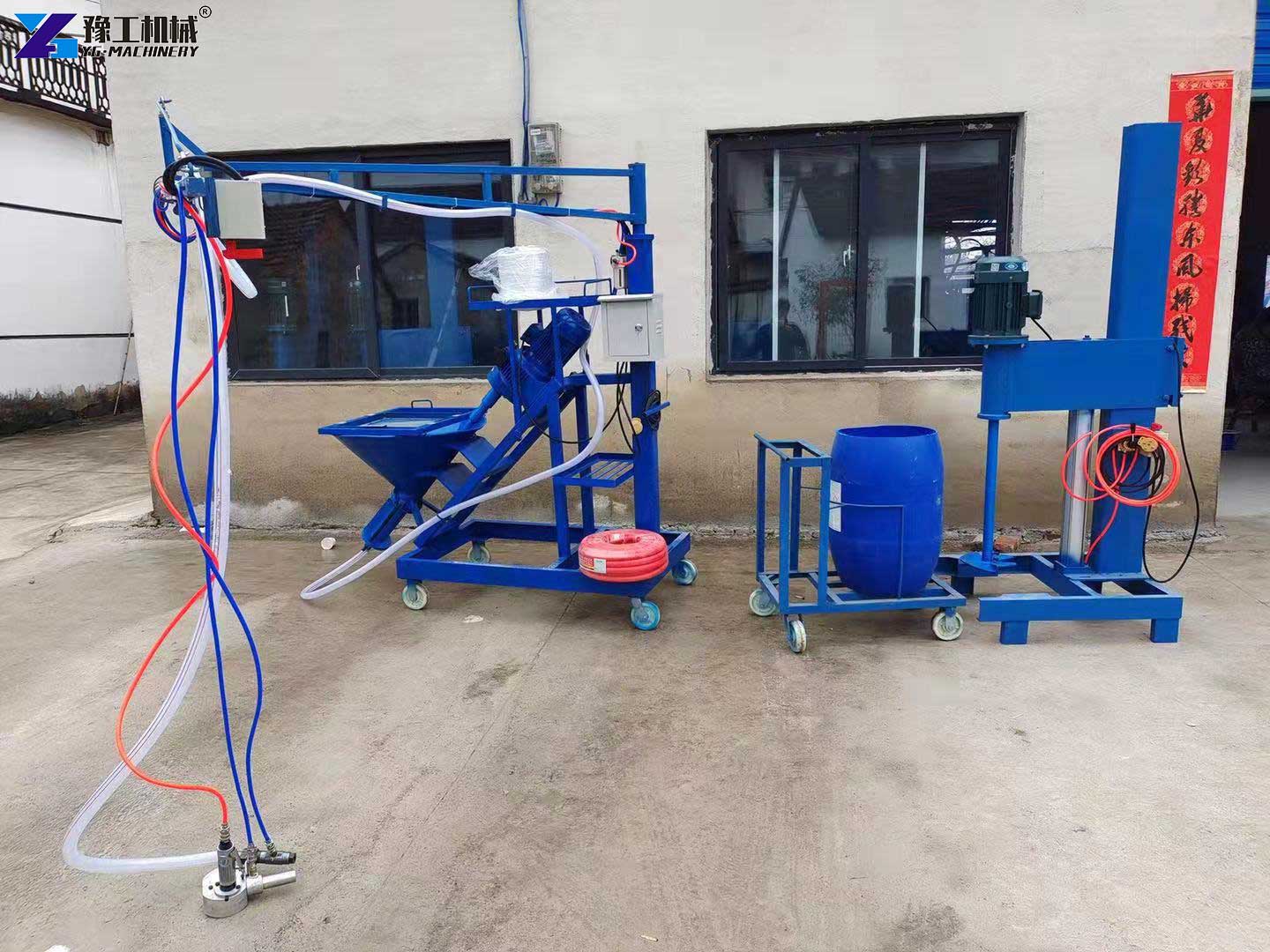
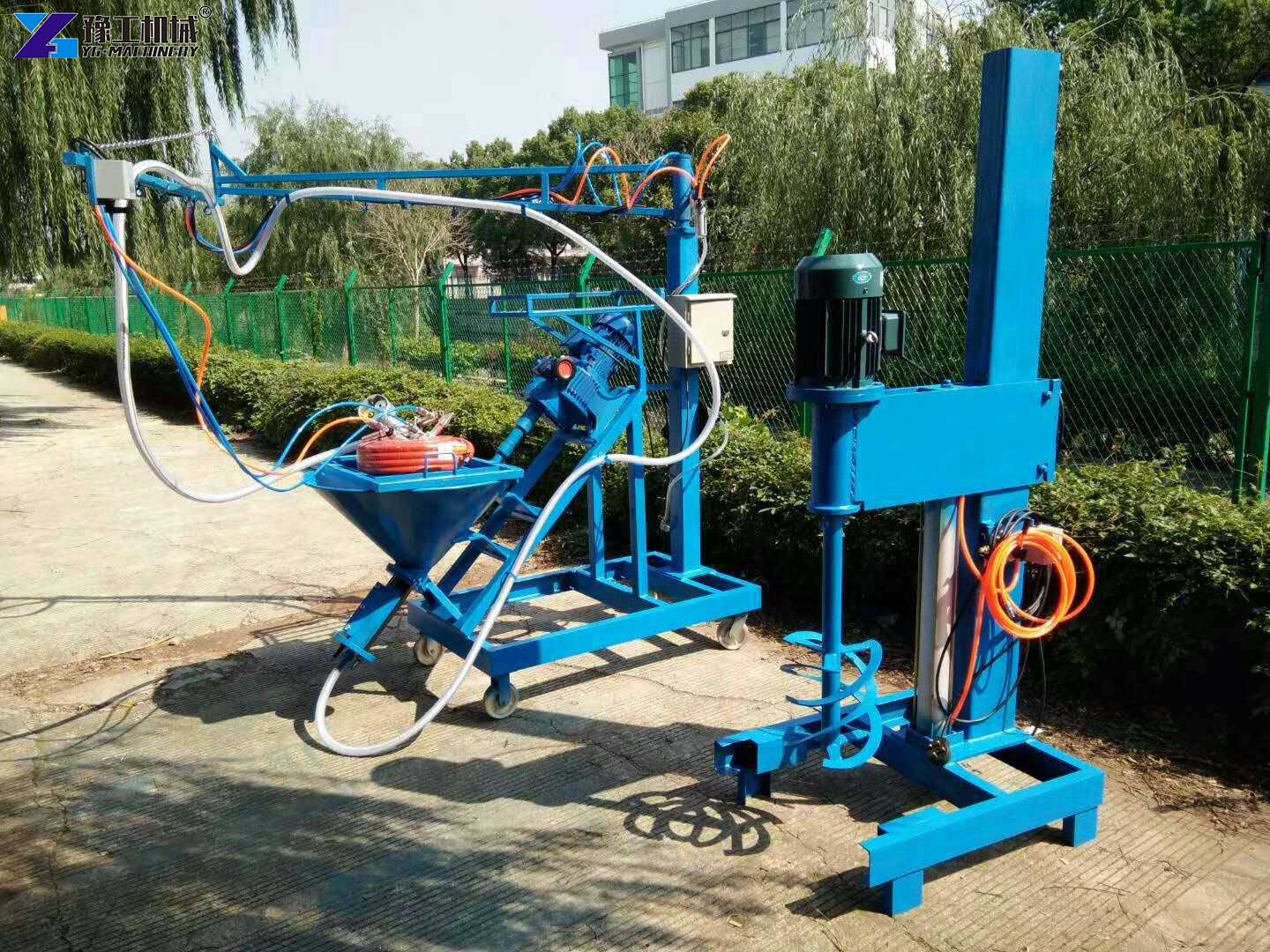
Our GRC machine is designed according to the actual needs of GRC production and construction, with stable performance, high efficiency and low failure rate, which can help you greatly reduce production costs and improve product quality. If you are looking for reliable GRC spraying equipment for your factory or project, or want to know more about product parameters and prices, contact us today to get detailed product specifications and a free quotation for your needs.