
Why Choosing the Right Spider Crawler Crane Matters?
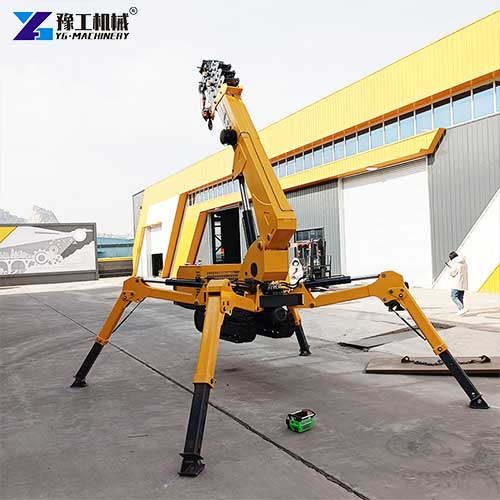
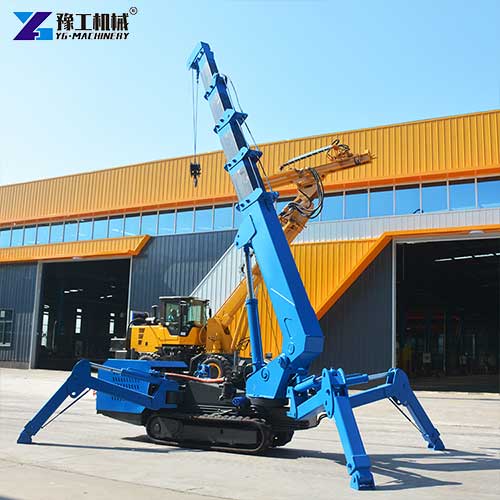
When working in confined spaces such as indoor construction sites, glass curtain wall installation, or narrow urban alleys, traditional truck-mounted cranes simply cannot fit. This is where a spider crawler crane becomes indispensable. These compact yet powerful machines offer exceptional maneuverability and lifting capacity in tight areas where no other crane can operate. However, selecting the wrong model can lead to inefficiency, safety risks, or unnecessary costs. In this guide, we break down the YG series – YG-3, YG-5, and YG-8 – to help you choose the best spider crawler crane for your specific projects. If you are looking for a mini spider crane for sale, understanding the differences in lifting radius, hook speed, and transport dimensions will save you time and money.
Spider Crawler Crane Parameters:
| Model | YG-3 | YG-5 | YG-8 | |
| Specification | 3t | 5t | 8t | |
| Maximum working radius | 8.83m×0.15t | 14m×0.5t | 16.5m | |
| Maximum above-ground head | 9.9m×0.7t | 16.8m | 18m | |
| Winch device | Hook Speed | 0-8m/min(4 rope) | 12m/min(4 rope) | 12m/min(4 rope) |
| Rope diameter | φ8mm×45m | Φ11mm×80m | Φ11mm×80m | |
| Telescopic system | Boom Type | 5-section boom, pentagonal structure | 5-section boom, pentagonal structure | 5-section boom, pentagonal structure |
| Boom Length/Time | 3.1m-9.2m/20sec | 12.3m/54sec | 12.3m/54sec | |
| Up and down | Boom Angle/Time | 0°~78°/13sec | 0°~78°/13sec | 0°~78°/13sec |
| Slew system | Slew Angle/Speed | 0-360°continuous/60sec | 0-360°continuous/38sec | 0-360°continuous/38sec |
| Traction system | Walking Way | Hydraulic motor drives | Hydraulic motor drives | Hydraulic motor drives |
| Walking Speed | 0~2.5km/h | 0~2.5km/h | 0~2.5km/h | |
| Grade Ability | (25°)36% | (25°)36% | (25°)36% | |
| Operating system | Operation type (Boom/outrigger) | Manual operation, manual walking(remote control option) | Manual operation, manual walking(remote control option) | Manual operation, manual walking(remote control option) |
| Operating characteristics | Manual operation, remote control | Manual operation, remote control | Manual operation, remote control | |
| Transport parameters | L*W*H(mm) | 2950*980*1560 | 5000*1500*1900 | 5000*1600*2180 |
| Total weight(kg) | 2700 | 6200 | 7200 | |
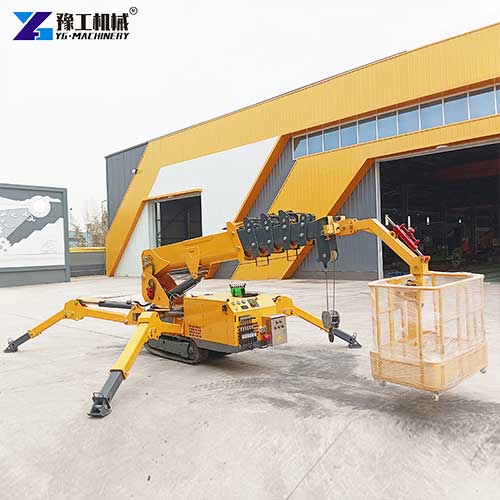
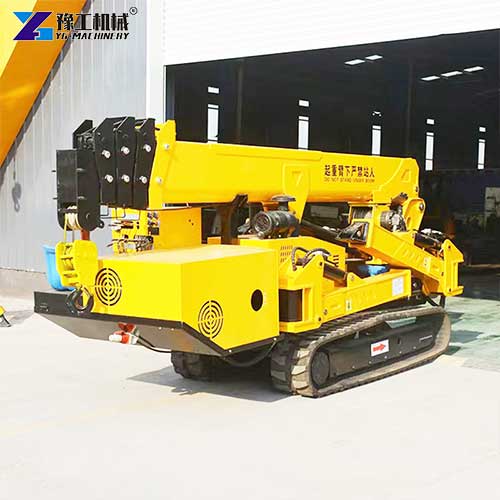
Spider Crawler Crane Application:
- Glass curtain wall installation – Lifting glass panels from inside a building or from a narrow street.
- Indoor heavy equipment placement – Moving HVAC units, generators, or transformers into basements or upper floors via elevator shafts or windows.
- Bridge inspection and repair – Working on confined bridge decks or underneath structures.
- Power substation maintenance – Lifting transformers in areas where overhead lines restrict tall cranes.
- Landscaping and tree work – Removing large branches or placing rocks in tight gardens.
Model Comparison and Recommendation:
YG-3: The Ultra-Compact Choice
Best for: Indoor work, historical renovations, elevator shaft installations, and any site with sub-1m wide access. Its light weight (2700kg) means it can be used on upper floors with floor loading approval. The slower hook speed (0-8m/min) is acceptable for precision placement. If you need a mini spider crane for sale that can go through a standard doorway, this is it.
YG-5: The Balanced Performer
Best for: General urban construction, glass wall projects up to 5 stories, and bridge work. It offers a good compromise between reach (16.8m) and transport size (5000×1500×1900mm). The 12m/min hook speed and 80m rope length improve productivity. Many contractors choose this as their first mobile spider crane.
YG-8: The Heavy Lifter
Best for: Industrial maintenance, power plant work, and heavy equipment placement. With 8t capacity and 18m height, it rivals much larger cranes but fits in a 1.6m wide footprint. The 7200 kg weight requires more planning for transport, but the lifting power justifies it.
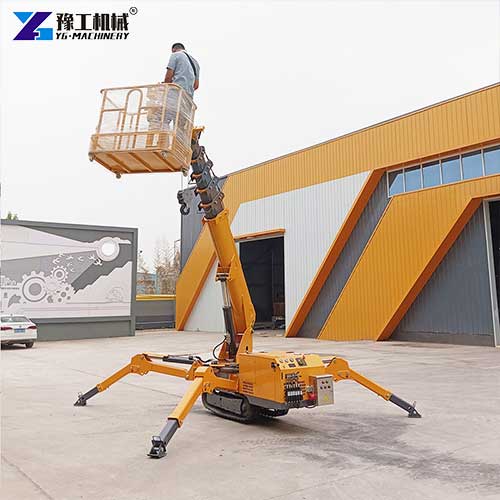
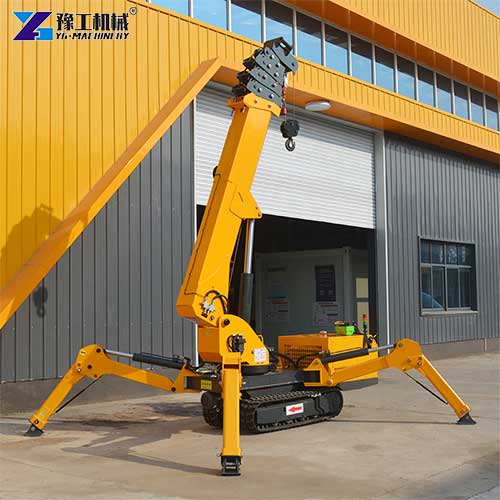
How to Select the Right Model: A 5-Step Guide
- Step 1: Assess your typical access point. The smallest model can squeeze through a standard single doorway. If your job site involves entering existing buildings through person-sized openings, that alone dictates your choice. Larger models need a freight elevator or roll-up door access.
- Step 2: Consider where the crane will work. Indoor slab floors can handle lighter models without reinforcement. For outdoor uneven terrain or soft ground, the heavier models offer better stability and track grip, but require more careful ground preparation.
- Step 3: Think about how often you reposition. If you move between lifts constantly, faster hook speed and longer rope reduce cycle time. For single-position lifts or precision placement indoors, slower, controlled movement is actually safer.
- Step 4: Evaluate operator positioning. Tight corners or overhead hazards may block the operator’s view. A remote control becomes essential in those cases. All models offer this option, but consider it early in your selection.
- Step 5: When choosing a crane, select based on the actual maximum load capacity, not the maximum radius. Many buyers choose oversized specifications because they only focus on the numbers. The correct approach is to check the actual weight and the distance that needs to be lifted. Smaller models can usually handle most jobs and can be installed where large cranes are inaccessible.
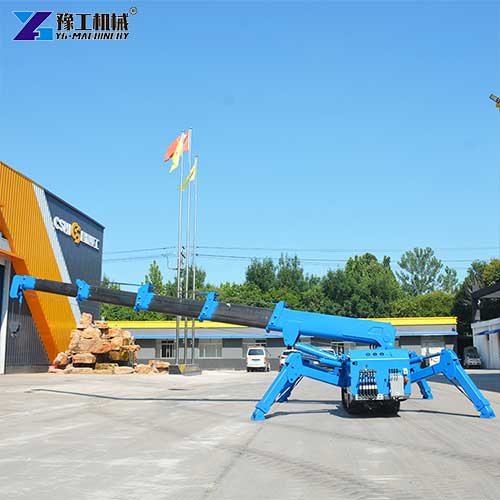
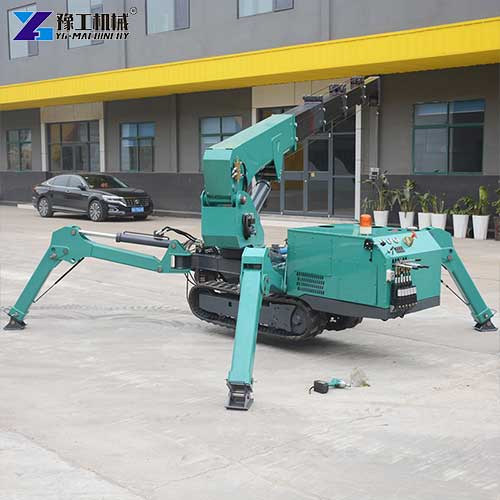
Mini Spider Crane For Sale– YG Machinery Manufacturer
If you are looking to purchase a mobile spider crane or simply want a quote tailored to your specific application, please contact us today. Please provide your typical load capacity, maximum lifting height, and work site dimensions. We will help you select the appropriate model.