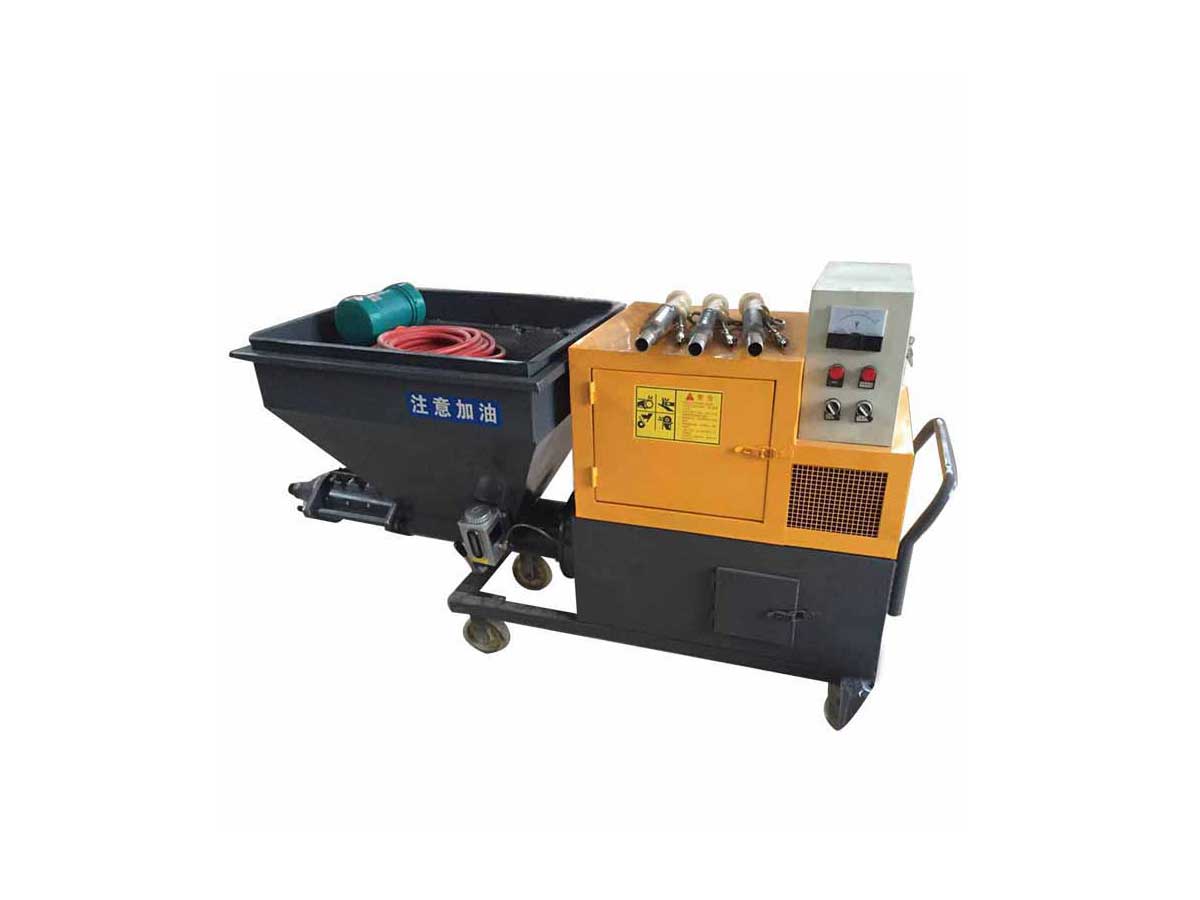

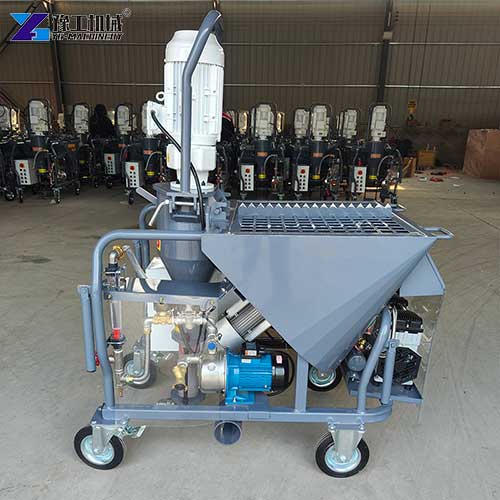
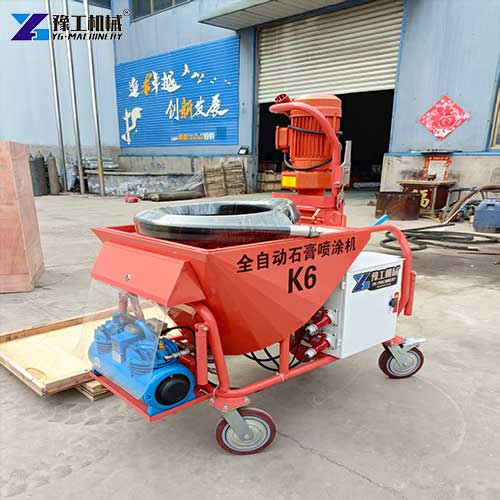
A gypsum spray plaster machine does one job: it takes pre-mixed gypsum plaster and sprays it onto walls and ceilings. Fast. Even. With one operator and one assistant, a crew covers 200-300 square meters per shift. Manual troweling covers 30-40 square meters per day with the same crew. The difference is not marginal. It is 5 to 10 times faster.
The YG-20 gypsum plaster spray machine is built for this speed. It runs on 220V or 380V power, delivers 30L/min max flow with a 5.5KW motor, and reaches 20 meters vertically and 80 meters horizontally. The 115L hopper holds enough material for continuous spraying, reducing refill stops. At 145kg, it moves between job sites without a trailer. If you are comparing gypsum spraying machine price options and want to know whether the YG-20 matches your project requirements, contact us today.
Gypsum Spray Plaster Machine Parameters:
| Product Name | YG-20 Gypsum Spraying Machine |
| Voltage | 220V/380V |
| Max Flow | 30L/MIN |
| Main Power | 5.5KW |
| Vertical Spraying | 20m |
| Horizontal spraying | 80m |
| Hopper volume | 115L |
| Max Aggregate Size | 6mm |
| Weight | 145Kg |
| Dimension(L*W*H) | 110*70*140cm |
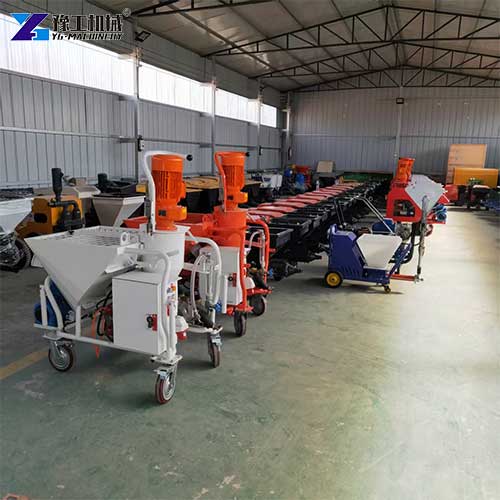
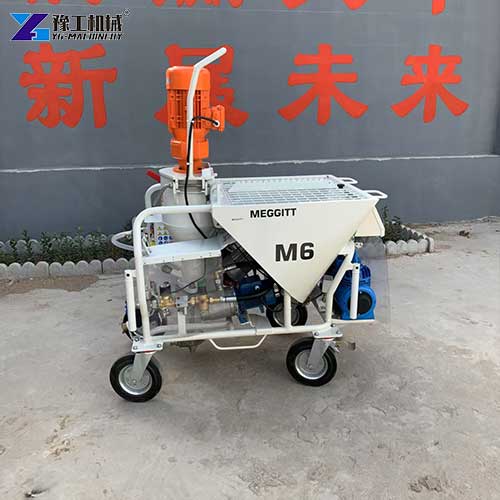
What Does a Gypsum Spray Plaster Machine Actually Do?
A gypsum spray plaster machine is not a complicated piece of equipment. It is a screw pump system that moves material from the hopper to the spray nozzle. The pump operates continuously, delivering a steady flow without pulsing. Compressed air atomizes the plaster as it leaves the nozzle, creating a fine, even mist that adheres well to walls and ceilings.
The operator controls the spray pattern and thickness by adjusting air pressure and gun angle. For rough base coats, use higher flow. For finish coats, reduce the flow for a thinner application. The pump maintains consistent pressure regardless of hose length—even at 80 meters horizontal distance, the spray pattern stays stable.
The electric gypsum spraying machine handles most standard plaster mixes with a maximum aggregate size of 6mm. It is designed for gypsum-based materials, including lightweight plasters, fire-resistant coatings, and soundproofing materials. It is not for cement mortar or heavy aggregates.
6 Features of Gypsum Spray Plaster Machine
A gypsum spray plaster machine is not for every job. It excels in specific applications.
- Interior wall and ceiling plastering. This is the primary application. The machine applies gypsum plaster to walls and ceilings in residential, commercial, and industrial buildings. The 20-meter vertical reach covers high ceilings without scaffolding.
- Ground leveling. The machine handles self-leveling screeds and floor underlayments. The 80-meter horizontal reach allows placement across large floor areas from a single position.
- Decorative plastering. From Venetian plaster to textured finishes, the machine enables intricate designs that would be labor-intensive to achieve manually. Architects and designers leverage this capability to create visually striking interiors.
- Drywall finishing. The gypsum plaster spray machine excels in applying joint compounds to drywall seams, corners, and fasteners, reducing the time required for taping and sanding.
- Fireproofing and soundproofing. Gypsum’s inherent fire-resistant and acoustic properties make it ideal for safety-critical environments. Spray machines ensure even coverage on structural elements like steel beams or ceiling panels.
- Restoration and repair. Older buildings with damaged plaster benefit from the precision of spray-applied gypsum, which seamlessly blends with existing surfaces.
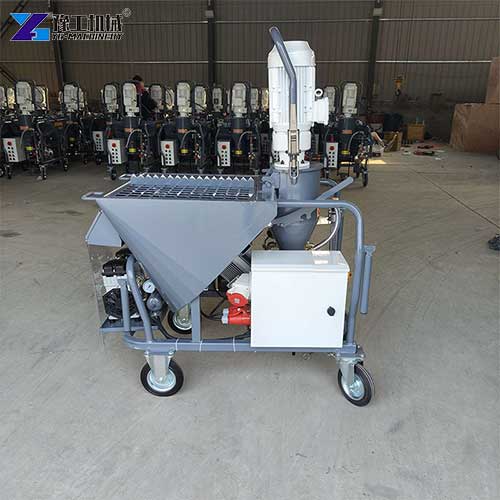
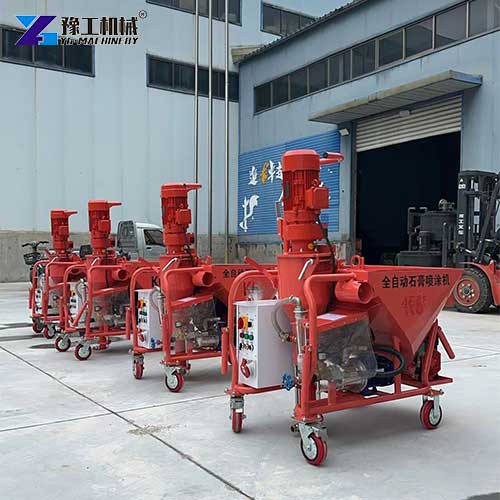
How to Choose the Right Gypsum Spray Plaster Machine?
The YG-20 electric gypsum spraying machine is designed for most plastering applications. Here is what to consider:
- Material type. The machine handles gypsum-based materials with a maximum aggregate size of 6mm. It is optimized for gypsum plaster, joint compounds, and decorative coatings. It does not handle cement mortar or heavy aggregates.
- Power supply. The YG-20 runs on 220V or 380V power. Check your site’s available power. If you work on sites with limited power, confirm the voltage before ordering.
- Project scale. The YG-20 covers 200-300 square meters per shift. For larger projects, the machine’s 115L hopper reduces refill frequency and the 80-meter horizontal reach allows placement across large areas from a single position.
- Portability. At 145kg, the YG-20 moves between job sites without a trailer. For contractors working on multiple small projects, the lightweight design is a practical advantage.
What Materials Work and What Don’t
The 6mm maximum aggregate size determines what materials this machine can handle and what it cannot. Understanding this before purchasing saves you from the frustration of a machine that cannot process your material.
Here is the bottom line: This electric gypsum spraying machine is for gypsum-based materials, not cement mortar.
Cement mortar requires a larger-diameter screw pump and higher pressure than this machine can deliver. The 6mm opening and 30L/min flow rate are designed for gypsum materials. Cement mortar is too dense and abrasive for this system.
Materials That Work
- Standard gypsum plaster. This is the most common material. Gypsum powder, sand, and additives mixed together typically have particle sizes in the 2- 4 mm range. The machine handles it without any issues.
- Lightweight gypsum plaster (with perlite or glass microspheres). Perlite particles are typically 3- 5 mm in diameter and pass through easily. These lightweight materials actually place less load on the pump than standard gypsum plaster.
- Fiber-reinforced gypsum. Fibers up to 6mm in length and diameter can pass through. Fibers longer than 6mm may wrap around the screw pump rotor and interfere with pumping.
- Insulating gypsum plaster. The aggregate is relatively coarse but still within the 6mm range. If the material feels slow to discharge, reduce the consistency slightly.
Materials That Do Not Work
- Cement mortar. The sand particles in cement mortar are typically 2- 5 mm, which theoretically could pass through. But cement mortar is far denser than gypsum and causes significantly more wear on the screw pump. Cement mortar also requires higher pumping pressure than the 5.5KW motor is designed to deliver. Running cement mortar through this machine will overload the motor and accelerate wear on the pumping system.
- Leveling mortars with large aggregates. Any material with aggregate over 6mm will get stuck in the pump or hoses, causing blockages and potential equipment damage.
- Joint compound (putty powder). While putty powder is very fine, it has high viscosity and poor flowability. It requires a different pumping approach. If you need to spray putty, use a dedicated putty sprayer or check with the manufacturer about compatibility.
A simple test: Take a handful of the material and feel the particle size. If the largest particles are no bigger than a grain of uncooked rice (about 6mm), the machine can handle it. And if the particles are noticeably larger than that, or if the material feels heavy and sandy, check whether it is suitable for this gypsum spray machine.
If you are comparing gypsum spraying machine price options and want to know whether the YG-20 matches your project requirements, contact us today.