
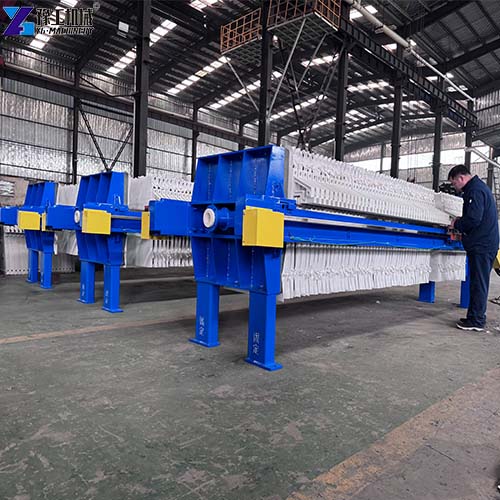
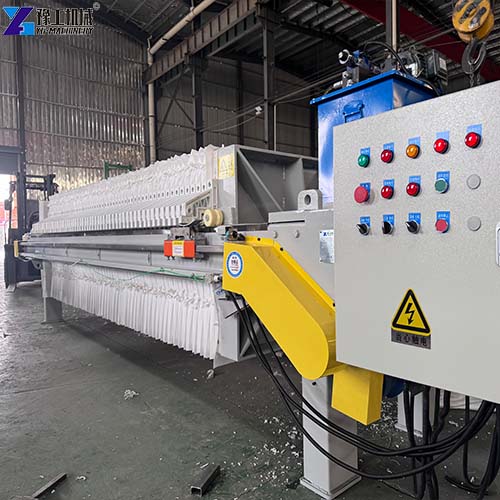
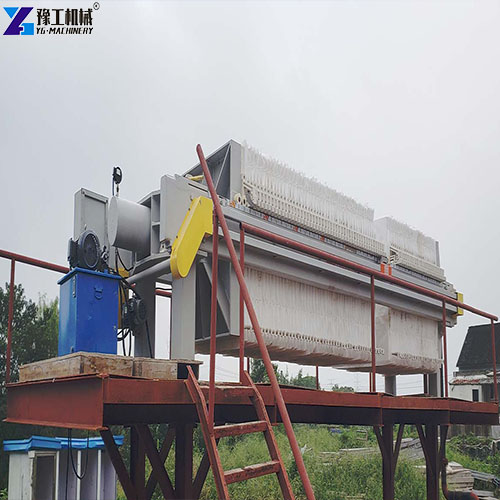
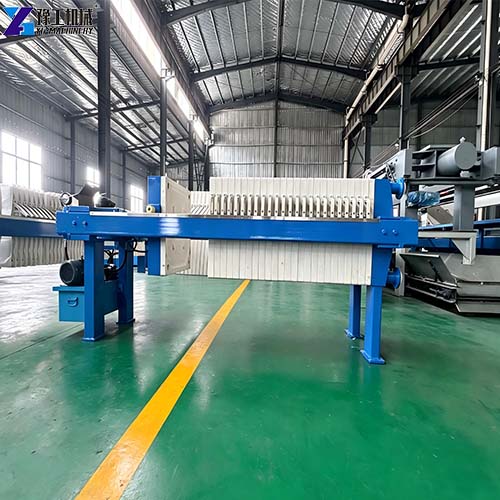
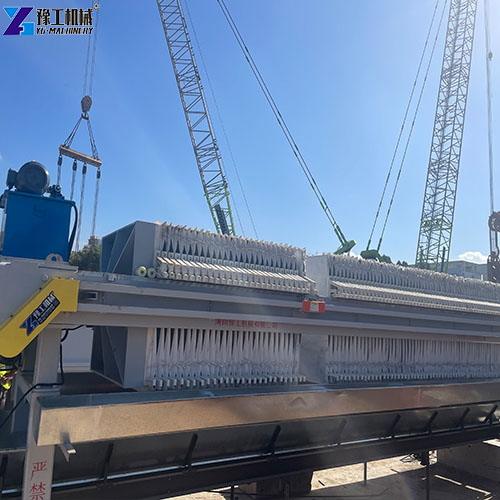
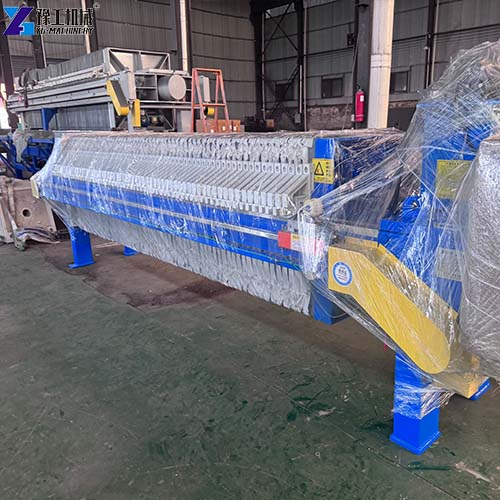
A mining filter press separates solids from mineral slurry and reduces tailings moisture. The YG series covers filtration areas of 100 m², 250 m², and 500 m² with clamping pressure up to 20 MPa. It uses filter cloth and feed pump pressure to trap particles and form a dry cake. Send us your slurry volume and target moisture, and we will select the right machine for your mine site.
Hot-Selling Automatic Filter Press Core Specifications at a Glance
| Model | XMZ100/1000-30U | XMZ250/1250-30U | XMZ500/1500-30U |
| Chamber Volume | 1,500 L | 3,750 L | 7,500 L |
| Filtration Area | 100 m² | 250 m² | 500 m² |
| Clamping Pressure | 20 MPa | 20 MPa | 20 MPa |
| Filtration Pressure | 0.6 MPa | 0.6 MPa | 0.6 MPa |
| Overall Weight | 6,628 kg | 14,288 kg | 30,288 kg |
| Number of Movable Plates | 57 pcs | 91 pcs | 123 pcs |
| Number of Chambers | 58 | 92 | 124 |
| Filter Plate Size | 1000×1000×60 mm | 1250×1250×65 mm | 1500×1500×65 mm |
| Quantity of Filter Cloth | 57+1 (cloth for head & tail plates) | 91+1 (cloth for head & tail plates) | 123+1 (cloth for head & tail plates) |
| Overall Dimension | 5780×1500×1400 mm | 8745×1850×1600 mm | 11820×2100×1820 mm |
Why Upgrade from Traditional Dewatering Methods
Traditional tailings management often relies on settling ponds. These ponds take up vast land areas, need long settling times, and pose environmental risks. Manual plate-and-frame machines require operators to tighten the clamp by hand, which limits throughput and increases labor costs. The YG industrial design solves these problems with a hydraulic filter press that builds pressure automatically. For large-scale operations, an automatic filter press with PLC control pulls plates without manual effort. Additionally, a membrane option squeezes the cake further to lower moisture. This machine produces drier cakes, which reduces transport costs and recovers more process water for reuse.
4 Application Scenarios for Dewatering Filter Press
1. Tailings Dewatering
Pain point: Tailings ponds fill up, and transporting wet waste is expensive.
Benefit: The dewatering filter press lowers moisture in the tailings, making them easier to handle and stack. This reduces environmental impact and water loss.
2. Concentrate Filtration
Pain point: High moisture in concentrates increases shipping weight and transport fees.
Benefit: This mining filter press produces a dry cake that saves shipping costs and meets buyer specifications.
3. Coal Slurry Processing
Pain point: Coal washing plants produce large volumes of fine slurry that are difficult to handle.
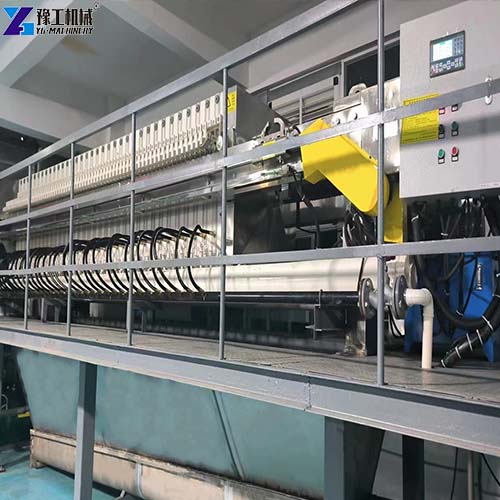
Benefit: An automatic filter press handles continuous cycles and reduces manual labor during discharge. The PLC cabinet controls the pulling trolleys for efficient cake removal.
4. Mineral Processing Plants
Pain point: Some minerals require high-pressure separation to recover valuable liquids.
Benefit: The mining filter press provides 20 MPa clamping pressure for stable operation. You can choose open flow or closed flow based on your plant layout. Closed flow collects filtrate through one pipe, keeping the workspace clean.
How to Select the Right Mining Filter Press
Choose a model based on chamber volume and filtration area. The 100 m² model suits small operations, while the 250 m² and 500 m² models handle higher throughput. Consider the filter plate size to fit your building space and transport route.
For mining, corrosion protection is critical. YG offers powder coating, PP wrapping, and stainless steel wrapping. You can also add a belt conveyor to move discharged cake and a dosing tank to prepare slurry.
When you select a mining filter press, confirm your target cake moisture and daily processing volume. With these details, our team can match the right chamber volume and plate count.
About YG Machinery
Founded in 2005, YG Machinery manufactures separation equipment for mining, chemical, and wastewater industries. We export to more than 100 countries. Our filter press range covers 100 m² to 500 m² models with manual, hydraulic, PLC, and membrane configurations. Send your slurry details and capacity target. We will help you choose the right mining filter press for your project.
FAQ
A: A hydraulic filter press uses an oil cylinder to clamp the plates. An automatic filter press uses a PLC cabinet and pulling trolleys to move plates during discharge. Choose the automatic version for large mines with frequent cycles and limited operators.
A: It squeezes water out of the slurry. The membrane version can further reduce moisture by pumping air or water into membrane plates. This step presses the cake after the initial filtration cycle.
A: The hot-selling models are 100 m², 250 m², and 500 m². Each model uses different plate sizes: 1000×1000 mm, 1250×1250 mm, and 1500×1500 mm. We also offer custom solutions for special slurry conditions.
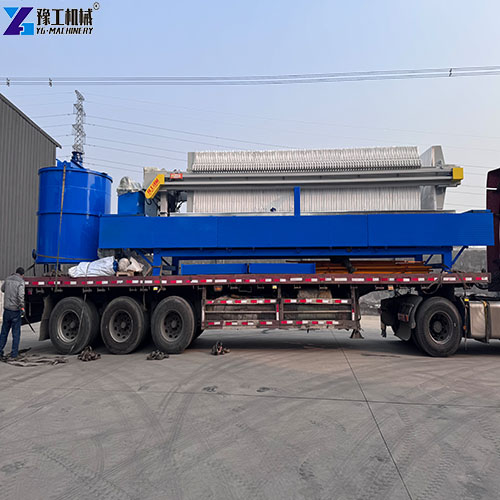
A: We use a welded steel frame with wooden boards. The whole unit fits in one crate to prevent damage and missing parts during transport.
A: Yes. A fully automatic cloth washing system is available. It cleans the filter cloth to maintain filtration efficiency and extend cloth life.
A: Check your slurry type, solids content, required cake moisture, batch volume, and available floor space. Also confirm your power supply and whether you need a platform or belt conveyor. Send these details with your inquiry for an accurate recommendation.