
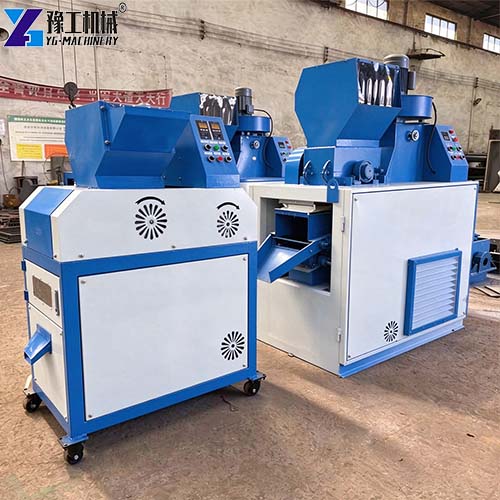
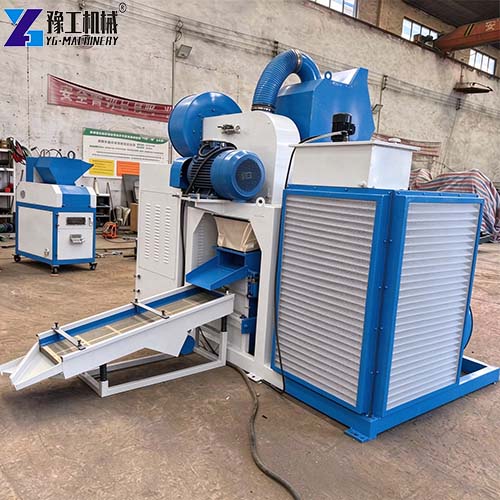
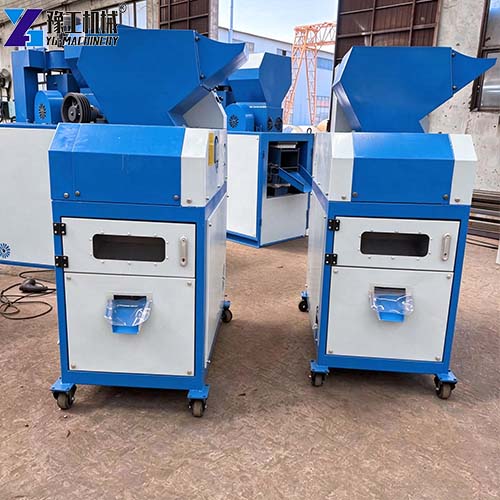
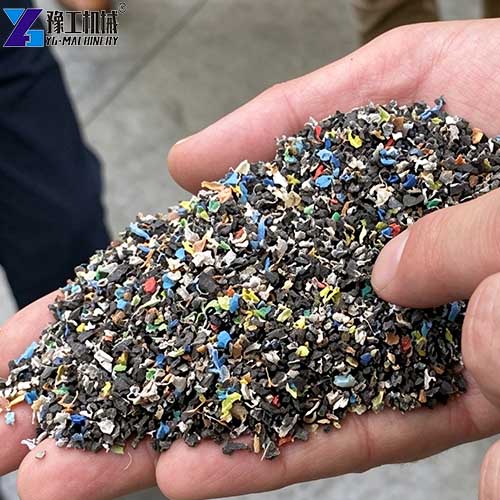
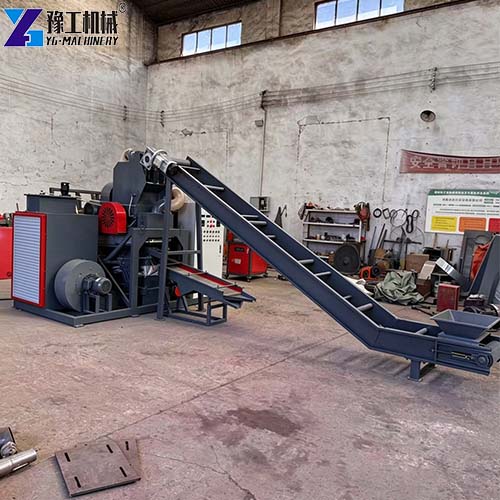
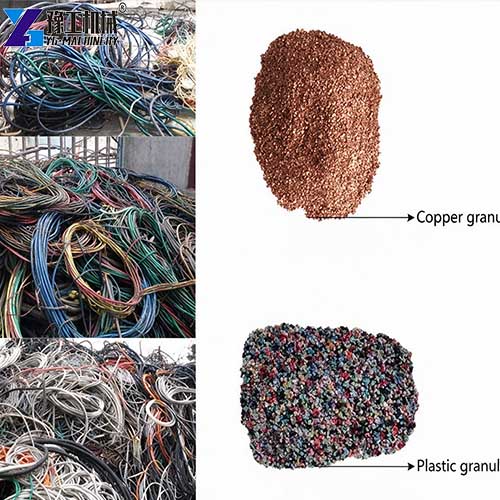
The copper wire recycling machine is an eco‑friendly complete‑set line for renewable‑resource recovery, also known as a mixed‑wire separator. It crushes waste wires and cables, then separates copper cores from plastic insulation. Final copper particles look like rice grains, and industry operators call these outputs copper rice. This dry‑type unit comes with triple dust removal: cyclone dust removal, bag‑type dust collection and air purifier treatment to control dust pollution.
What Cable Granulator Machine Can Do
This machine handles many kinds of scrap materials. It processes power cables, network cables, square‑gauge wires, earphone wires, communication cables, mixed scrap wires, aluminum‑plastic wires and hard‑to‑recycle fine capillary wires. Different YG series models cover hourly output from 40‑80 kg/h up to 500‑800 kg/h.
| Specifications | YG-260 | YG-300 | YG-400 | YG-600 | YG-800 |
| Overall dimensions (L × W × H) | 1100 × 595 × 1750 mm | 2300 × 900 × 1900 mm | 2760 × 2500 × 2200 mm | 4600 × 2200 × 2400 mm | 4600 × 2200 × 2400 mm |
| Main motor power | 3 kW | 5 kW | 7.5 kW | 30 kW | 55 kW |
| Blower power | 0.75 kW | 1.5 kW | 2.2 kW | 3 kW | 3 kW |
| Dust removal fan power | 0.75 kW | 1.5 kW | 2.2 kW | 3 kW + 1.5 kW* | 3 kW + 2.2 kW* |
| Specific gravity separator power | 0.04 kW × 2 | 2.2 kW | 2.2 kW | 2.2 kW | 3 kW |
| Vibrating screen power | — | 0.12 kW × 2 | 0.12 kW × 2 | 0.18 kW × 2 | 0.18 kW × 2 |
| Total power | 4.58 kW | 10.94 kW | 14.34 kW | 41.56 kW | 66.56 kW |
| Voltage | 220 V, 50 Hz | 380 V, 50 Hz | 380 V, 50 Hz | 380 V, 50 Hz | 380 V, 50 Hz |
| Processing capacity | 40–80 kg/h | 80–150 kg/h | 150–300 kg/h | 300–500 kg/h | 500–800 kg/h |
If you check the copper granulator price, you will notice that capacity directly influences the quotation. Besides regular wires, this copper wire recycling machine supports flexible custom configuration for special‑feed scenarios.
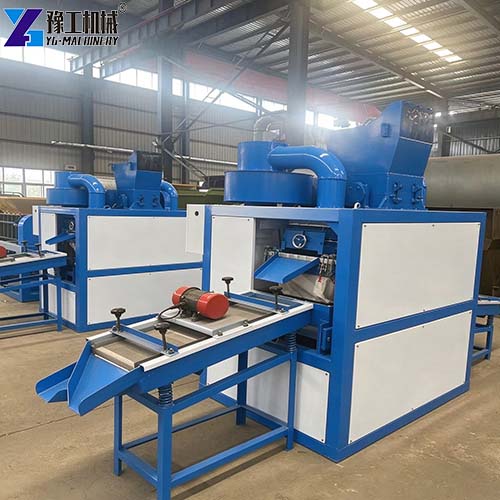
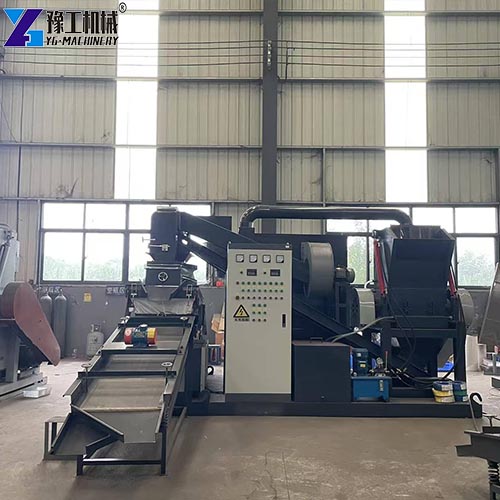
Thanks to physical crushing and gravity sorting, the equipment finishes crushing, grinding, airflow separation and screening in sequence. Operators feed scrap wires into the hopper; materials go through primary crushing, secondary grinding, density‑based airflow separation and final screening. You gain clean copper granules and recyclable plastic fragments at one run.
Copper Wire Recycling Machine Core Advantages
First, it occupies limited floor space and moves easily without complicated installation work. Second, automation lowers labor demand; only one operator runs the whole line with one‑touch PLC control. Third, layered separation plus frequency‑conversion control brings stable high sorting accuracy. In addition, low‑noise running reduces site disturbance, and the triple‑dust‑removal system meets local environmental standards. The integrated compact frame simplifies installation and commissioning work. This cable granulator fits small workshops and medium‑scale recycling yards equally well.
Profit Potential For Your Recycling Project
You get two saleable outputs after processing. High‑purity copper granules can sell directly to smelters, and separated plastic fragments are ready for plastic‑granule production. Manual wire stripping costs plenty of working hours and cannot handle thin capillary wires efficiently. By contrast, this copper wire recycling machine raises daily processing volume and cuts labor expense. You earn revenue both from copper products and recycled plastic materials. Multiple YG‑series options match different factory scales, so you avoid over‑investing on oversized capacity.
YG After‑Sales Support
We act as the original manufacturer with complete YG copper wire recycling machine‑model selections. We deliver fast shipment and offer customization for special‑size or special‑voltage requirements. Our team supplies professional after‑sales service, including online operation training and troubleshooting guidance. Spare‑part supply keeps your production line running steadily for long‑term use. Reach out to our sales team if you want further details about copper granulator price or parameter matching for your raw‑material conditions.