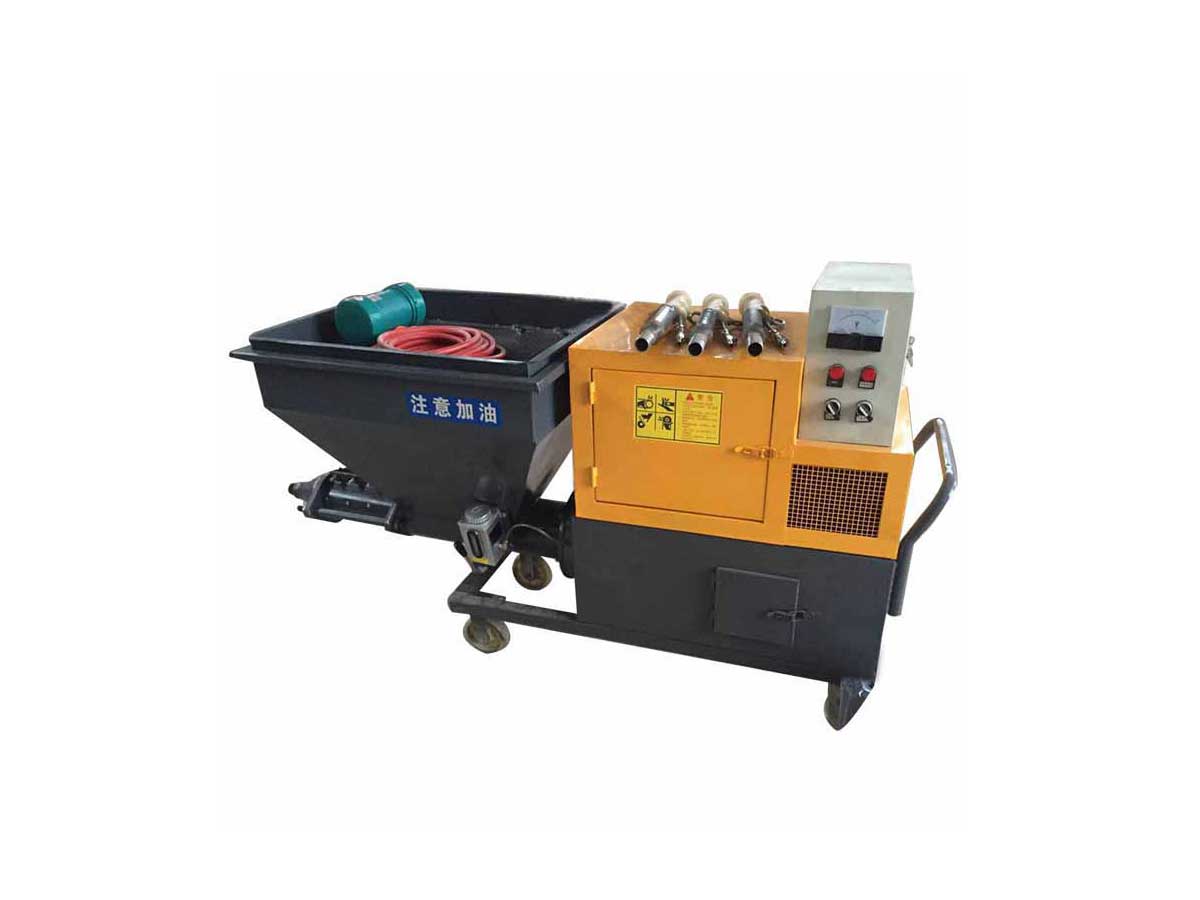

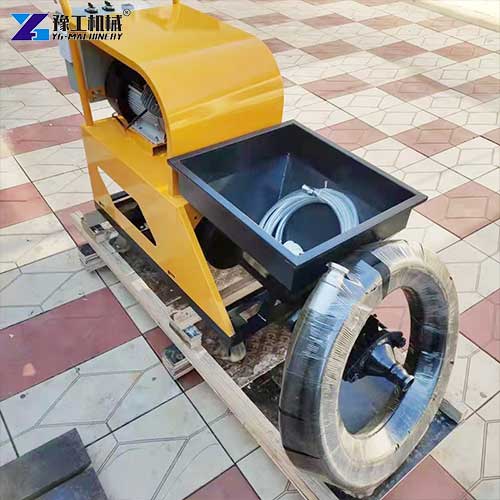
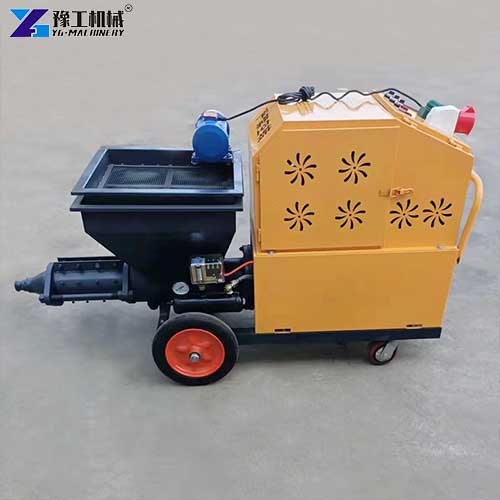
Spain’s residential renovation market includes many projects that require consistent wall finishes, predictable labor costs and careful scheduling. For small and medium-sized contractors, traditional hand plastering can become a bottleneck when several rooms or entire building facades need treatment within a limited timeframe. Meanwhile, spray render machines for sale offer an alternative for projects where repetitive manual application consumes too much working time. This creates an opportunity for contractors to improve material delivery and application without investing in an unnecessarily large production system.
YG Spray Render Machines For Sale Technical Specifications
The YG series includes four models designed for different site requirements. The following specifications help buyers compare machine size, power, hopper capacity and conveying distance before requesting a quotation.
| Specification | YG311 | YG318 | YG500 | YG711 |
| Maximum pressure | 3 MPa | 3 MPa | 3 MPa | 3 MPa |
| Listed capacity | 3 m³/h* | 3 m³/h* | 3–4 m³/h* | 4 m³/h* |
| Main motor power | 4 kW | 7.5 kW | 8 HP / 12 HP | 7.5 kW |
| Maximum particle size | 4 mm | 8 mm | 8 mm | 8 mm |
| Horizontal conveying distance | 30 m | 50 m | 50 m | 50 m |
| Vertical conveying distance | 20 m | 30 m | 30 m | 30 m |
| Hopper capacity | 60 L | 80 L | 80 L | 100 L |
| Feed pipe diameter | 32 mm | 32 mm | 32 mm | 32 mm |
| Machine weight | 200 kg | 320 kg | 320 kg | 320 kg |
| Reference water-cement-sand ratio | 0.7–1:1:3 | 0.7–1:1:3 | 0.7–1:1:3 | 0.7–1:1:3 |
For a contractor handling ordinary cement mortar on residential walls, the YG318 is a reasonable model to evaluate when the site needs an 80 L hopper, a 7.5 kW electric motor and a stated conveying range of 50 m horizontally or 30 m vertically. Actual suitability depends on the mortar’s workability, aggregate size, hose layout and electrical supply.
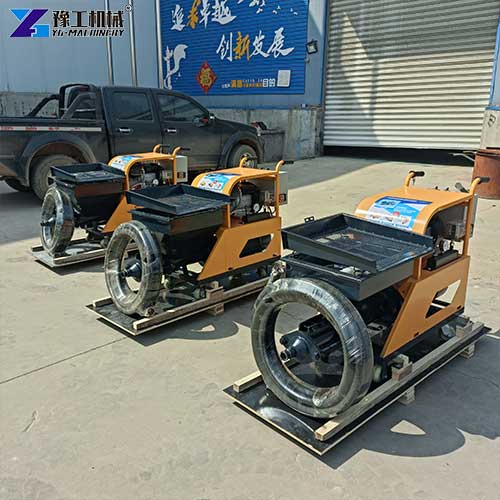
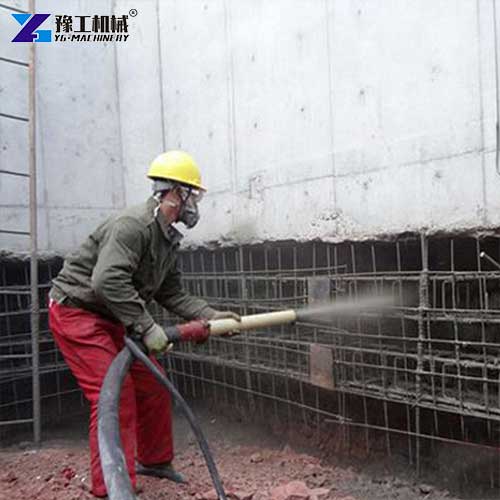
Spain Cement Stucco Sprayer Case Study
Customer Background and Project Requirements
Case profile: Illustrative scenario for a Spanish renovation contractor
The customer in this example is a small construction and renovation company based in Spain. It has operated for approximately 12 years and employs eight field workers, with additional tradespeople brought in when project schedules require them. Its main business includes apartment renovation, interior wall rendering, small residential developments and exterior plastering for private property owners.
The company previously relied on manual plastering for most wall finishing work. Workers mixed and transferred mortar in batches, then applied and levelled it by hand. This method suited small repairs, but larger renovation jobs created several practical difficulties: application speed depended heavily on the available crew, mortar thickness varied between workers, and moving material between floors required additional handling.
The contractor began evaluating spray render machines for sale after scheduling several wall-finishing jobs close together. Rather than seeking the largest machine available, it wanted a compact system that could fit its usual renovation sites and remain practical for a relatively small crew.
Its purchasing requirements were specific:
- Conveying distance: A target of up to 40 m horizontally and 20 m vertically for representative site layouts, with sufficient margin for hose routing.
- Material compatibility: Cement mortar with a maximum aggregate size of 8 mm, subject to confirmation that the selected mix meets the machine’s operating requirements.
- Working pressure: A rated maximum pressure of 3 MPa, with adjustable delivery suited to the application.
- Loading capacity: An approximately 80 L hopper to reduce frequent loading interruptions.
- Power supply: An electric model compatible with the available site connection.
- Finish quality: More consistent mortar application, with less manual effort spent distributing material across large wall areas.
The company also wanted a straightforward operating process. Its workers needed to understand feed preparation, pressure adjustment, spray-gun handling and end-of-shift cleaning without adding unnecessary complexity to daily site management.
Recommended Solution: YG318 Mortar Sprayer Machine
Based on these requirements, we selected the YG318 as the candidate model for evaluation. Its stated 3 MPa maximum pressure, 7.5 kW motor, 80 L hopper and 50 m horizontal/30 m vertical conveying distances align with the example contractor’s target specifications.
The selection addresses each requirement as follows:
| Customer requirement | Proposed response |
| Convey mortar across typical renovation sites | The stated 50 m horizontal and 30 m vertical conveying ranges provide a nominal margin over the target distances. Actual performance must be checked against the hose layout and mortar properties. |
| Handle aggregate up to 8 mm | The listed maximum particle size is 8 mm. The contractor should verify the grading and consistency of its actual mortar before operation. |
| Maintain suitable pressure | The machine has a stated maximum pressure of 3 MPa. Operators should adjust pressure and feed rate to the material and surface rather than assume maximum pressure is always appropriate. |
| Reduce frequent loading interruptions | The 80 L hopper provides a larger loading volume than the YG311’s 60 L hopper, although actual uninterrupted running time depends on consumption and replenishment. |
| Work with the available electricity | The 7.5 kW motor makes the YG318 an electric option. The site must confirm supply capacity, voltage, phase, and protection requirements before purchase. |
| Improve application consistency | Continuous screw feeding and an adjustable spray gun can help maintain a more regular application pattern when the mortar and operating technique remain consistent. |
The proposed delivery and training process focuses on practical use rather than complicated commissioning procedures. Before the first production run, the operator should check the electrical connection, inspect the hose and fittings, and prepare mortar according to the approved mix requirements.
Next, the team loads the prepared material into the hopper and starts the machine using the control system. Operators adjust the pressure and flow rate, test the spray pattern on a small section, and then continue across the working surface while maintaining a consistent gun distance and movement speed. The spray gun’s rotating connection helps the operator change direction when moving between wall sections.
At the end of the shift, the team stops the machine and flushes the material path and spray gun with clean water according to the operating instructions. This step helps prevent residual mortar from hardening inside the system.
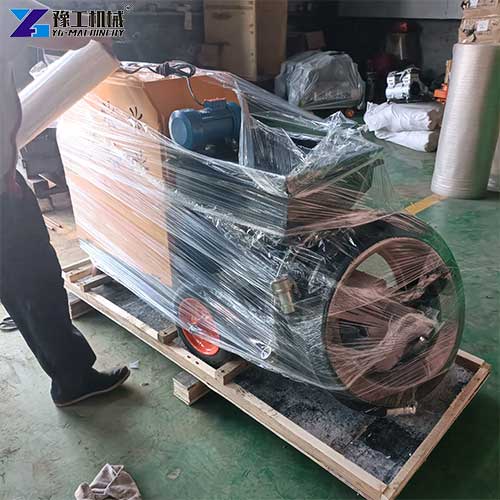
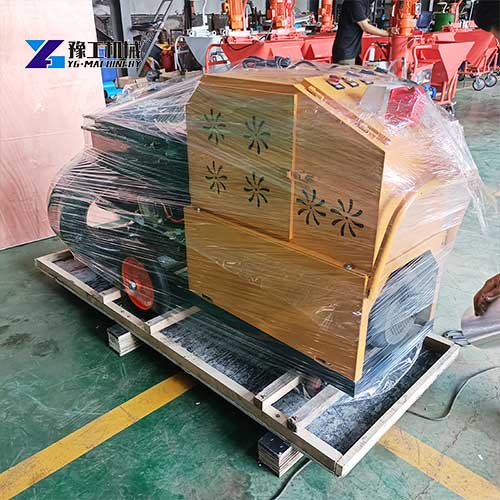
Results and Feedback
After introducing the YG318 into its wall-rendering workflow, the contractor in this illustrative case evaluates the machine against the problems that previously slowed down its renovation projects. The main benefits focus on application efficiency, labor organization, surface consistency, material control and scheduling.
- Faster mortar application
The machine’s continuous feeding system allows workers to apply prepared mortar without relying entirely on repeated manual spreading. This can help the crew maintain a more consistent working rhythm across large wall sections. The contractor would measure the improvement by comparing the accepted wall area completed per shift under similar site conditions.
- Better use of available labor
Instead of assigning every worker to manual mortar application, the team can divide responsibilities between material preparation, machine operation and surface levelling. This makes the workflow easier to organize and may reduce repetitive manual effort. The actual labor saving depends on the wall area, finishing requirements and crew experience.
- More consistent wall coverage
The adjustable delivery rate and spray gun help operators control how they distribute mortar across the wall. With a suitable mix and consistent spraying technique, the team can aim for more uniform coverage and reduce uneven application that requires correction. Workers still need to level the mortar and inspect the finished surface.
- Fewer interruptions during material delivery
The YG318’s 80 L hopper and stated conveying range of 50 m horizontally and 30 m vertically give the contractor more flexibility when arranging equipment around a renovation site. The larger hopper can reduce the frequency of replenishment compared with a 60 L hopper, although the actual difference depends on mortar consumption and loading arrangements.
Customer Feedback
“For our renovation projects, the main challenge was keeping wall-rendering work moving while coordinating the rest of the crew. The YG318’s continuous feeding system gives us a more organized way to apply mortar, and the adjustable spray flow helps us adapt to different wall sections. The 80 L hopper is also useful because we can plan material replenishment around the work instead of stopping without preparation. We still need to level the mortar and clean the machine properly after each shift, but the process gives us a practical option for recurring wall-finishing jobs.”
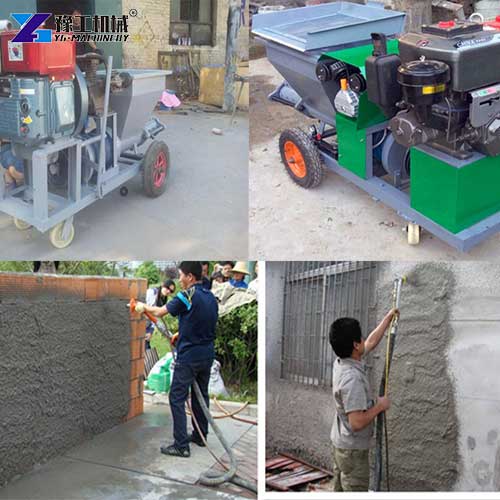
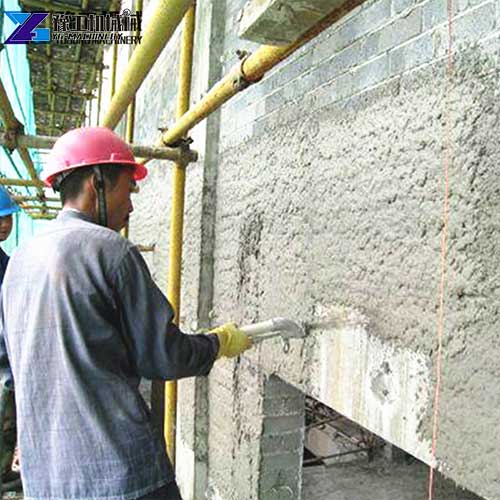
4 Advantages of Concrete Spraying Equipment
The proposed application is not simply about replacing a hand tool with a powered machine. It is about improving the relationship between material preparation, delivery, application and finishing.
1. Continuous Feeding for More Consistent Application
Traditional manual work relies on workers repeatedly collecting, spreading and levelling mortar. The YG318 uses a screw-feeding arrangement to deliver prepared material continuously toward the pumping system. With an appropriate mix and stable operating technique, this process can help reduce interruptions during repetitive wall application.
For the Valencia contractor, the key evaluation point is whether continuous feeding improves wall-coverage speed without creating additional finishing work.
2. Adjustable Flow for Different Wall Sections
Not every part of a renovation project requires the same application technique. Open wall sections, corners, narrow passages and areas around openings can demand different operator movements.
The machine’s adjustable delivery and controllable spray gun allow the operator to adapt application to the working area. However, the team must still control gun distance, movement speed and layer thickness to achieve the desired finish.
3. Conveying Distance for Multi-Room and Multi-Floor Jobs
A longer conveying range can reduce the need to reposition the machine as frequently, depending on the building layout. The YG318 lists a horizontal distance of 50 m and a vertical distance of 30 m.
These figures should be treated as nominal specifications, not guaranteed distances under every condition. Mortar formulation, hose diameter, bends, elevation changes and the required output can all influence actual performance.
4. A Practical Alternative to Manual Material Distribution
A spray render machines for sale can be worth considering when contractors repeatedly apply compatible materials across large wall areas. Nevertheless, spraying does not eliminate every finishing task. Workers may still need to level, straighten or smooth the applied mortar according to the specified finish.
For that reason, the best comparison is not simply machine output versus manual output. Contractors should compare the complete process, including preparation, spraying, levelling, cleaning and any corrective work.
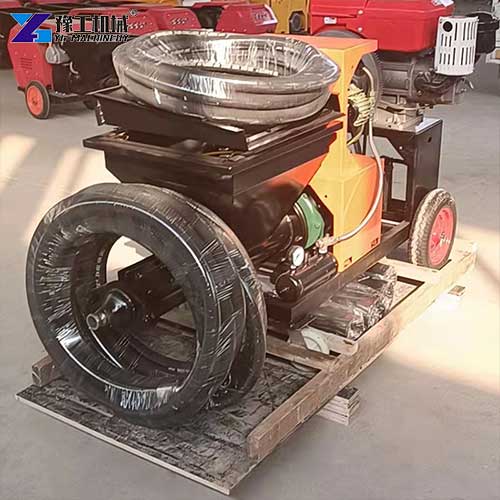
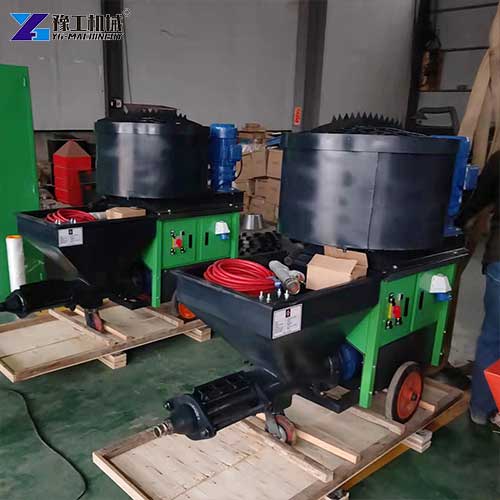
Choosing the Right Mortar Sprayer Machine for Different Construction Jobs
The YG series covers different combinations of hopper capacity, motor power and conveying distance. Buyers should match the machine to the actual project rather than choose solely by model number.
- YG311: Its 60 L hopper, 4 kW motor and stated 30 m horizontal/20 m vertical conveying range make it a candidate for smaller projects where compact handling matters.
- YG318: Its 80 L hopper and 7.5 kW motor make it a candidate for renovation contractors needing a balance between site flexibility and conveying range.
- YG500: Its listed 8 HP/12 HP power options, 80 L hopper and 50 m horizontal/30 m vertical range warrant checking against projects with different power or site requirements. The exact configuration must be confirmed.
- YG711: Its 100 L hopper and stated 50 m horizontal/30 m vertical range may suit jobs where a larger loading volume is useful. Buyers should confirm the motor configuration and the intended operating conditions.
Before ordering, Spanish buyers should also confirm the machine’s voltage and phase, local electrical compatibility, spare-parts requirements, suitable mortar formulation and the correct output rating. These checks help ensure that the selected equipment fits the intended project instead of creating avoidable site adjustments.
Explore the YG Series for Your Next Rendering Project
The YG spray render machines for sale offer several configurations for contractors working on interior plastering, exterior wall rendering and compatible mortar applications. The YG311, YG318, YG500 and YG711 provide different options for hopper capacity, motor power and conveying distance.
If you are comparing cement stucco sprayers, share your target output, mortar type, maximum aggregate size, conveying distance and available power supply. These details will help narrow the model selection and establish a realistic configuration for your construction project.