

An automotive plant needs to clean engine intake manifolds and cylinder heads without disassembling the engine or waiting for chemical solvents to dry. A low-power industrial dry ice blasting machine may not deliver enough air pressure to remove carbon deposits, while an oversized unit wastes compressed air and dry ice. The wrong choice also risks damaging sensitive electronics or leaving residual contamination.
This guide compares P7X and A625 using real working parameters, then explains which models fit automotive, food, mold, electronics, and aerospace cleaning. It also helps you decide when a dry ice sand blasting machine is the right investment instead of manual scraping or water-based washing.
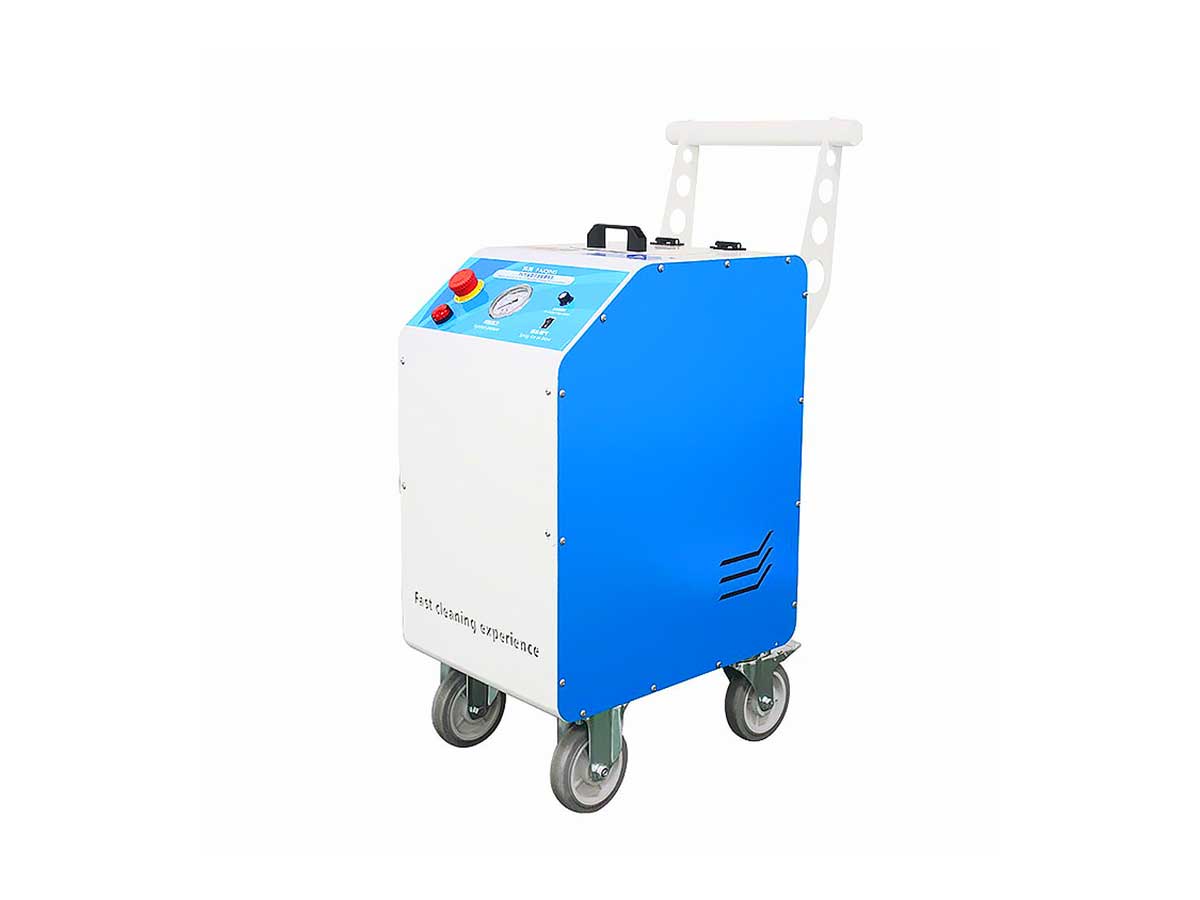
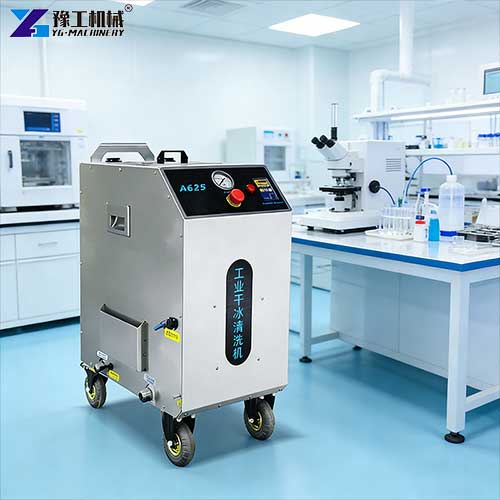
Technical Parameters: P7X vs A625
| Parameter | YGP7X | YGA625 |
| Motor Power | 370 W | 750 W |
| Voltage | AC220V, 50-60Hz | AC220V, 50-60Hz |
| Air Consumption | 28-106 CFM (0.8-3.0 m³/min), adjustable | 3-8 m³/min, adjustable |
| Air Supply Pressure | 0.1-0.9 MPa | 0.2-1.6 MPa |
| Ice Delivery Speed | 0-0.75 kg/min, adjustable | 0-3.6 kg/min, adjustable |
| Hopper Capacity | 11 kg (23.5 lbs) | 25 kg |
| Hopper Size | 0.3 m³ | – |
| Degree of Protection | IP54 | IP54 |
| Machine Weight | 55 kg | 65 kg |
| Dry Ice State | 2.5-3 mm | 2.5-3 mm, granular |
| Drive Mode | Direct connection | Permanent magnet synchronous |
| Machine Size | 510x460x910 mm | 440x680x780 mm |
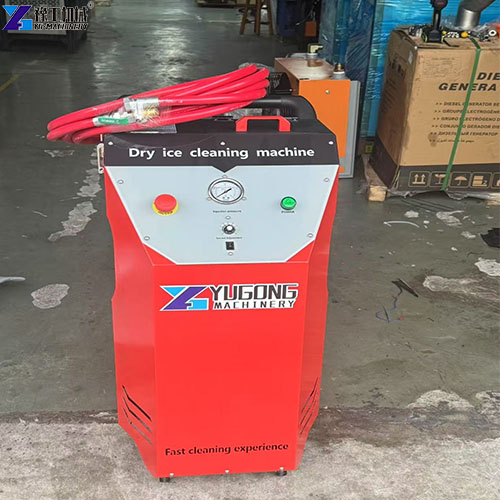
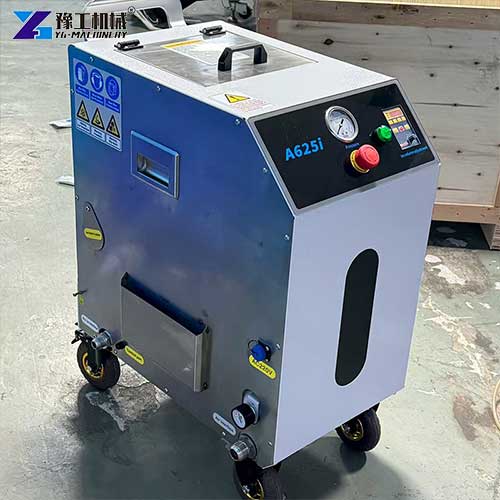
Industrial Dry Ice Blasting Machine Application Scenarios
- Automotive parts cleaning: Shops use an industrial dry ice blasting machine to clean combustion chambers, throttle bodies, engine bays, intake manifolds, and wheel hubs without disassembly.
- Mold, food, and printing equipment: A commercial dry ice blasting machine removes residue from molds, food processing lines, and printing presses without chemical solvents.
- Electronics and deburring: A dry ice sand blasting machine cleans electronic devices and performs product trimming and deburring with no water or abrasive media.
- Aerospace, marine, and power: Heavy industries use a commercial dry ice blasting machine on aerospace components, ship parts, manufacturing equipment, and power generation hardware.
- Automotive interiors, battery packs, and precision molds: A compact industrial dry ice blasting machine cleans new energy vehicle battery compartments, motors, electrical cabinets, circuit boards, and medical precision molds, and its small body suits field service calls.


Model Comparison and Recommendation
YGP7X: The Automotive and General Cleaning Choice
Best for: auto repair shops, general manufacturing, and users who need adjustable airflow in a compact unit.
YGP7X runs on 370 W, uses 0.8-3.0 m³/min adjustable air consumption, and delivers 0-0.75 kg/min ice feed. Its 11 kg hopper and 55 kg weight make it easy to move between bays. With 0.1-0.9 MPa air pressure and direct connection drive, it handles most automotive and general cleaning tasks. If you need an industrial dry ice blasting machine for engine parts and daily maintenance, this model is a practical starting point.
YGA625: The High-Capacity Industrial Choice
Best for: food processing, mold cleaning, printing equipment, and heavy industrial users.
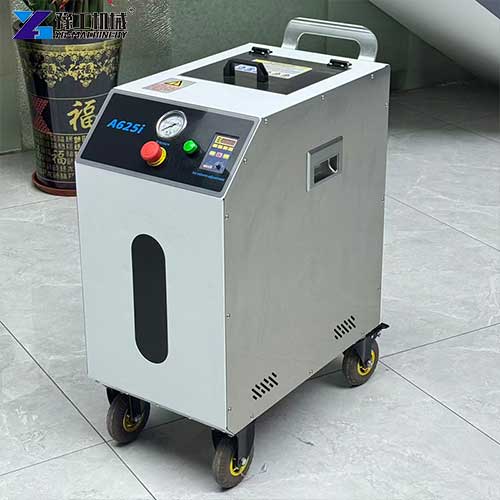
YGA625 uses a 750 W motor, 3-8 m³/min air consumption, and 0.2-1.6 MPa air pressure. Its 0-3.6 kg/min ice feed and 25 kg hopper support longer cleaning cycles with fewer refills. The permanent magnet synchronous drive and 65 kg body give stable output for molds, food equipment, and printing presses. When your production line cannot stop for long, this machine reduces downtime and keeps cleaning consistent.
How to Select the Right Model: A 5-Step Guide
Step 1: Define your cleaning target and contamination type. If you clean engine carbon, choose a model with enough air pressure and ice feed, such as YGP7X or YGA625. If you clean precision electronics, prioritize micro-particle capability and low damage risk, such as Mini Nova or P61.
Step 2: Match air consumption to your compressor. YGP7X needs 0.8-3.0 m³/min, while YGA625 needs 3-8 m³/min. If your shop has a small compressor, the lower range is safer. If you have a large central air system, the higher range gives faster cleaning.
Step 3: Check air supply pressure and ice delivery speed. YGP7X runs at 0.1-0.9 MPa and 0-0.75 kg/min. YGA625 runs at 0.2-1.6 MPa and 0-3.6 kg/min. Hard deposits and large surfaces need higher pressure and faster ice feed. Delicate surfaces need lower settings.
Step 4: Consider hopper capacity and machine weight. YGP7X has an 11 kg hopper and weighs 55 kg. YGA625 has a 25 kg hopper and weighs 65 kg. For long shifts, a larger hopper reduces refill stops. For mobile service, a lighter unit is easier to load and transport.
Step 5: Decide if you need automation and remote control. T6i supports electronic pressure regulation, flow monitoring, remote adjustment, remote data monitoring, and recipe programming. If you plan to link cleaning with automated production, choose T6i or P9s. If you only need manual cleaning, a standard model is enough.

Get a Tailored Recommendation
Send your cleaning application, contamination type, compressor airflow, air pressure, and daily workload. We will recommend the right industrial dry ice blasting machine and confirm the matching hopper size, ice feed rate, and control features. If you are sourcing a machine for automotive, food, mold, or electronics cleaning, ask for a full quotation and spare parts list. Tell us whether you need a commercial dry ice blasting machine for heavy production or a compact dry ice sand blaster for field service, and we will help you avoid oversizing, undersizing, and unnecessary downtime.