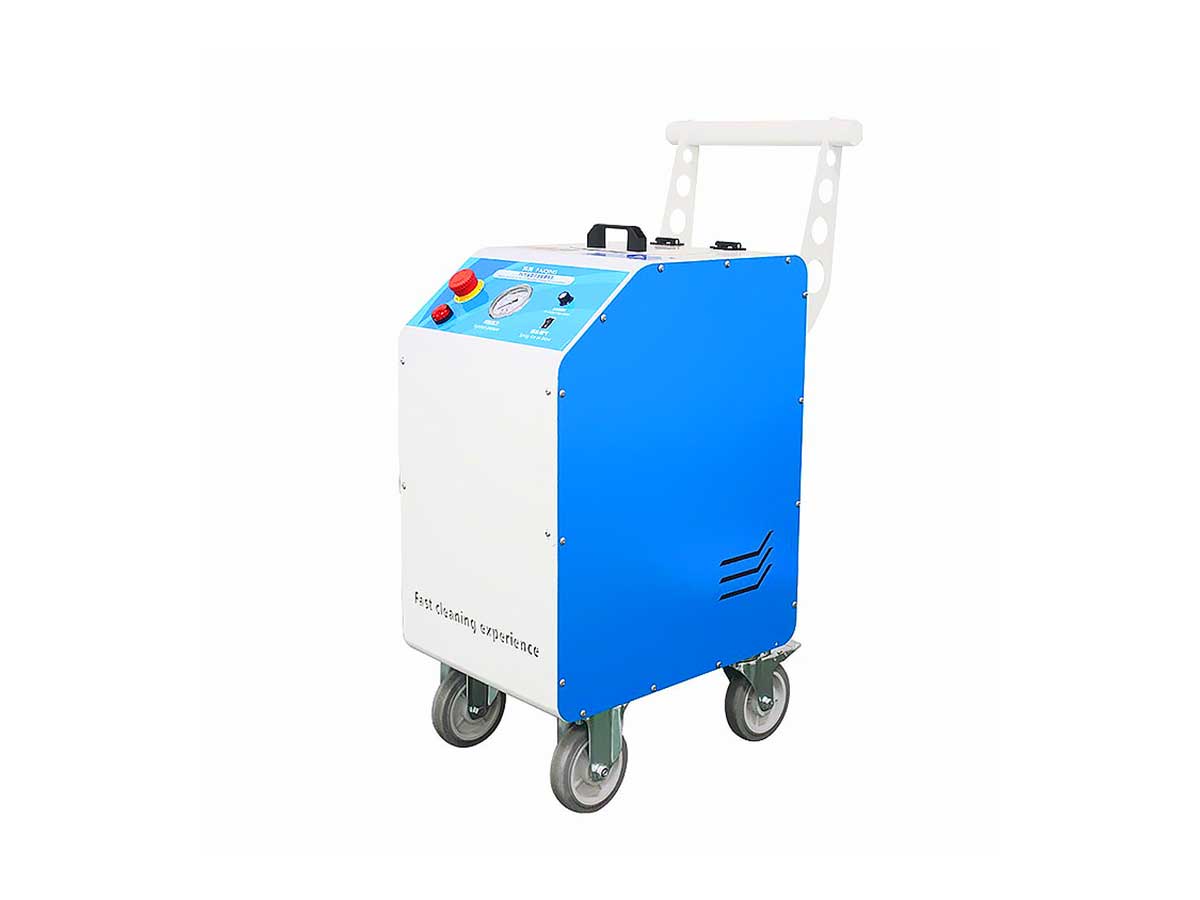

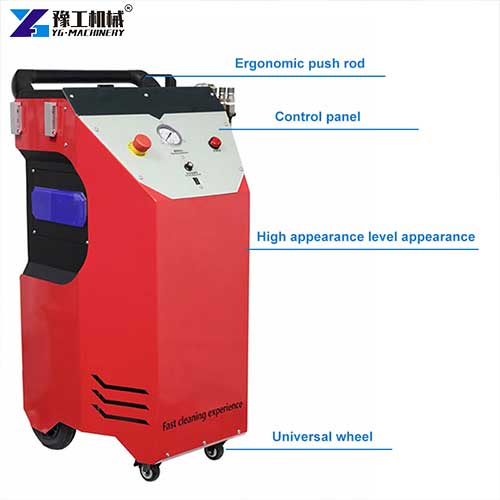
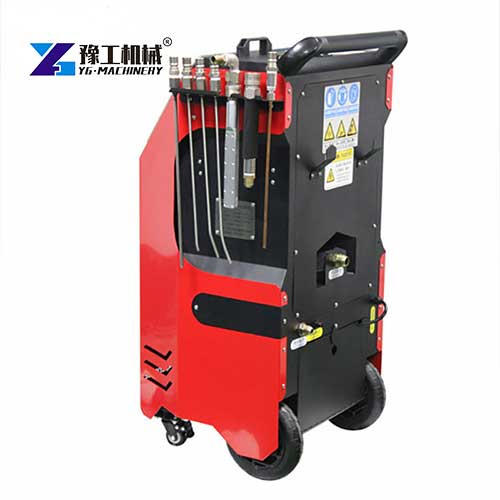
A commercial dry ice blasting machine provides a practical way to remove oil, grease, carbon deposits, and other contaminants from suitable surfaces without using water as the cleaning medium or adding abrasive blasting materials. By accelerating dry ice particles with compressed air, the machine loosens contamination while the dry ice sublimates after impact, reducing the need to clean up leftover blasting media. For automotive workshops, equipment maintenance companies, and manufacturing facilities in Poland, this technology offers an alternative to conventional chemical cleaning and abrasive methods.
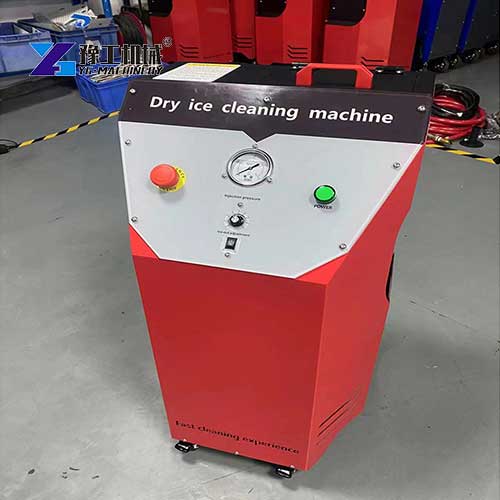
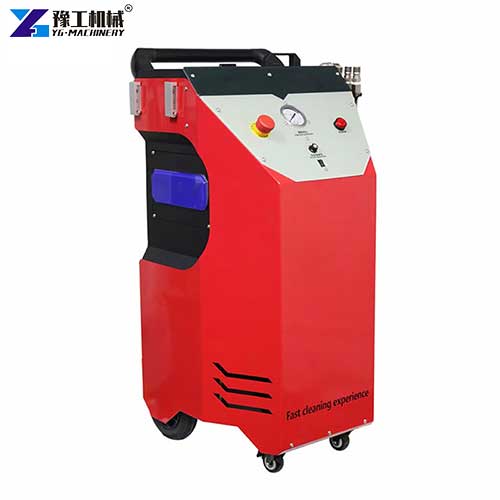
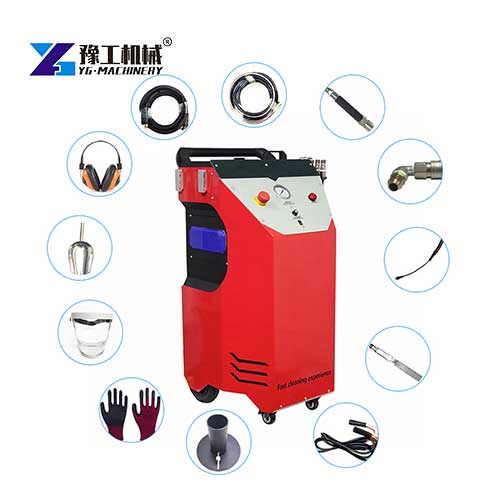
The YGP7X combines adjustable ice delivery, a compact structure, and a 55 kg machine weight, making it suitable for applications where operators need to move between workstations. Different dry ice blasting models are available for automotive components, production equipment, molds, and other industrial cleaning tasks.
Commercial Dry Ice Blasting Machine Specifications: YGP7X
The YGP7X is one option for businesses looking for a dry ice cleaning car machine for routine maintenance and component cleaning. Its adjustable ice delivery and air supply pressure allow operators to evaluate the cleaning setup according to the contamination, surface material, and available compressed-air supply.
| Parameter | YGP7X Specification |
| Motor power | 370 W |
| Voltage | AC 220 V, 50–60 Hz |
| Air consumption | 0.8–3.0 m³/min, adjustable |
| Air supply pressure | 0.1–0.9 MPa |
| Ice delivery speed | 0–0.75 kg/min, adjustable |
| Hopper capacity | 11 kg |
| Protection rating | IP54 |
| Machine weight | 55 kg |
| Dry ice particle size | 2.5–3 mm |

What Makes the YGP7X Suitable for Commercial Cleaning?
- Adjustable dry ice delivery: The ice delivery rate can be adjusted to suit different cleaning tasks. Operators can test the settings on a small area first, particularly when working with coated, painted, or delicate surfaces.
- Compact equipment design: At a listed weight of 55 kg, the machine can be moved between suitable work areas more easily than many larger industrial systems. Transport arrangements should still account for its dimensions, accessories, and site layout.
- Flexible air supply settings: The listed operating pressure range is 0.1–0.9 MPa. Buyers should check whether their existing air compressor can provide the required pressure and flow rate continuously during operation.
- Reduced secondary cleanup: Dry ice sublimates to CO₂ on impact, leaving no sand or water residue on cleaned surfaces. However, removed grease, paint, dust, and other contaminants still need to be collected and handled appropriately.
Case Study: P7X Dry Ice Blasting Machine Exported to Poland
Poland has a range of automotive maintenance businesses and industrial manufacturers that need reliable ways to clean components and production equipment. For workshops handling engine parts, metal components, and machinery, cleaning methods must be chosen according to the type of contamination and the sensitivity of the surface.
YG Machinery has published an export case describing the supply of P7X dry ice cleaning machines to Poland for applications involving automotive maintenance and industrial cleaning. The following application details explain how a machine in this category can be evaluated for such work; individual customer requirements and measured results should be confirmed against the original project records.
1. Customer Requirements and Cleaning Challenges
For an automotive workshop or industrial maintenance team, common cleaning challenges include:
- Oil and grease buildup: Engine components, housings, and mechanical assemblies can accumulate stubborn deposits during normal operation.
- Carbon deposits on automotive parts: Components such as throttle bodies and intake-related parts may require careful cleaning to remove deposits without damaging functional surfaces.
- Concerns about water residue: Water-based cleaning may be unsuitable for certain assemblies or may require additional drying before inspection and reassembly.
- Risks from abrasive cleaning: Conventional abrasive blasting can alter the surface of some workpieces and is not appropriate for every precision component.
- Time spent on manual cleaning: Repeated brushing, scraping, and solvent application can make maintenance work labor-intensive.
The appropriate solution depends on the actual part being cleaned. A dry ice blaster is not automatically suitable for every coating, seal, plastic, or electronic component, so the operator should verify material compatibility before treating the entire workpiece.
2. Why Consider the YGP7X Industrial Dry Ice Blaster?
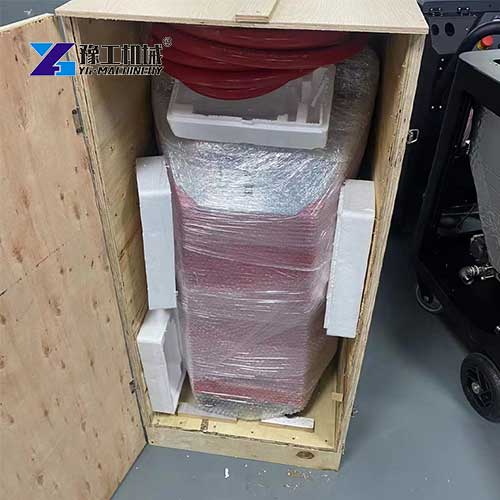
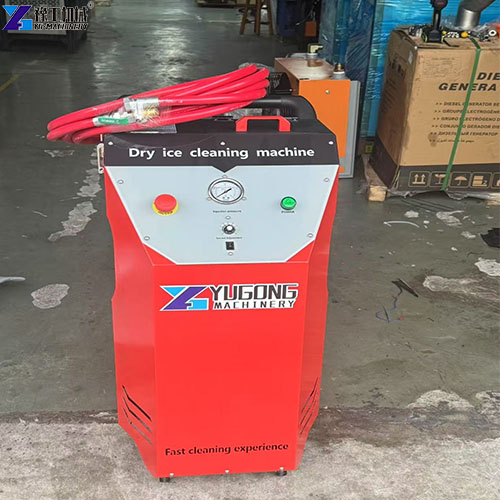
The YGP7X provides adjustable ice delivery and air pressure, allowing the cleaning setup to be evaluated for different types of contamination. Its listed 11 kg hopper capacity also provides a defined working capacity for planning cleaning sessions and dry ice replenishment.
For automotive maintenance, the machine may be evaluated for suitable applications such as:
- Removing selected oil and grease deposits from compatible metal components.
- Cleaning suitable engine-bay parts and mechanical housings.
- Removing dirt from selected chassis components and wheel-related parts.
- Cleaning industrial machine surfaces where water or added abrasive media is undesirable.
Before cleaning, the operator should confirm the appropriate nozzle, air pressure, ice feed rate, working distance, and surface compatibility. The machine’s suitability should be established through a controlled test rather than assumed from the application category alone.
3. What Benefits Can a Polish Workshop Evaluate?
When comparing a commercial dry ice blasting machine with conventional cleaning methods, buyers should consider the entire maintenance process rather than cleaning speed alone.
- Reduced use of cleaning chemicals: Dry ice blasting can reduce or eliminate cleaning chemicals for suitable tasks, depending on the process being replaced.
- No added water as the blasting medium: This can be beneficial for components where water residue creates additional drying requirements.
- No abrasive blasting media left on the workpiece: Dry ice sublimates after impact, reducing cleanup associated with sand or other solid abrasives.
- Potentially less disassembly: Some accessible components can be cleaned in place, provided the equipment is safely isolated and the target area is suitable for dry ice blasting.
- Flexible maintenance applications: A suitably configured machine can be evaluated for different compatible components, rather than being limited to one specific cleaning task.
Actual time savings, operating costs, and cleaning quality vary by application. A fair comparison should include dry ice consumption, compressed-air costs, labor, preparation, contaminant collection, and any required finishing work.
Portable Dry Ice Cleaning Machine for Different Industries
Although automotive maintenance is one possible application, a commercial dry ice blasting machine can also be considered for other industries. The appropriate model depends on the material, contamination, cleaning frequency, and required precision.
1. Automotive Manufacturing and Repair
Automotive workshops may use dry ice blasting to clean suitable engine components, housings, and selected mechanical parts. For vehicle detailing, chassis maintenance, and engine-bay cleaning, the operator should verify that nearby electrical connections, rubber components, coatings, and sensitive assemblies can tolerate the selected cleaning conditions.
2. Food Processing Equipment
Food processing facilities may evaluate dry ice cleaning for suitable machine surfaces, molds, and production equipment where water use or chemical residues create additional cleaning requirements. Dry ice blasting does not replace sanitation validation or the cleaning procedures required by the facility’s food safety program.
3. Molds and Manufacturing Equipment
Molds and production equipment can accumulate release agents, oil, and process residues. Dry ice blasting may help clean suitable mold surfaces and complex geometries while reducing the need for abrasive media. The mold material, surface finish, vents, and contamination must be checked before cleaning.
4. Electrical and Precision Components
Dry ice itself is a nonconductive solid, and the process does not use water as the blasting medium. Nevertheless, that does not mean every energized electrical component is safe to clean. Equipment should be isolated according to site safety procedures, and the suitability of the machine, surface, and surrounding components must be verified before work begins.
YG Commercial Dry Ice Blasting Machine for Sale
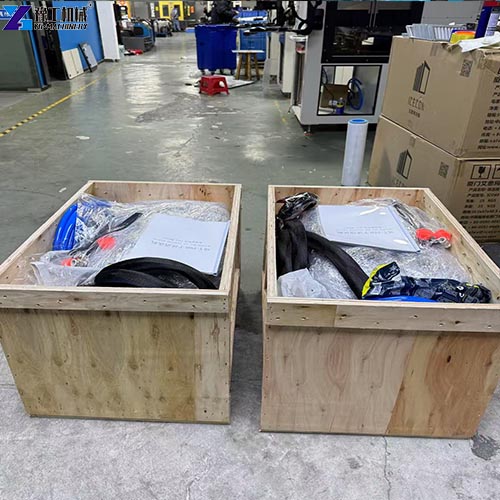
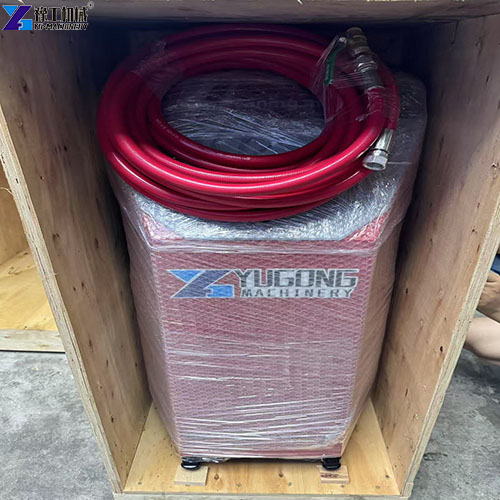
YG Machinery offers dry ice cleaning equipment for automotive maintenance, industrial equipment cleaning, mold cleaning, and other suitable applications. The YGP7X features adjustable ice delivery, a compact design, and a listed machine weight of 55 kg, while the YGA625 provides a higher listed ice delivery rate of up to 3.6 kg/min.
To identify the right industrial dry ice blaster for your business in Poland, share your cleaning application, workpiece material, contamination type, and available air compressor specifications. The equipment can then be evaluated against your actual operating requirements.
Contact YG Machinery for model details, technical specifications, and a quotation for your dry ice cleaning application.