
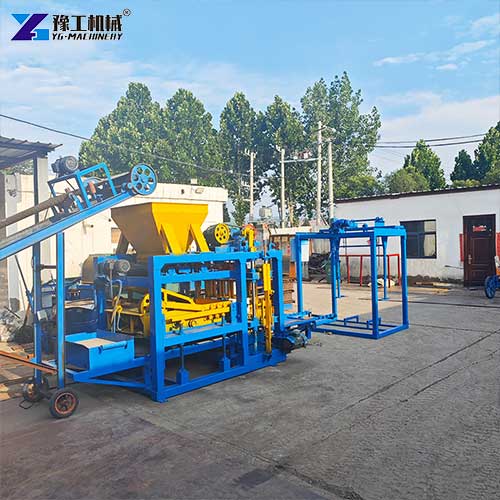
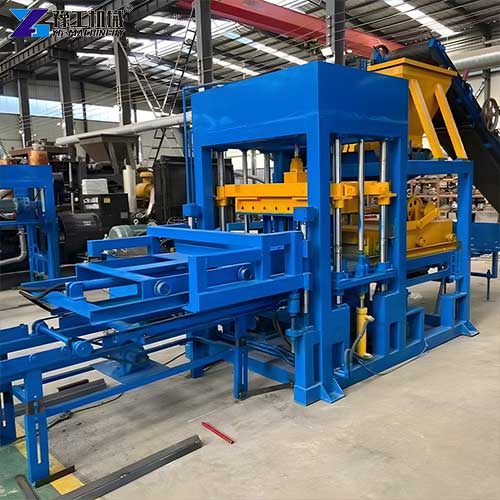
A Canadian construction materials producer needed an automated solution for manufacturing concrete blocks, standard bricks, and paving products with consistent production cycles. The customer wanted to use locally available materials such as sand, stone, stone powder, and cement while reducing dependence on manual production steps. YG supplied a complete automatic brick making machine price solution centered on the YG-QT4-15 automatic production line. The system integrates the main brick machine with a feeding system, hydraulic power station, computer control cabinet, material distributor, mixer, conveyor, and stacking machine.
With a 15-second molding cycle, the main machine can produce 4–7 bricks per mold, while the standard configuration has a rated power of 27.2 kW and a nominal pressure of 16 MPa. The production line uses hydraulic forming and vibration transmission to compress the prepared material into concrete bricks, hollow blocks, and paving products without firing. This allows the Canadian customer to establish a continuous production workflow from material mixing and feeding to forming and stacking.
Automatic Brick Making Machine Technical Parameters
| Item | YG-QT4-15 Specification |
| Model | YG-QT4-15 |
| Power | 27.2 kW |
| Molding Cycle | 15 seconds |
| Capacity per Mold | 4–7 bricks |
| Daily Output | 8,000–10,000 pcs |
| Forming Method | Hydraulic |
| Nominal Pressure | 16 MPa |
| Transmission Mode | Vibration Transmission |
| Machine Dimension | 5900 × 2200 × 2400 mm |
| Weight | 2,100 kg |
The complete production line includes the main brick machine, feeding board machine, board output machine, hydraulic pump station, computer control cabinet, material distributor, mixer, conveyor, and stacking machine.
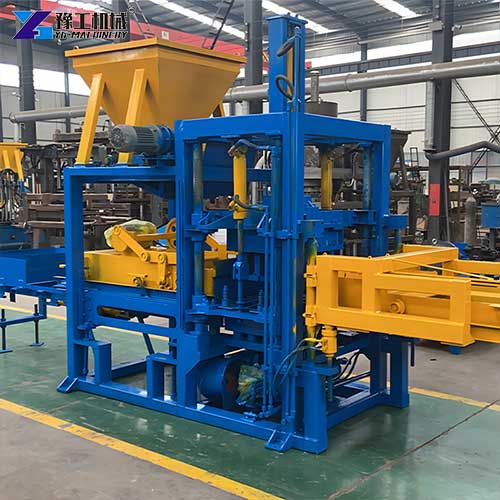
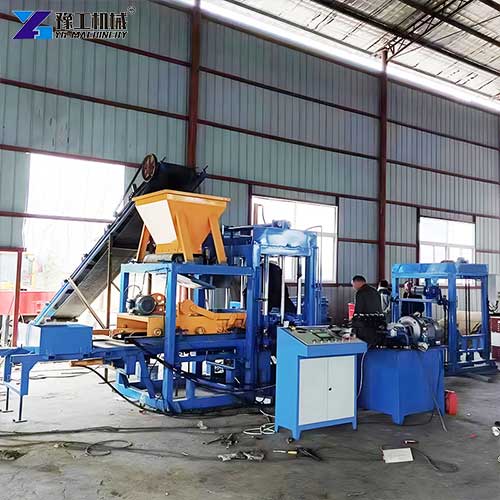
Case Study: Automatic Brick Making Machine for Concrete Block Production in Canada
Customer Background
The customer was a Canadian building-materials manufacturer supplying concrete products for local construction and landscaping projects. Its product range included concrete blocks and paving products, with demand varying between construction projects and seasonal infrastructure work.
The company had previously relied on a production process with several manual handling stages. As order volumes increased, the customer wanted a more integrated production line that could connect material preparation, brick forming, product transfer, and stacking into one continuous workflow.
Customer Requirements
The Canadian customer had several specific requirements for the new production line:
- Higher production consistency: The customer wanted a fixed molding cycle instead of relying heavily on manual production speed.
- Multiple product options: The equipment needed to produce hollow blocks, standard bricks, and pavers by changing the applicable mold.
- Automated material handling: Feeding, product transfer, and stacking needed to be integrated into the production process.
- Efficient use of raw materials: The customer planned to use cement, sand, stone, stone powder, and similar materials for non-fired concrete products.
- Continuous production: The customer wanted a complete line rather than a standalone forming machine.
The production process uses scientifically proportioned raw materials, water mixing, and high-pressure forming to produce concrete bricks, hollow blocks, and colored paving products. These products do not require firing and can be released after a relatively short drying period.
YG’s Solution and Customer Feedback
YG recommended the YG-QT4-15 configuration as the core of the customer’s automated production line. The complete setup combined the forming machine with material feeding, hydraulic power, computer control, mixing, conveying, and stacking equipment.
The solution directly matched the customer’s requirements:
| Customer Requirement | YG Solution |
| Consistent molding cycle | 15-second molding cycle |
| Automated forming | Hydraulic forming system |
| Stable material transmission | Vibration transmission |
| Integrated production | Mixer + conveyor + feeding + forming + stacking |
| Multiple concrete products | Different molds for blocks, bricks, and pavers |
| Continuous workflow | Automatic feeding, forming, ejection, transfer, and stacking |
The production cycle follows a continuous sequence: material feeding, compression, mold ejection, finished-product transfer, and refilling. The main motor drives the transmission system, while the crank-link mechanism converts rotary motion into vertical movement of the crossbeam.
The measurable production capacity of the selected YG-QT4-15 configuration is 8,000–10,000 pieces per day based on the stated standard production data.
The customer’s feedback focused on the integrated workflow:
“The main advantage for us is having the forming, conveying, and stacking processes connected in one production line. It makes the daily production process much easier to organize.”
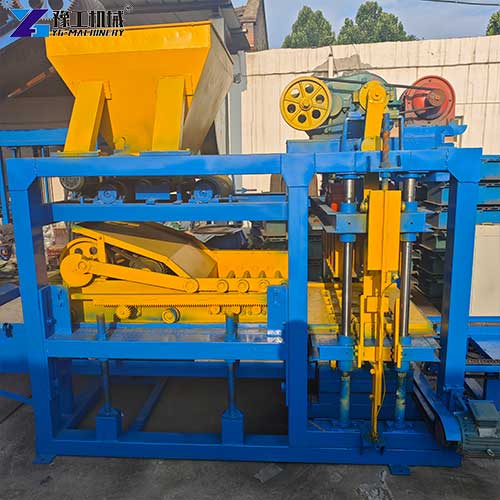
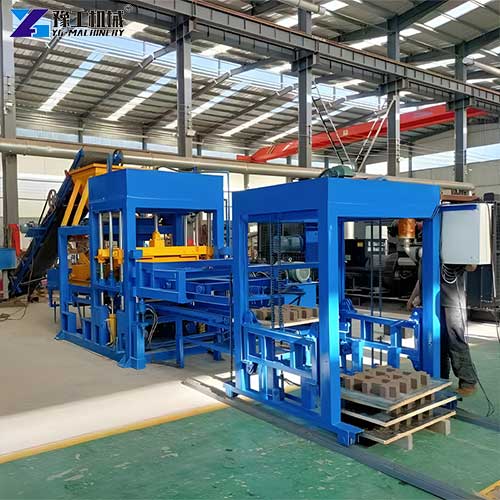
Core Design Features That Solved the Client’s Pain Points
1. Hydraulic Forming Creates a Consistent Production Cycle
The fully automatic brick making machine uses hydraulic forming with a nominal pressure of 16 MPa. The YG-QT4-15 has a 15-second molding cycle, allowing the production process to follow a defined operating rhythm.
This directly addresses the customer’s need for more consistent production compared with manually controlled forming operations.
2. Integrated Production Line Reduces Manual Material Handling
The complete system combines the brick machine with a mixer, conveyor, material distributor, feeding equipment, and stacking machine.
Instead of treating mixing, forming, transfer, and stacking as separate operations, the line connects these stages into a continuous workflow. This is particularly useful for manufacturers handling regular production orders.
3. Multiple Products Can Be Manufactured With Different Molds
The block brick making machine can be configured for different concrete products according to the required mold.
The available production data includes hollow blocks in 400 × 200 × 200 mm, 400 × 150 × 200 mm, and 400 × 100 × 200 mm sizes, as well as porous blocks, standard bricks, and pavers.
For example, the stated output for a 240 × 115 × 53 mm standard brick is 30 pieces per mold, with a production rate of 6,300–7,200 pieces per hour under the listed operating conditions. A 225 × 112.5 × 60 mm paver configuration produces 15 pieces per mold, with a listed rate of 2,160–2,700 pieces per hour.
4. Vibration Transmission Supports Efficient Material Forming
The production line uses vibration transmission during the forming process. Together with hydraulic compression, this helps transform the prepared mixture into the required concrete product shape.
This design allows the customer to use materials such as cement, sand, stone, stone powder, and other suitable aggregates as the basic production materials.
5. Automatic Control Coordinates the Production Process
The production line includes a computer control cabinet and hydraulic power station as part of the complete configuration.
The control system coordinates the recurring sequence of feeding, pressing, mold ejection, product pushing, and material replenishment, reducing the need for operators to manually coordinate every individual forming step.
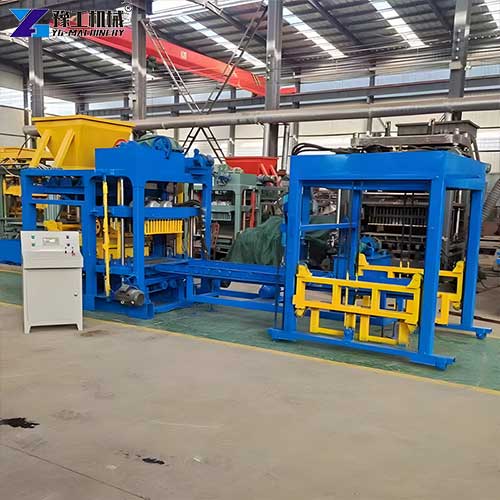
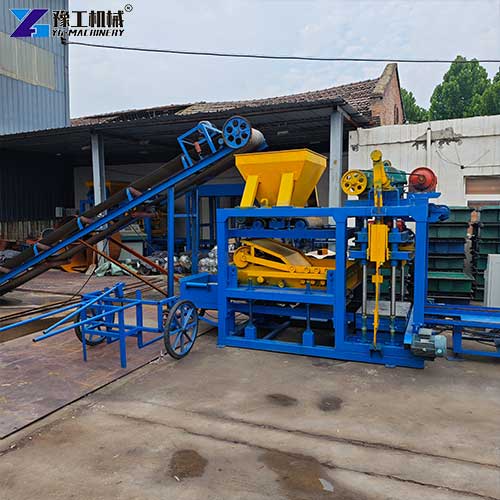
Industrial Brick Making Machine For Sale
YG supplies automatic concrete brick production solutions for manufacturers producing hollow blocks, standard bricks, porous blocks, and paving products. The equipment can use materials such as cement, sand, stone, stone powder, slag, fly ash, and other suitable raw materials according to the required product formulation.
For customers comparing a machine, model selection should consider the required product type, mold size, target daily output, available installation space, and degree of automation. The YG-QT4-15 configuration has a 27.2 kW power rating, 15-second molding cycle, and stated daily output of 8,000–10,000 pieces.
When evaluating the automatic brick making machine price, it is also important to consider whether the quotation includes only the main forming machine or the complete production line. A complete configuration can include the mixer, conveyor, feeding equipment, hydraulic station, control cabinet, and stacking system, which directly affects the total project investment.
If you are looking for an automatic brick making machine price for the Canadian market, send us your target brick or block size, required daily output, raw materials, and available factory space. YG can recommend a suitable configuration and provide a detailed quotation for the complete production line.