
Handling large glass panels and heavy stone slabs can be challenging when workers need to move materials between work areas or position them accurately. An Australian glazing contractor and a US stone-handling business both needed a more efficient way to handle heavy materials. By evaluating suitable glass vacuum lifting equipment, YG could address their different lifting and positioning requirements. If your business faces similar challenges, contact us to find a suitable model for your application.
Case 1: Glass Lift Robot Sold to Australia
1. Customer Background
A glazing contractor in Australia regularly handled large glass panels for commercial windows, partitions, and building façades. Moving panels into installation positions required careful coordination, especially in confined spaces where workers had limited room to adjust the glass manually.
The contractor wanted a powered solution to simplify panel movement and improve positioning during installation.
2. Customer Requirements
The main requirements were:
- Flexible positioning: Adjust panel height and reach during installation.
- Suitable lifting capacity: Handle panels of different weights within the machine’s rated limits.
- Easy movement: Move panels between preparation and installation areas with less manual repositioning.
3. Solution and Implementation
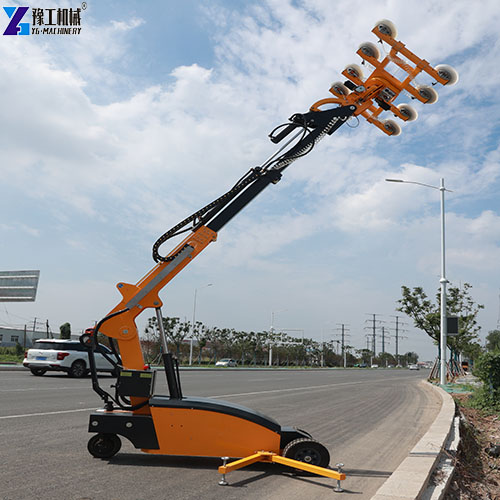
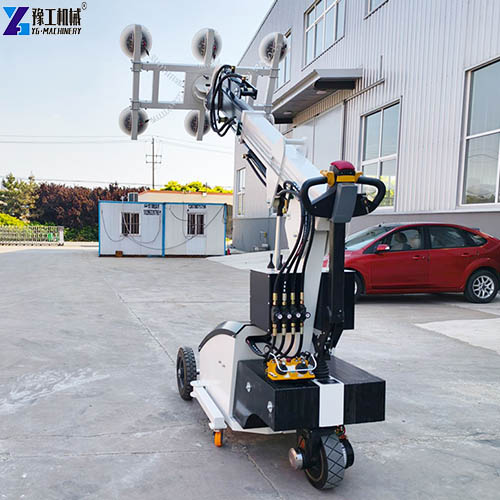
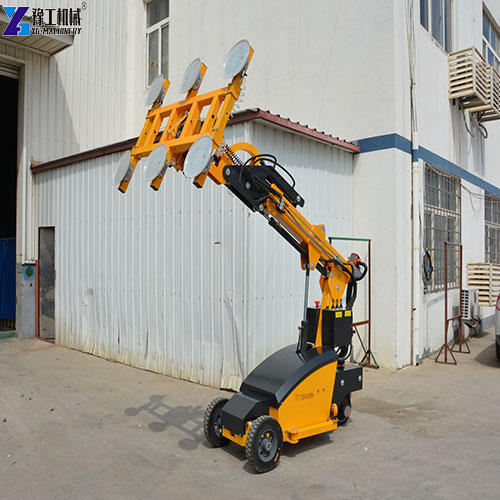
The YG-LD-500 glass lift robot was selected for evaluation based on the contractor’s expected load requirements. It has a rated capacity of 500 kg with the main arm retracted, and 250 kg with the arm extended, a lifting height of 3,700 mm, and six 300 mm suction cups.
Electric travel, powered lifting, and the extendable arm help operators move compatible glass panels and adjust their positions. The tilting and rotation functions also support changes in panel orientation, depending on the machine configuration.
Before lifting, the crew checks the panel weight, surface condition, suction-cup contact, and applicable load limit.
4. Results and Practical Value
The glass vacuum lifting equipment provides a more controlled way to move and position compatible glass panels. Powered lifting and adjustable reach can reduce repeated manual repositioning, while the suction frame helps with alignment before installation.
For glazing contractors, the key is to match the machine’s capacity, lifting height, and working reach to the actual panel dimensions and installation conditions.
Case 2: Glass Vacuum Lifting Equipment Sold to United States
1. Customer Background
A stone fabrication and installation business in the United States handled granite and marble slabs for countertops and interior projects. Moving slabs between storage, preparation, and workstations required careful coordination because of their weight and size.
The business wanted a powered handling solution for suitable slabs that could improve movement between work areas and simplify positioning.
2. Customer Requirements
The business focused on three priorities:
- Appropriate load capacity: Match the machine to the actual slab weight and arm position.
- Flexible handling: Move and position slabs around workstations more easily.
- Surface compatibility: Ensure the suction cups could form a reliable vacuum seal on the material.
3. Solution and Implementation
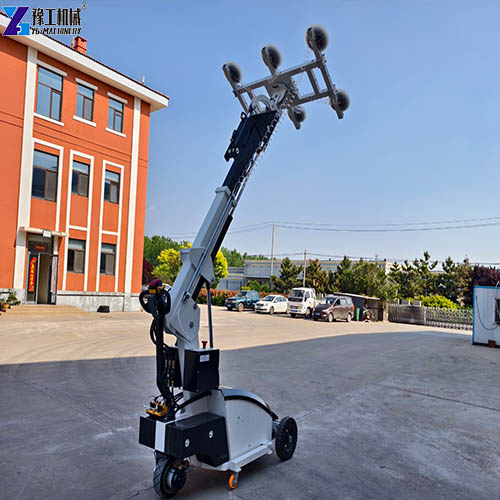
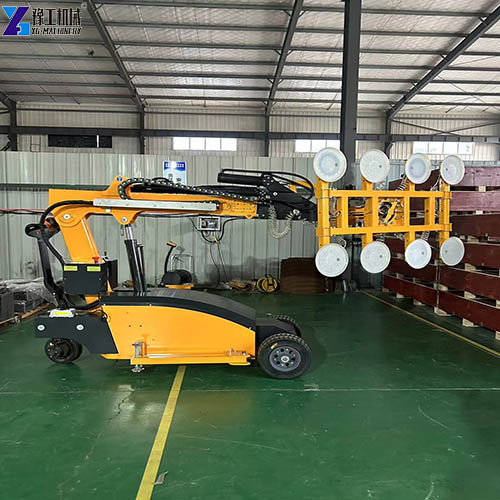
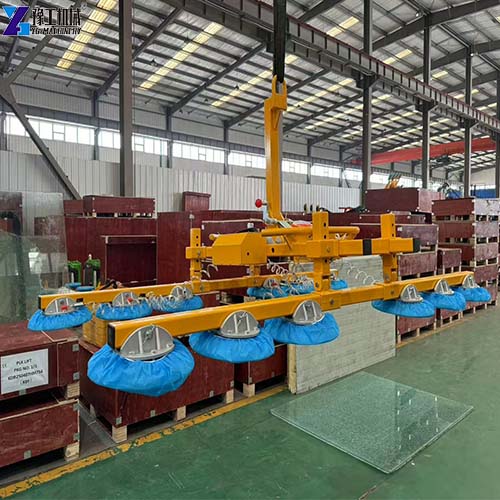
The YG-LD-800 glass vacuum lifting equipment was considered for applications requiring a higher rated capacity. The model has a listed capacity of 800 kg with the arm retracted and 400 kg with the arm extended. It offers a maximum listed lifting height of 5,000 mm and eight 300 mm suction cups.
Its powered travel, lifting system, and adjustable arm can support the transfer of compatible slabs between work areas. Before operation, the team needs to confirm the slab’s weight, center of gravity, surface condition, and suitability for vacuum lifting.
Granite and marble vary in porosity and surface finish. Rough, cracked, or uneven slabs may not provide a reliable vacuum seal, so compatibility must be verified before use.
4. Results and Practical Value
The machine offers a more organized approach to moving suitable slabs between workstations. Powered movement and lifting can reduce reliance on manual repositioning, while the extendable arm provides additional reach where required.
For stone-handling businesses, choosing the right capacity is only part of the decision. Surface compatibility, load distribution, and the intended lifting position must also be considered.
Comparing the YG-LD Glass Vacuum Lifting Equipments
The YG-LD series offers five models for different lifting requirements.
| Specification | YG-LD-300 | YG-LD-400 | YG-LD-500 | YG-LD-600 | YG-LD-800 |
| Capacity, arm retracted | 300 kg | 400 kg | 500 kg | 600 kg | 800 kg |
| Capacity, arm extended | 150 kg | 200 kg | 250 kg | 300 kg | 400 kg |
| Lifting height | 3,600 mm | 3,600 mm | 3,700 mm | 3,700 mm | 5,000 mm |
| Number of suction cups | 4 | 4 | 6 | 6 | 8 |
| Suction cup diameter | 300 mm | 300 mm | 300 mm | 300 mm | 300 mm |
| Travel motor | 16 V / 1,500 W | 16 V / 1,500 W | 24 V / 1,500 W | 24 V / 1,500 W | 24 V / 1,200 W |
| Lifting motor | 24 V / 2,000 W / 10 L | 24 V / 2,000 W / 10 L | 24 V / 2,000 W / 10 L | 24 V / 2,000 W / 10 L | 24 V / 2,000 W / 12 L |
| Package dimensions (mm) | 2580 × 1030 × 1600 | 2580 × 1030 × 1600 | 2580 × 1030 × 1600 | 2580 × 1050 × 1600 | 3630 × 1125 × 1760 |
| Net / gross weight | 1,100 / 1,150 kg | 1,280 / 1,330 kg | 1,300 / 1,350 kg | 1,400 / 1,450 kg | 1,600 / 1,650 kg |
All models list 300 mm suction cups. Actual suitability depends on load weight, arm position, material surface, and operating conditions. Buyers should confirm the final configuration with the supplier.
5 Key Features of a Glass Lifter Machine
- Electric travel and lifting: Help operators move the machine and raise or lower compatible loads.
- Extendable arm: Provides additional reach when approaching a panel or slab directly is difficult.
- Tilting and rotation: Support changes in material orientation; some functions may require optional electric operation.
- Individual vacuum control: Each suction cup has its own control valve for inspection and maintenance.
- Vacuum reserve and alarm: Provide additional protection if power is interrupted but do not replace safe operating procedures.
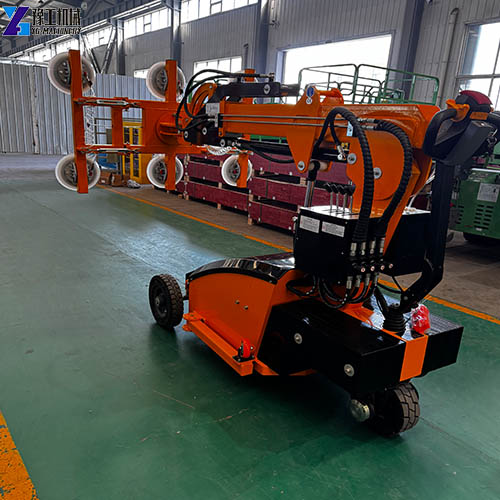
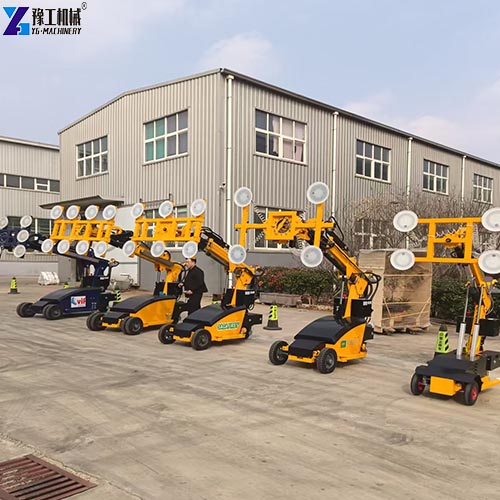
YG Glazing Robot For Sale
The Australian glazing application emphasizes panel positioning and installation height, while the US stone-handling application highlights load capacity and surface compatibility.
When comparing glass vacuum lifting equipment or looking for a glazing robot for sale, consider the material type, load weight, dimensions, required lifting height, and available working space. These details help determine whether a YG-LD-300, YG-LD-400, YG-LD-500, YG-LD-600, or YG-LD-800 is appropriate.
Contact us with your application details to compare models and confirm a suitable configuration for your project.