
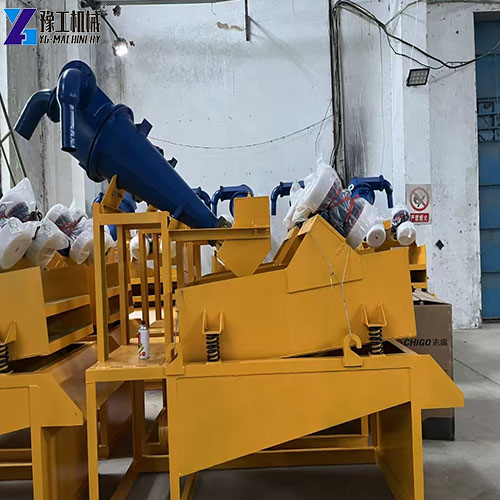
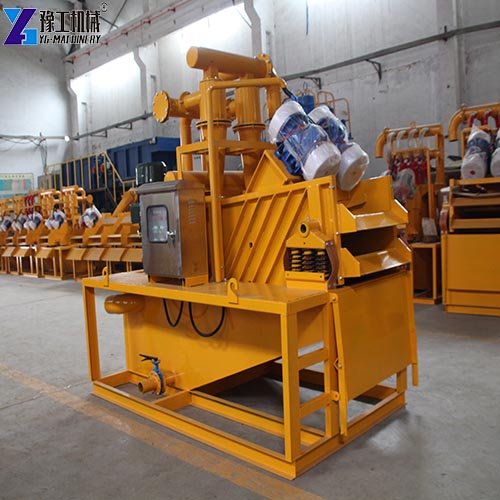
Mud treatment equipment removes sand, gravel, and other solid particles from drilling slurry. It helps reduce the sand content of the treated slurry, making it more suitable for construction processes that require better slurry quality.
A mud separator uses a combination of a hydrocyclone and vibrating screens to separate heavier particles from the liquid. Depending on the model, the system can process slurry once or circulate it through the screening system again for further separation.
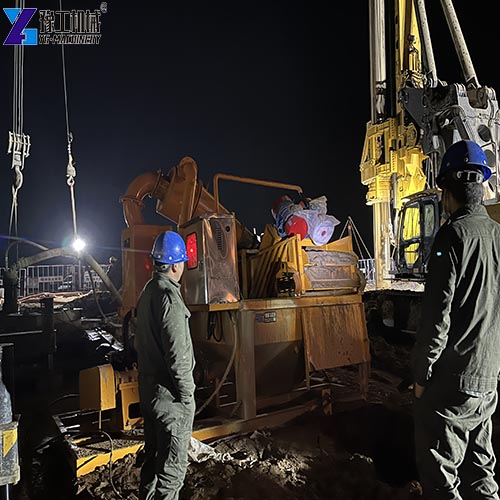
YG provides several models designed for different site conditions, from single-cycle sand separation to internal-circulation systems that allow repeated screening. This equipment serves piling, trenchless directional drilling, shield tunneling, well drilling, bridge construction, and other projects that require sand removal from slurry.
What Problems Can Mud Treatment Equipment Solve?
Construction slurry often contains sand and solid particles that can interfere with work quality and equipment operation. Proper sand separation helps contractors manage these challenges.
1. Reduce Sand Content in Piling Slurry
During pile drilling, sand can accumulate in the slurry and borehole. Excessive sand in the slurry can contribute to concrete placement problems, including the risk of pile defects or unsatisfactory pile inspection results.
YG’s equipment removes sand and other solid particles from the slurry, helping contractors improve slurry quality during piling operations.
2. Handle Sand Removal in Different Construction Projects
Many projects require sand separation to maintain suitable slurry conditions. Typical applications include:
- Piling and foundation construction: Remove sand from slurry generated during drilling.
- Trenchless directional drilling: Process slurry produced during underground pipeline installation.
- Shield tunneling: Separate solid particles from construction slurry.
- Well drilling: Remove sand and other particles from drilling fluids.
- Bridge construction: Support foundation work and other operations that require slurry treatment.
3. Improve the Treatment of Fine Sand
Some sites contain finer sand or larger solid particles that a basic screening configuration may not handle effectively.
YG’s internal-circulation models allow slurry to pass through the screening process repeatedly. This configuration can improve sand removal compared with a single-cycle model, particularly when site materials contain fine sand and larger stones.
However, extremely fine particles, such as sand around 100 mesh, can be difficult to separate. Contractors should confirm the material conditions before selecting a machine.
4. Match Equipment to Different Site Conditions
Not every construction site needs the same configuration. A single-cycle machine may suit projects involving medium or coarse sand without large stones, while an internal-circulation model offers greater flexibility for more demanding conditions.
Selecting the appropriate configuration helps contractors avoid paying for unnecessary equipment while ensuring the system suits the actual slurry.
How Does a Mud Separator Work? Follow One Batch of Slurry
The easiest way to understand the working process is to follow a batch of slurry from its entry into the machine to its final discharge.
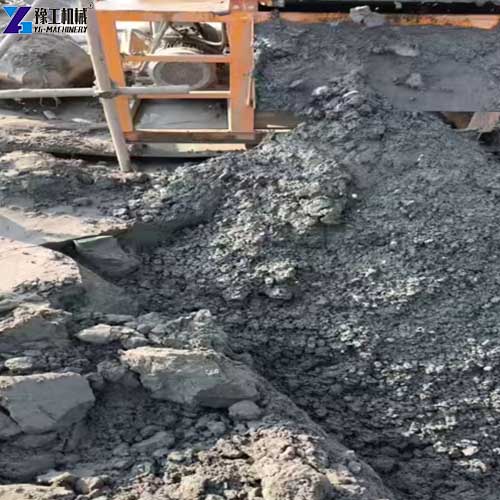
Step 1: Slurry enters the system
A pump delivers slurry containing sand and other solid particles into the machine. The slurry must remain fluid enough for the pump to move it. Material that is excessively thick or has dried and hardened is unsuitable for normal pumping.
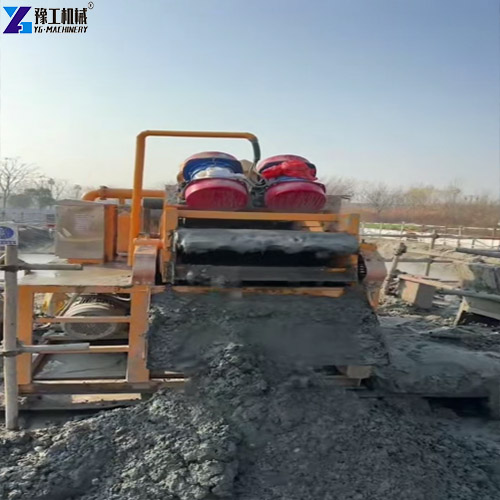
Step 2: The hydrocyclone separates heavier particles
The slurry enters the hydrocyclone, where high-speed centrifugal action helps separate heavier particles from the lighter liquid. The heavier particles move toward the screen, while the lighter slurry flows out toward the slurry tank.
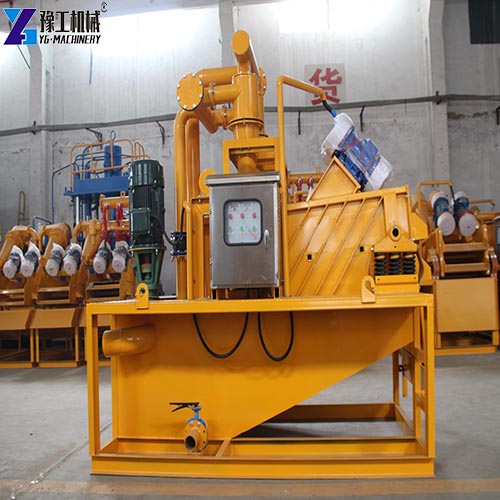
Step 3: Vibrating screens separate solid particles
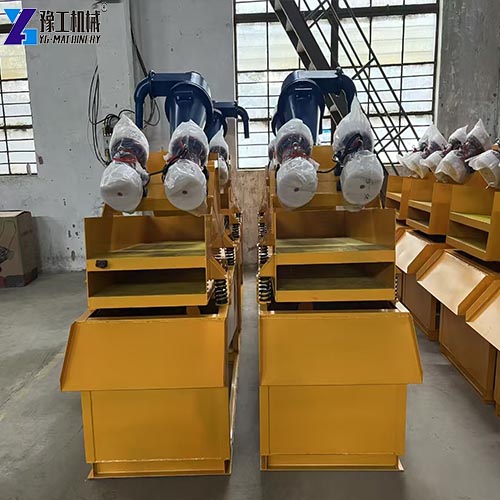
A vibration motor drives the screen to vibrate. The screen removes solid particles according to its screening configuration. YG uses a two-layer arrangement, with a coarser lower separation stage and a finer upper screening stage in its internal-circulation models. Screen materials include polyurethane and stainless steel.
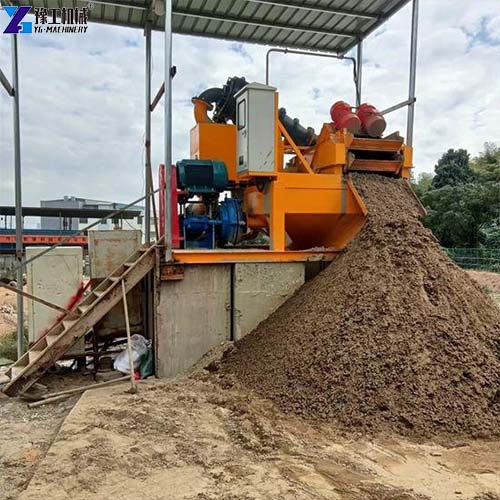
Step 4: The treated slurry enters the tank
After screening, the lighter slurry flows into the slurry tank. In a single-cycle machine, the slurry completes its treatment pass and can be discharged. In an internal-circulation machine, an integrated pump can draw slurry from the tank and return it to the screening system.
Step 5: The system completes one or more treatment cycles
A single-cycle machine processes the slurry once. An internal-circulation model can repeat the screening process to improve separation. Contractors can select the configuration according to the material and the required treatment conditions.
The main difference between these configurations is the treatment route. A single-cycle system offers a simpler arrangement, while an internal-circulation system adds a pump to return slurry for further screening.
Why Consider YG for Mud Treatment Equipment?
YG offers a range of sand-separation configurations for construction projects with different material and processing requirements. Rather than using one setup for every application, buyers can choose between single-cycle and internal-circulation models.
1. Two Configurations for Different Requirements
Single-cycle models: A series
The A series processes slurry once inside the machine. It suits medium and coarse sand when the material does not contain large stones. Its simpler configuration also offers a lower purchase cost than the internal-circulation option.
Internal-circulation models: B and C series
The B and C series can circulate slurry through the screening system repeatedly. They suit a wider range of site conditions, particularly applications involving larger stones and finer sand.
These models provide an option for contractors who need more extensive screening than a single-cycle system can offer.
2. Different Pump Arrangements in the B and C Series
The B and C series share the internal-circulation principle but use different pump arrangements.
| Feature | B Series | C Series |
| Pump arrangement | Vertical pump | Horizontal pump |
| Cost | Relatively lower | Relatively higher |
| Typical application | Internal-circulation treatment | Often used on larger machines |
| Maintenance and operation | Depends on the selected model and site conditions | The horizontal pump arrangement facilitates maintenance and supports stable operation |
According to YG’s product information, the C series uses a horizontal pump arrangement that is less prone to damage and easier to maintain. The B series uses a vertical pump and offers a lower-cost alternative while maintaining the same intended treatment effect.
3. Screen Design for Solid-Liquid Separation
Screen selection plays an important role in the treatment process.
YG’s documented screen configurations include:
- Polyurethane screens: Used for coarse sand screening.
- Stainless steel screens: Used for finer sand screening.
- Slotted stainless steel screens: Offer a high open area, good water permeability, and durability.
The appropriate screen configuration depends on the machine model and the characteristics of the material being processed.
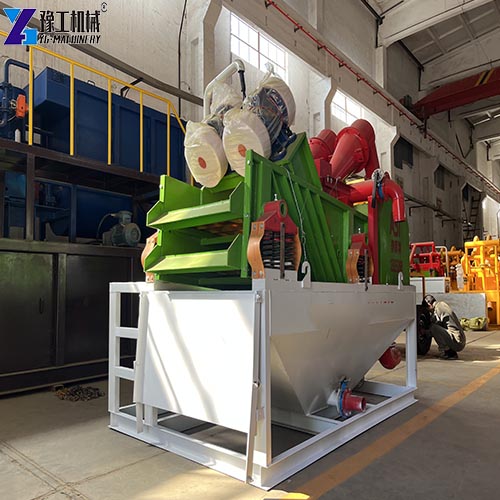
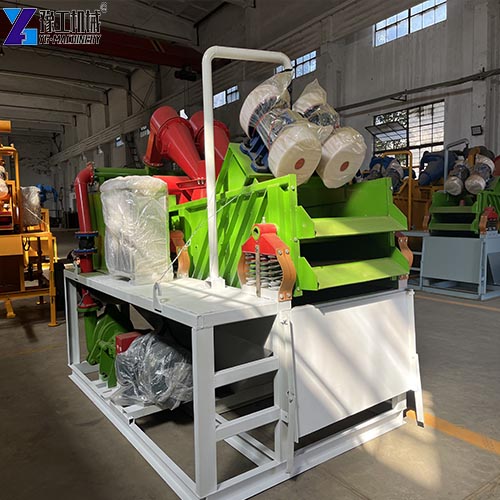
YG’s Best-Selling Models and Technical Parameters
YG offers seven commonly sold models: YG-100A, YG-250A, YG-160B, YG-200B, YG-250B, YG-250C, and YG-300C. The following table summarizes the technical specifications provided in the product documentation.
| Technical Parameters | YG-100A | YG-250A | YG-160B | YG-200B | YG-250B | YG-250C | YG-300C |
| Maximum Slurry Processing Capacity (m³/h) | 100 | 250 | 160 | 200 | 250 | 250 | 300 |
| Total Machine Power (kW) | 0.5 | 3 | 17.2 | 24.2 | 25 | 48 | 59.4 |
| Vibration Motor Power (kW) | 0.25 × 2 | 1.5 × 2 | 1.1 × 2 | 1.1 × 2 | 1.5 × 2 | 1.5 × 2 | 2.2 × 2 |
| Total Machine Weight (kg) | 550 | 1,350 | 1,950 | 2,050 | 2,300 | 4,000 | 5,500 |
| Material Screening Capacity (t/h) | 10–25 | 25–62.5 | 16–40 | 20–50 | 25–62.5 | 25–62.5 | 30–75 |
| Overall Dimensions (L × W × H, m) | 2.5 × 0.83 × 2.1 | 3.7 × 1.2 × 2.4 | 2.7 × 1.9 × 2.6 | 2.7 × 1.9 × 2.6 | 3.3 × 2.0 × 2.3 | 4.0 × 2.3 × 2.7 | 4.3 × 3.0 × 3.1 |
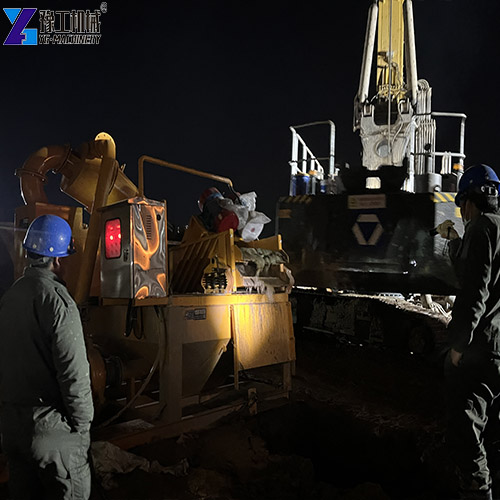
YG Mud Treatment Equipment for Sale
Looking for a suitable solution for piling, drilling, tunneling, or other construction projects that require sand separation?
YG offers multiple models and circulation configurations to help buyers match equipment to their site conditions. Whether you need a straightforward single-cycle system or an internal-circulation configuration for repeated screening, the first step is to identify the slurry characteristics and required processing capacity.
Contact YG to discuss your project and request model recommendations, technical specifications, and a quotation.
Frequently Asked Questions
Both terms describe equipment used to remove sand and other solid particles from slurry. The exact equipment configuration matters more than the name: YG’s systems use hydrocyclone separation and vibrating screens, with either single-cycle or internal-circulation operation.
The internal-circulation B and C series can screen slurry repeatedly and generally provide better sand removal than the A series under suitable conditions. However, extremely fine particles, such as sand around 100 mesh, can be difficult to separate. Confirm the particle size and slurry characteristics before purchasing mud treatment equipment.
No. The A series uses single-cycle treatment. The B series uses an internal-circulation system with a vertical pump, while the C series uses an internal-circulation system with a horizontal pump.
The slurry tank stores the treated slurry, which can be discharged or returned to the internal pump for further screening, depending on the machine configuration and operating process.
Start by identifying the sand particle size, the presence of larger stones, slurry consistency, required processing capacity, and available installation space. Then compare the A, B, and C series to determine which configuration best fits your working conditions.
A mud treatment equipment should always match the actual particle size, slurry flowability, and processing requirements of the construction site.