
A wastewater treatment plant may generate thousands of liters of slurry daily, but a unit with insufficient clamping pressure will leak, while one with too little filtration area will bottleneck the entire discharge line. When the filter cake still holds too much moisture, you pay more for hauling and disposal. Choosing the wrong industrial filter press leads to frequent cloth replacement, high labor costs, and halted production.
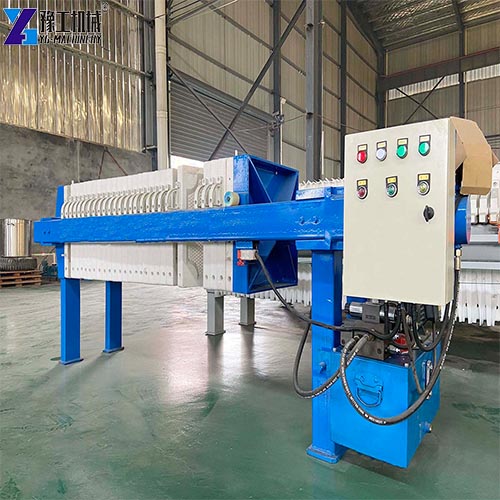
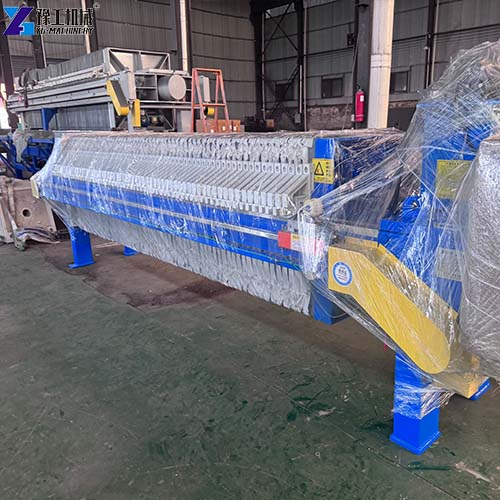
This guide compares three popular models: XMZ100, XMZ250, and XMZ500. It explains how to match filtration area, clamping method, and membrane squeezing to your actual throughput. We will also help you decide whether you need a standard sludge filter press or a high-efficiency dewatering filter press for your specific site conditions.
Industrial Filter Presses Technical Parameters: XMZ100 vs XMZ250 vs XMZ500
| Model | XMZ100/1000-30U | XMZ250/1250-30U | XMZ500/1500-30U |
| Chamber Volume | 1,500 L | 3,750 L | 7,500 L |
| Filtration Area | 100 m² | 250 m² | 500 m² |
| Clamping Pressure | 20 MPa | 20 MPa | 20 MPa |
| Filtration Pressure | 0.6 MPa | 0.6 MPa | 0.6 MPa |
| Overall Weight | 6,628 kg | 14,288 kg | 30,288 kg |
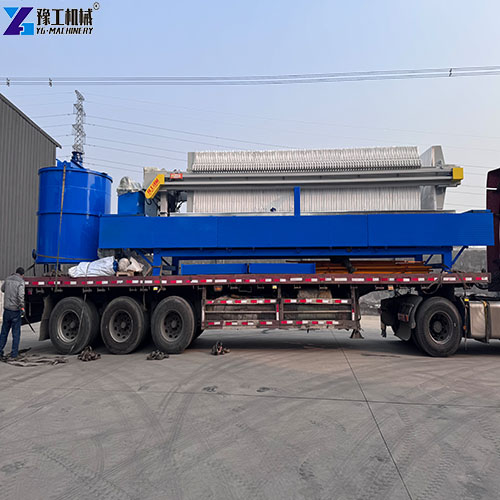
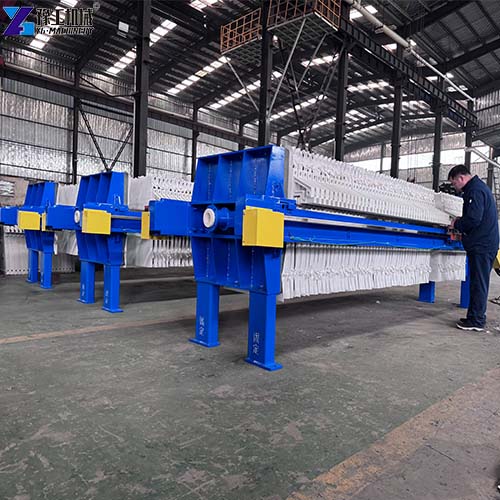
Dewatering Filter Press Model Comparison and Recommendation
XMZ100/1000-30U: The Compact Entry Choice
Best for: small to mid-size treatment plants, workshops, and pilot projects.
This industrial filter press offers a 100 m² filtration area and a 1,500 L chamber volume. It delivers 20 MPa clamping pressure and 0.6 MPa filtration pressure. At 6,628 kg, it fits into compact factory spaces and keeps installation costs low. If your daily slurry volume is moderate, this model handles the load without demanding a massive footprint.
XMZ250/1250-30U: The Mid-Range Production Choice
Best for: municipal wastewater plants, large manufacturing facilities, and mining operations.
With a 250 m² filtration area and a 3,750 L chamber volume, this unit doubles the capacity of the entry model. It maintains 20 MPa clamping pressure and 0.6 MPa filtration pressure. The 14,288 kg structure ensures stable operation under continuous cycling. When your production line generates consistent slurry, this industrial filter press balances capacity and floor space efficiently.
XMZ500/1500-30U: The High-Volume Industrial Choice
Best for: large-scale mining, power plants, and heavy chemical processing.
This model features a 500 m² filtration area and a massive 7,500 L chamber volume. The 30,288 kg frame handles the stress of high-volume batch processing. It keeps the same 20 MPa clamping and 0.6 MPa filtration pressure, ensuring reliable cake formation even at maximum load. For facilities that need to process massive slurry volumes daily, this industrial filter press delivers the throughput you need.
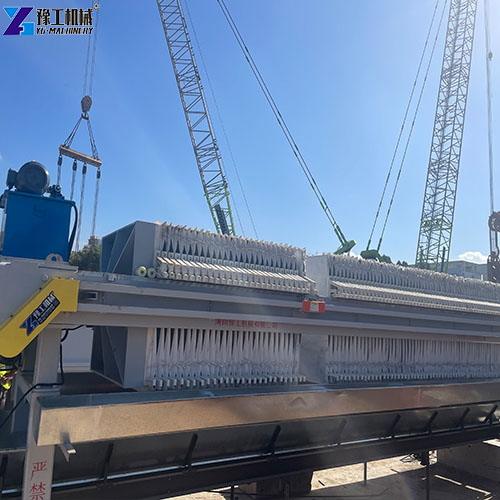
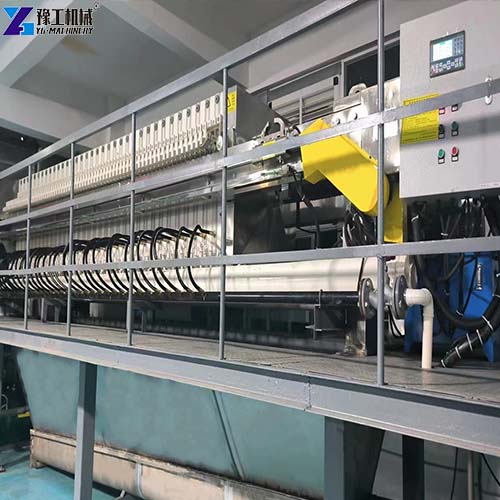
How to Select the Right Sludge Filter Press Model: A 5-Step Guide
Step 1: Calculate your required filtration area and chamber volume. If your daily slurry output is under 10 tons, the 100 m² model usually suffices. For 20 to 30 tons per day, move up to the 250 m² model. For massive tailings or municipal plants exceeding 50 tons daily, the 500 m² model is the practical choice. Always size based on peak production, not just the average.
Step 2: Choose your clamping method. Manual jacks work for small workshops with infrequent use. Hydraulic automatic clamping with automatic pressure retention suits continuous operation. Program-controlled automatic plate pulling uses PLC cabinets to move the plates, reducing labor intensity on large machines. If you run multiple shifts, the automatic options pay for themselves quickly.
Step 3: Decide if you need membrane squeezing. Standard chamber filter presses use pump pressure to form the cake. If you need a lower moisture content, choose a membrane filter press. It pumps water or air into the membrane plates after filtration, squeezing the cake to reduce moisture. This step alone dictates your choice if you handle fine particles or strict disposal rules.
Step 4: Match the construction material to your slurry. Standard carbon steel with anti-corrosion coating works for neutral slurries. For acidic or alkaline chemicals, specify stainless steel or PP (polypropylene) coated plates. If you need to move the equipment between sites, ask about the mobile trailer-mounted configuration.
Step 5: Plan your auxiliary equipment. A filter press needs a feed pump to push the slurry, a platform for safe operator access, and a belt conveyor to transport the discharged cakes. Adding a filter cloth washing system extends cloth life. When you purchase an industrial filter press, confirm that the supplier offers these accessories to avoid installation delays.
Get a Tailored Recommendation
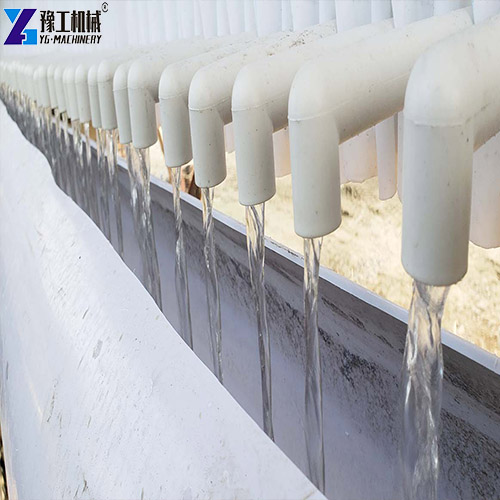
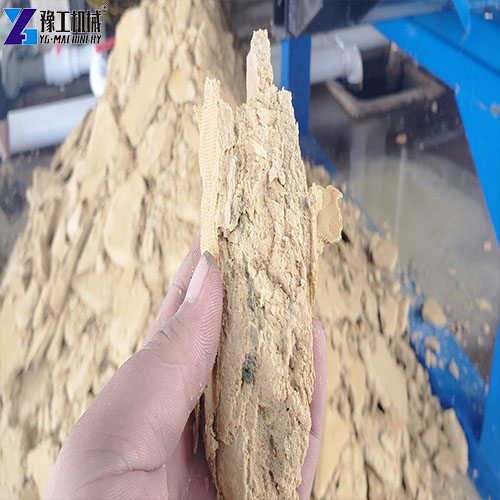
Send your slurry type, daily volume, required cake moisture, and available floor space. We will recommend the right industrial filter press and confirm whether you need standard chamber plates or membrane squeezing. If you are comparing a sludge filter press for municipal use or a heavy-duty dewatering filter press for mining, our team provides full technical support and quotes. Contact us today to ensure your facility gets the exact equipment it needs.