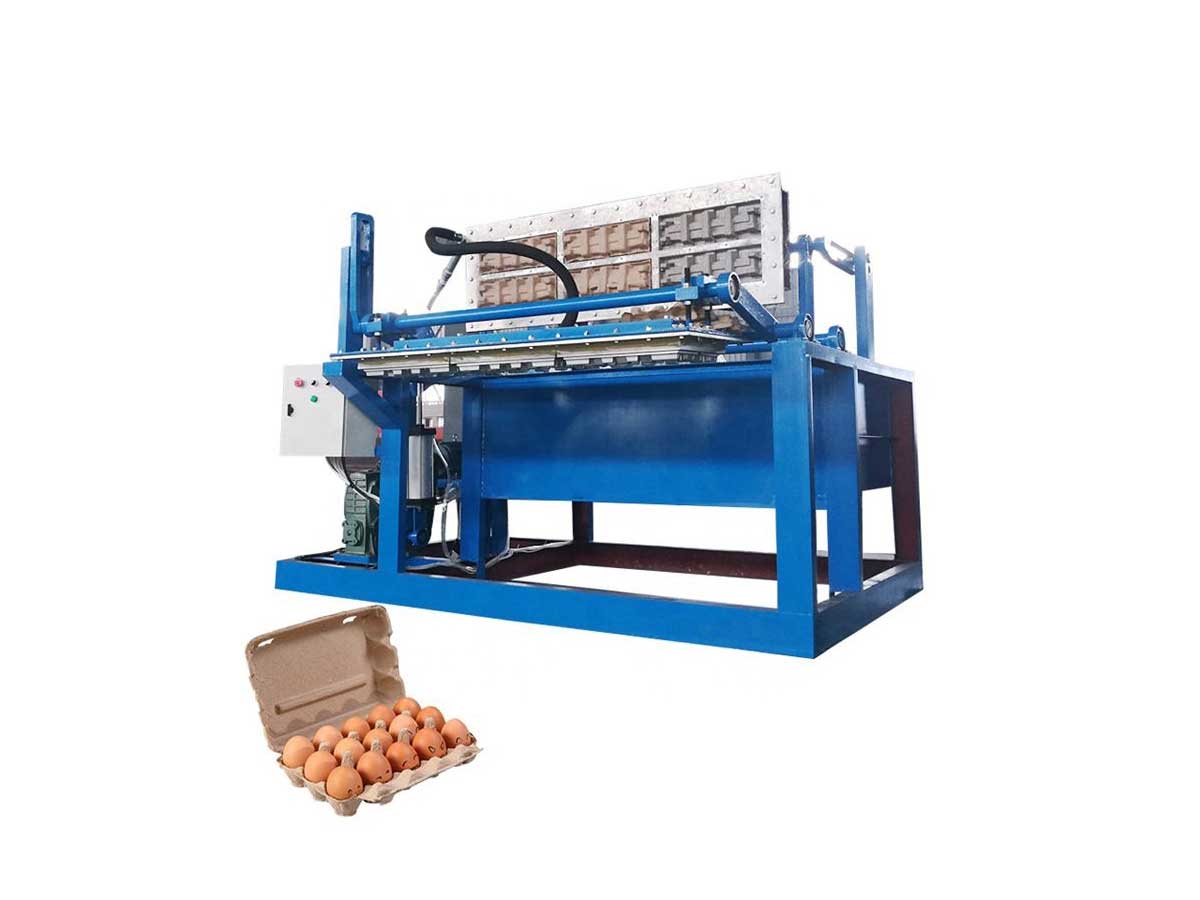

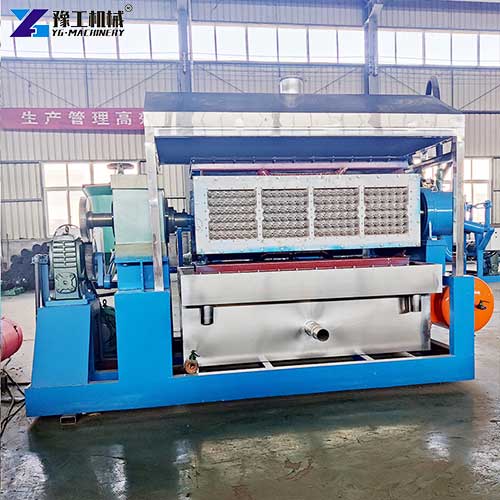
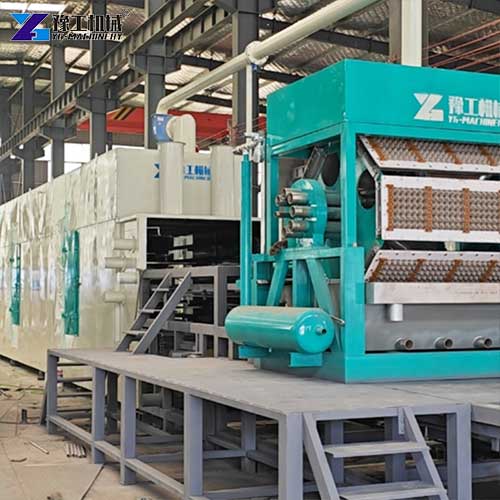
An egg paper tray making machine converts waste paper, old cartons, and other suitable fiber materials into molded pulp egg trays through pulping, vacuum forming, dewatering, demolding, and drying. For Brazilian poultry farms, egg processors, and packaging businesses, this production method provides a practical way to manufacture egg trays locally instead of relying entirely on purchased packaging.
YG equipment can be configured according to required capacity, mold specifications, automation level, and drying method. Depending on the project, customers can choose smaller forming equipment for limited production or higher-capacity rotary systems for continuous manufacturing. The same pulp molding principle can also be adapted to fruit trays, bottle holders, and other molded fiber packaging products.
How Does an Egg Paper Tray Making Machine Work?
The production process begins with waste paper, waste cartons, straw, or other suitable raw materials. These materials are processed through a pulping system and diluted into uniform pulp.
The pulp is then transferred to the forming section. Using vacuum suction, the pulp attaches evenly to the surface of the customized mold. After dewatering and forming, the wet tray is removed from the mold and sent to the drying section.
The complete process can be organized as:
Raw Material Preparation → Pulping → Forming → Dewatering → Demolding → Drying → Finished Egg Trays
This process allows continuous production and produces molded trays with good structure, cushioning, and ventilation.
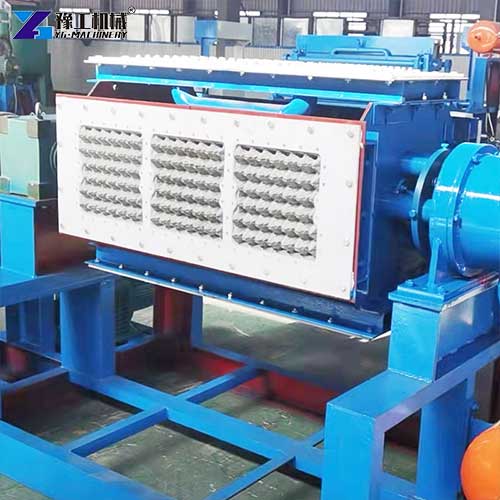
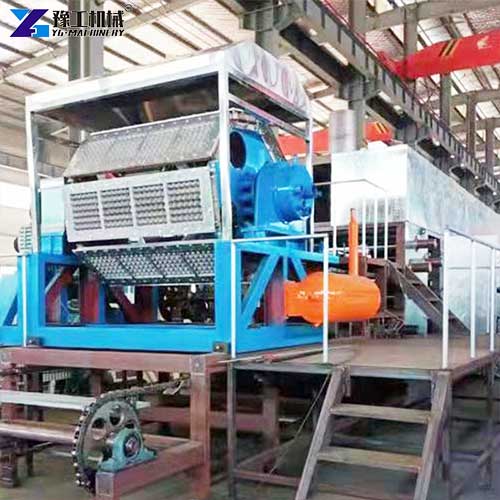
Case Study: Egg Tray Production Solution for a Brazilian Project
Brazil has been identified as one of the larger-capacity markets in the Americas for egg tray equipment, making production capacity an important consideration for local poultry and packaging businesses.
Customer Background
A Brazilian poultry-related packaging business was evaluating a local molded-pulp tray production solution. Instead of purchasing all finished trays from outside suppliers, the project required a production setup that could process suitable recycled fiber materials and manufacture egg trays closer to the point of use.
The project also needed flexibility because production requirements can change as the business expands.
Customer Requirements
The planned production solution needed to address several practical points:
- Use waste paper or recycled cartons as the main raw material.
- Produce molded pulp egg trays with consistent forming quality.
- Select a production capacity according to actual egg packaging demand.
- Keep manual labor under control through suitable automation.
- Choose a drying method according to available space and energy conditions.
- Allow future mold changes for other molded pulp products.
These requirements are consistent with the main factors that influence equipment selection, including hourly capacity, mold stations, drying method, automation level, raw-material compatibility, footprint, and installed power.
YG’s Solution
For a project with relatively controlled production requirements, a smaller forming configuration such as 3×1 or 4×1 can be considered, with a reference output of around 1,000–1,500 pieces per hour. For larger production requirements, 3×4 or 4×4 configurations can be selected according to the required output and production layout.
| Project Requirement | Recommended Solution |
| Recycled paper raw materials | Waste paper, waste cartons, and other suitable fiber materials |
| Egg tray production | Customized egg tray molds |
| 1,000–1,500 pcs/h requirement | 3×1 or 4×1 configuration |
| Larger production demand | 3×4 or 4×4 configuration |
| Limited drying area | Drying box or other compact drying arrangement |
| Lower initial investment | Natural air-drying can be considered |
| Higher automation requirement | Automated demolding and suitable drying system |
| Future product expansion | Replaceable/customized molds |
The final configuration should be selected after confirming the customer’s required output, egg tray specification, factory space, raw materials, and drying conditions rather than using the same machine configuration for every project.


Why Choose a Paper Egg Tray Machine for Brazilian Production?
1. Recycled Materials Can Be Used
The production system can process waste cartons, waste paper, and straw into pulp for molded packaging. This gives poultry farms and packaging producers more flexibility in selecting raw materials.
2. Flexible Production Capacity
Not every customer needs a large automated production line. Smaller configurations can serve startup businesses or farms with moderate demand, while larger forming systems are available for higher-volume production. This model gradient covers small investment projects through larger automated production lines.
3. Multiple Drying Options
Drying has a major influence on the overall production layout. Depending on the available space and production target, customers can consider natural drying, drying boxes, civil drying systems, multi-layer metal drying, electric heating, or gas heating.
4. One Machine Can Support Multiple Products
With customized molds, the same pulp molding production concept can be used for egg trays, fruit trays, bottle holders, and other molded fiber products. This gives the equipment greater flexibility when the business expands beyond egg packaging.
5. Mold Changes Support Product Flexibility
The egg paper tray making machine is designed around replaceable molds, allowing customers to adjust products according to market requirements. The source material notes that the rapid mold-change design can complete a mold switch within one hour under the stated operating conditions.

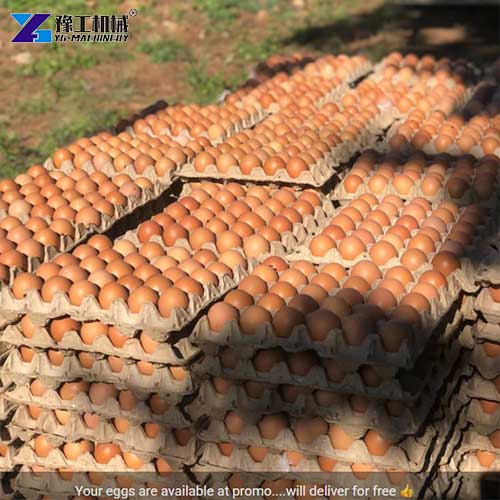
Egg Tray Manufacturing Machine for Different Production Needs
The right egg tray manufacturing machine depends mainly on production volume, available space, automation requirements, and drying conditions.
For a small farm or startup, a 3×1 or 4×1 configuration can provide a relatively compact entry point. The reference production range is approximately 1,000–1,500 egg trays per hour.
For larger farms, egg processors, and packaging manufacturers, higher-capacity configurations can be considered. A complete project can integrate pulping, forming, drying, and stacking to reduce manual handling and create a more continuous production workflow.
The egg paper tray making machine is therefore not limited to one customer type. It can be configured for:
- Poultry farms producing trays for their own eggs
- Egg processing and packing businesses
- Molded pulp packaging factories
- Packaging distributors and manufacturers
- Businesses developing environmentally oriented packaging products
Egg Carton Machine with Customized Drying Solutions
Drying is one of the most important parts of a molded pulp production line because it affects both production efficiency and factory layout.
For projects with sufficient outdoor space, natural drying can reduce initial equipment investment, though it requires more racks, floor space, and labor. A drying box provides a more controlled arrangement within a relatively defined area.
For larger production lines, civil drying or multi-layer metal drying can provide a more organized continuous process. Choose based on production capacity, local energy conditions, available space, and the desired level of automation.
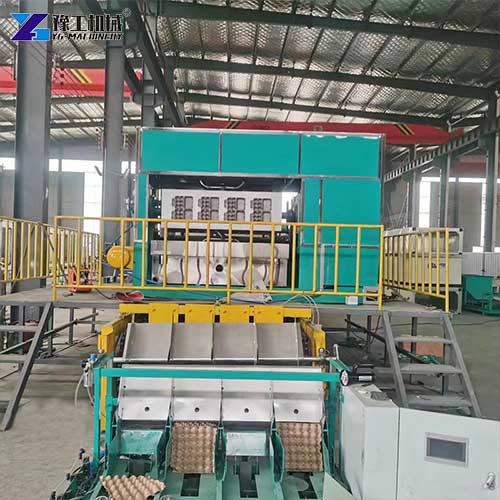
Build Your Egg Tray Production Line with YG
A complete project can be planned from raw-material preparation through finished tray production. YG can help customers evaluate equipment configuration, mold requirements, drying options, factory layout, and production capacity according to the intended application.
If you are looking for an egg paper tray making machine for a poultry farm, egg packaging business, or molded pulp production project in Brazil, send us your required capacity, tray specifications, available raw materials, and factory conditions. We can recommend a suitable production configuration based on your actual requirements.