
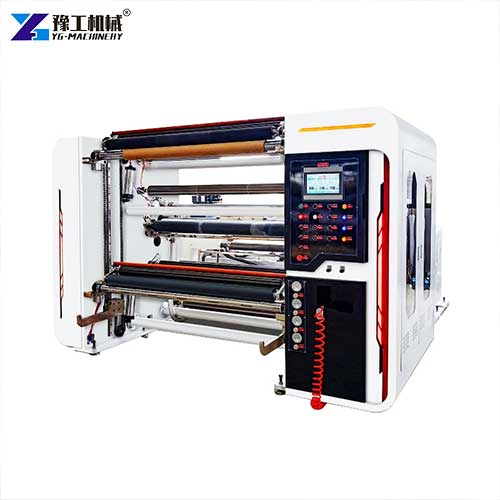
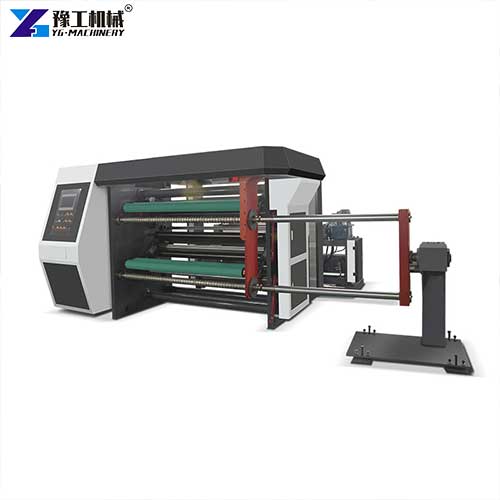
A paper slitting rewinding machine converts a wide master roll into multiple narrower rolls and rewinds them under controlled tension. It is also called a paper slitter rewinder, or a thermal paper slitting machine when configured for thermal paper rolls. The machine combines unwinding, web guiding, tension control, slitting knife groups, and rewinding into one production line. Two technical features matter most: stable tension keeps each finished roll flat and evenly wound, while adjustable knife positioning allows widths from 5 mm on back-to-back models to 3000 mm custom widths on gantry models.
YG offers YG-1300, YG-1600, and YG-1800 hot-selling models, plus A-type, C-type, bridge-type, back-to-back, gantry, and single-shaft configurations for paper, film, foil, nonwoven, and label converters. For paper mills, packaging plants, printers, and industrial material processors, the right configuration depends on material, web width, roll diameter, and finished roll or sheet format. Contact YG for a free quote and model recommendation.
Parameters of Paper Slitting Rewinding Machine
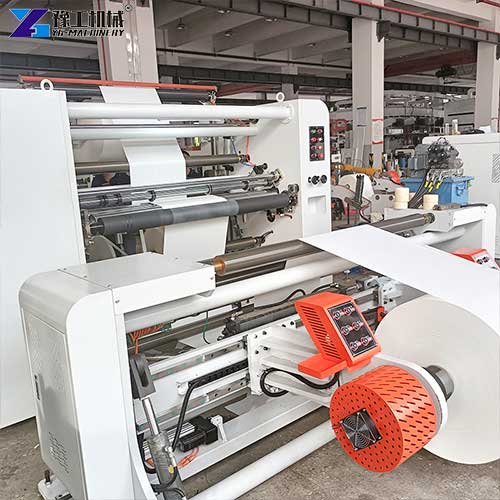
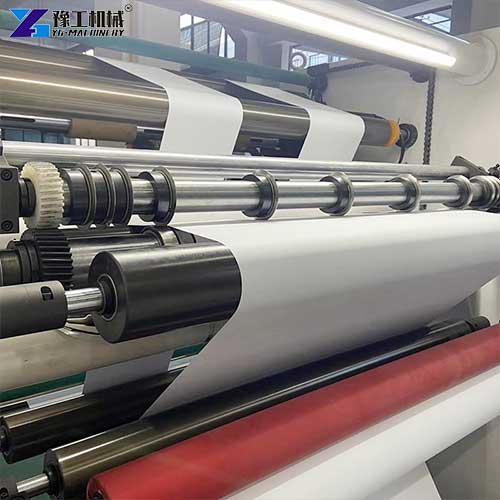
| Model | YG- 1300 | YG- 1600 | YG- 1800 |
| Max width | 1300mm | 1600mm | 1800mm |
| Max Diameter for unwinding | ¢1400mm | ¢1400mm | ¢1400mm |
| Min width of slitting | 30mm | 30mm | 30mm |
| Max Diameter of rewinding | ¢1000mm | ¢1000mm | ¢1000mm |
| Speed | ≤350m/min | ≤350m/min | ≤350m/min |
| Total Power | 24kw | 26kw | 30kw |
| Power supply | 380V/50hz | 380V/50hz | 380V/50hz |
| Weight | 4000kg | 4500kg | 5500kg |
| Overall dimension(LxWxH) | 3300x3150x1930(mm) | 3300x3450x1930(mm) | 3300x3650x1930(mm) |
6 Advantages of Paper Slitting Rewinding Machine
1. Wide Material Compatibility For Paper, Film, Foil, And Nonwovens
YG designs A-type machines for most paper slitting and rewinding, C-type machines for paper and film with film priority, and bridge-type machines for adhesive labels. The same platform can process paper, film, PVC, BOPP, OPP, PET, aluminum foil, and nonwoven. For buyers checking a paper slitting machine for sale, material testing is the first filter because knife type, tension, and static control change with the web.
2. Ultra-Narrow To Large-Width Slitting From 5 Mm To 3000 Mm
Back-to-back paper slitting rewinding machine models reach a minimum slitting width of 5 mm, while gantry models cover 1600, 1800, and 2000 standard widths and custom 3000 widths. A-type and C-type models commonly start at 30 mm minimum slitting width. This range lets converters produce small labels, narrow tape rolls, and large industrial master rolls on one equipment strategy.
3. High-Speed Production Up To 600 M/Min
C-type slitting machines run at 10-600 m/min, A-type at 10-450 m/min, and back-to-back at 10-500 m/min. Hot-selling YG-1300, YG-1600, and YG-1800 models reach ≤350 m/min. A thermal paper slitting machine configuration can use the same tension and knife logic when thermal paper needs clean edges and stable rewinding.


4. Dedicated Adhesive Label Solution With Rotary Knife Degumming
The bridge-type slitting rewinding machine shares the basic data of C-type models but adds a rotary knife degumming device for adhesive materials. It can be supplied with an automatic or manual unloading arm. This design targets label converters that cannot use a standard slitter without glue buildup.
5. Shaftless Unwinding For Heavy Rolls Up To 2T
Shaftless unwinding is common in slitting machines. It supports a 1600 mm unwind diameter and about 2T roll weight, with 3/6 inch segment-type chucks that directly clamp the paper core. Compared with shaft-based loading, shaftless loading reduces the need to insert a long shaft through the mother roll, which saves changeover time on large, heavy rolls.
6. Flexible Rewind Diameter And Core Configuration
A-type machines provide 1000 mm or 1200 mm rewind diameter, C-type models provide 600 mm or 800 mm, gantry models reach 1500 mm, and single-shaft high-speed rewinders use air shafts with 1200 mm rewind diameter. YG configures 3/6 inch segment-type chucks and unwind structures according to customer roll diameter and working conditions. This flexibility helps match the machine to order size, core type, and downstream printing or packaging equipment.
4 Steps To Choose The Right Paper Slitter Rewinder Model
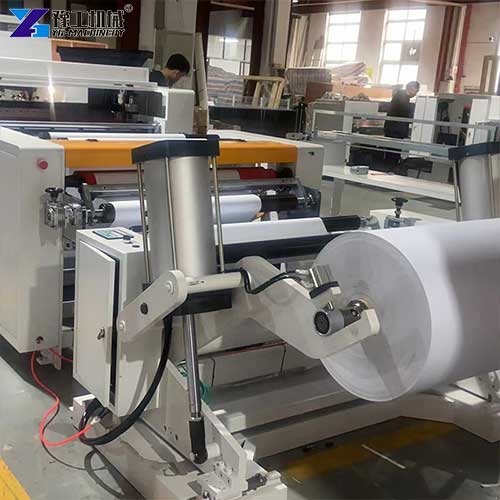
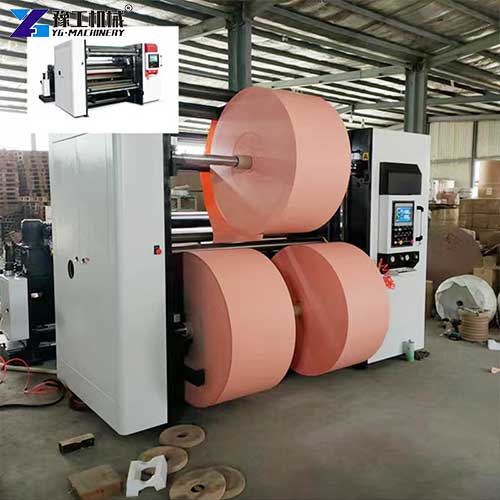
- Define Material And Maximum Web Width. If the material is paper or paperboard, start with an A-type machine. If it is film or flexible packaging, start with a C-type machine. If it is adhesive label stock, choose the bridge-type model. If the target is ultra-narrow slitting, choose a back-to-back model. If the target is large-width, heavy paper or board, choose a gantry model. For any machine inquiry, provide material, max width, thickness, or GSM first.
- Confirm Finished Format. If the final product is a narrow roll, a paper slitting rewinding machine is the correct direction. If the final product is a sheet, a cross-cutting machine or a slitting and cross-cutting combination is needed. For slitting, confirm minimum slit width, rewind diameter, and core size before quotation.
- Match Speed And Rewind Diameter To Order Volume. If the order mix is high-speed film packaging, choose C-type at 10-600 m/min. If it is general paper, A-type at 10-450 m/min with 1000/1200 mm rewind diameter fits. If it is ultra-narrow work, back-to-back at 10-500 m/min with a 600 mm rewind diameter is suitable. If it is large-format heavy rolls, gantry models reach 1500 mm rewind diameter. For thermal paper slitting machine projects, check tension stability and edge quality first.
- Choose Unwind Loading And Automation. If the unwind roll is 1600 mm diameter and about 2T, choose shaftless loading with 3/6 inch segment-type chucks. If rolls are small to medium, shaft-based loading remains practical. If labor reduction is a priority, add automatic unloading arms, automatic pushers, and infrared edge control. Check the 380V/50Hz power supply and 24-30 kW total power for YG-1300, YG-1600, and YG-1800.
FAQ About YG Paper Slitter Rewinder
Yes. Finished width is one of the key inputs for machine selection. Share the smallest, largest and most common widths so the configuration can be matched to your production range.
Some YG configurations are designed for paper and film, while the broader product range also covers materials such as PVC, BOPP, OPP, PET, aluminum foil and nonwoven materials. Material suitability should be confirmed for the exact machine configuration.
The listed minimum slitting width is 30 mm. If your production requires narrower rolls, tell YG the target width before choosing a model.
Send the material, maximum input width, unwinding diameter, roll weight, thickness or basis weight, minimum finished width, rewinding diameter and core size. These details give the manufacturer a practical basis for machine selection.
First, define the finished product. If you need multiple narrow rolls, slitting and rewinding is the relevant process. If you need fixed-length sheets, cross-cutting is the relevant process.
Is YG The Right Manufacturer for a Slitting Project?
A paper slitting rewinding machine is most valuable when it gives a converter the flexibility to turn standard master rolls into the widths customers actually need. YG provides multiple configurations and the YG-1300, YG-1600 and YG-1800 models give buyers clear starting points for width and production requirements.
If you are planning a new roll-converting line or replacing an existing machine, send YG your material, input width, roll diameter, target slit widths, rewinding requirements and core size. The more specific the production data, the easier it is to discuss a suitable configuration and quotation.