
Poland’s paper converting market is seeing more demand for flexible roll sizes as printers, packaging companies, and paper distributors place orders in different widths. Standard master rolls often do not match these requirements, while outsourcing every size can increase lead times and inventory pressure.
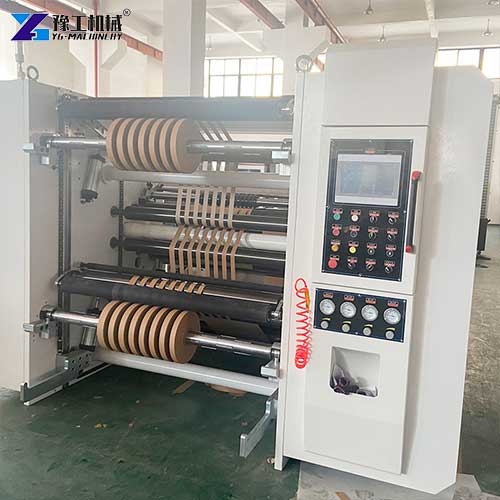
A paper rewinder provides a practical solution by converting wide paper rolls into narrower finished rolls through controlled slitting and rewinding. For converters that need flexible widths and consistent roll production, choosing the right machine capacity is essential. This case follows a Polish paper converting customer that needed to bring more roll-size conversion in-house and selected a YG configuration matched to its operating requirements.
Technical Parameters of the Paper Slitting and Rewinding Machine
| Parameter | YG-1300 | YG-1600 | YG-1800 |
| Max. Width | 1300 mm | 1600 mm | 1800 mm |
| Max. Unwinding Diameter | 1400 mm | 1400 mm | 1400 mm |
| Min. Slitting Width | 30 mm | 30 mm | 30 mm |
| Max. Rewinding Diameter | 1000 mm | 1000 mm | 1000 mm |
| Speed | ≤350 m/min | ≤350 m/min | ≤350 m/min |
| Total Power | 24 kW | 26 kW | 30 kW |
| Power Supply | 380V/50Hz | 380V/50Hz | 380V/50Hz |
| Weight | 4000 kg | 4500 kg | 5500 kg |
| Overall Dimension | 3300×3150×1930 mm | 3300×3450×1930 mm | 3300×3650×1930 mm |
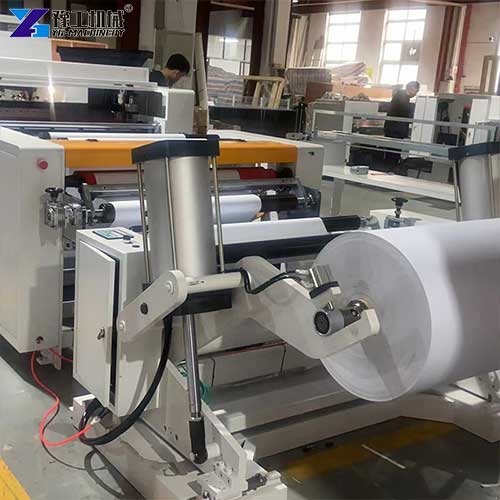
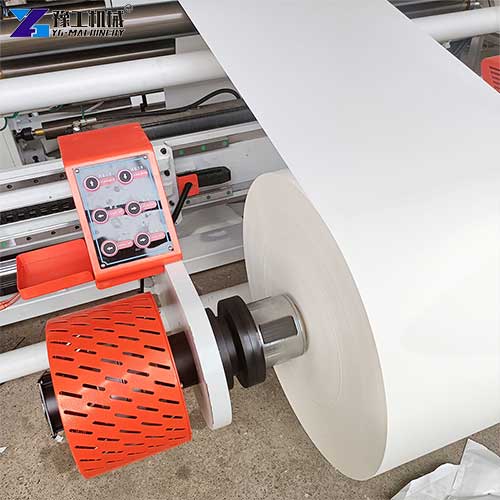
Case Study: Paper Rewinder for Paper Roll Converting in Poland
Customer Background
The customer was a privately operated paper converting company in Poland with more than 10 years of experience in roll processing. Its production team consisted of 18 employees working across roll converting, quality inspection, warehousing, and order preparation.
The company mainly supplied converted paper rolls to commercial printers, packaging manufacturers, and regional paper distributors. Its production model relied on purchasing standard-width paper master rolls and converting them into narrower rolls according to individual customer orders.
As customer specifications became more varied, the company wanted greater control over its own roll-converting schedule. Instead of maintaining large stocks of multiple pre-converted widths, the production manager wanted to process master rolls according to confirmed orders and keep more of the conversion work inside the factory.
Customer Requirements
Before the investment, the company used a combination of outsourced roll conversion and internal material handling. This arrangement created several practical problems.
Different customer widths required additional coordination with outside processors. When order specifications changed, production planning also became less flexible. Repeated handling of rolls increased the number of production steps, while the company had limited control over when different finished widths could be prepared.
The customer therefore established a clear technical checklist:
- Maximum input width: 1300 mm.
- Maximum unwinding roll diameter: 1400 mm.
- Minimum finished slit width: 30 mm.
- Maximum rewinding diameter: 1000 mm.
- Maximum required production speed: 350 m/min.
- Power supply: 380V/50Hz.
- Machine dimensions suitable for the existing workshop.
- Continuous roll-to-roll processing for paper rather than sheet cutting.
The customer also wanted one machine that could handle different finished-roll widths without changing the entire production setup for every order.
YG’s Solution and Customer Feedback
YG recommended the YG-1300 configuration for the Polish project because its working capacity closely matched the customer’s production requirements.
- 1300 mm input width. The YG-1300 provides a maximum working width of 1300 mm, allowing the customer to process its target master-roll width without moving to a larger machine unnecessarily.
- 1400 mm unwinding diameter. The YG-1300 supports a maximum unwinding diameter of 1400 mm, giving the customer the required capacity for its incoming paper rolls.
- Finished-roll flexibility. The machine can slit down to a minimum width of 30 mm, allowing the customer to produce much narrower rolls from wider master rolls. This was particularly important for handling different customer specifications on the same production line.
- Finished-roll diameter. The YG-1300 supports a maximum rewinding diameter of 1000 mm, providing a defined output capacity for the customer’s roll-converting workflow.
- Production speed. With a maximum speed of 350 m/min, the machine matched the customer’s target operating range while keeping the production process suitable for continuous roll conversion.
The machine also uses a 380V/50Hz power supply and has a total power of 24 kW. Its overall dimensions are 3300×3150×1930 mm, while its weight is 4000 kg. These specifications gave the customer clear information for workshop planning, electrical preparation, equipment positioning, and material handling.
After installation, operators received guidance on material loading, slitting setup, roll positioning, and routine production checks. The machine was then incorporated into the customer’s normal order-based production workflow.
The main operational change was greater control over roll-size conversion. Instead of arranging every width specification through an external processor, the customer could schedule the conversion of master rolls according to its own order requirements.
“The combination of the 1300 mm working width and 30 mm minimum slitting width is especially useful for us. We can process our regular master rolls and produce much narrower customer specifications without changing to another machine.”

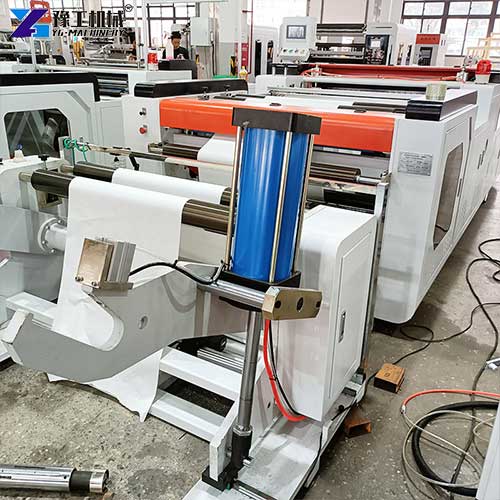
Core Design Features That Solved the Client’s Pain Points
1. 1300 mm Working Width
The YG-1300 accepts material up to 1300 mm wide. This capacity matches the customer’s target master-roll width and avoids unnecessary investment in a wider machine designed for production requirements outside the customer’s normal range.
For the Polish converter, the working width directly addressed the need to process its standard input rolls while keeping the machine configuration practical for its existing production area.
2. 1400 mm Unwinding Capacity
The unwinding section supports rolls up to 1400 mm in diameter. This provides the required input-roll capacity and allows the customer to work with its targeted master-roll format without additional size reduction before slitting.
For a customer moving more roll conversion in-house, matching the unwinding capacity to the incoming material is essential to maintaining a straightforward production flow.
3. 30 mm Minimum Slitting Width
The machine supports a minimum slitting width of 30 mm. This gives the customer a wide range of finished-roll width options from the same master roll.
Instead of keeping multiple pre-converted widths in inventory, the customer can process a wider roll according to the width required by each order. This directly addresses the customer’s need for greater flexibility when serving printers, packaging businesses, and other paper users.
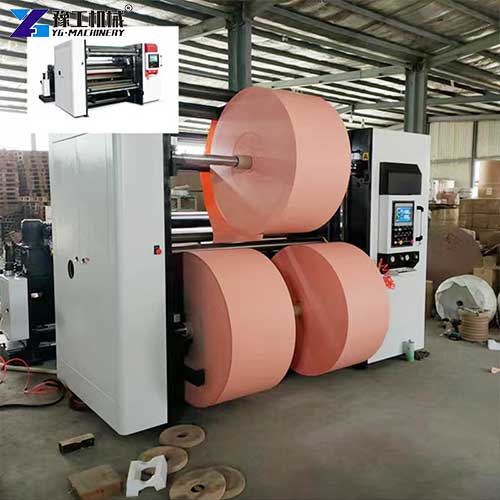
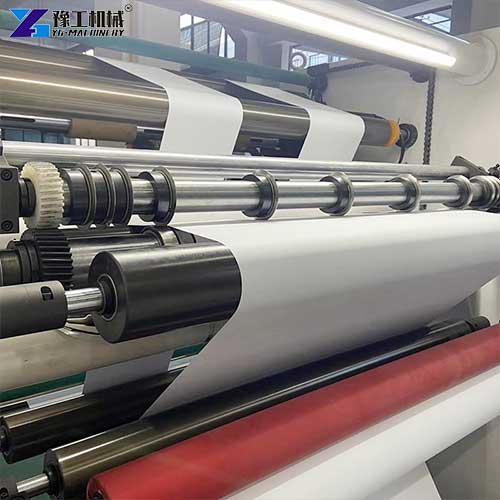
4. 1000 mm Rewinding Diameter
The maximum rewinding diameter reaches 1000 mm. This gives the production team a defined finished-roll capacity and helps organize downstream handling, storage, and order preparation.
For the Polish customer, the 1000 mm output capacity complemented the 1400 mm unwinding capacity and created a clear input-to-output roll specification.
5. Integrated Roll-to-Roll Processing
The production process combines unwinding, longitudinal slitting, and rewinding in one continuous workflow. The material enters as a wide roll, passes through the slitting section, and leaves as narrower finished rolls.
This roll-to-roll configuration directly supports the customer’s production model because its objective was to convert standard master rolls into customer-specific widths within its own facility rather than depend entirely on outside processing.
Paper Roll Slitter For Sale
Choosing a paper roll slitter starts with the material and actual production requirements rather than simply selecting the largest available model. YG offers YG-1300, YG-1600, and YG-1800 configurations for different working widths. The three models offer maximum widths of 1300 mm, 1600 mm, and 1800 mm, support a maximum unwinding diameter of 1400 mm, and have a minimum slitting width of 30 mm.
For buyers comparing a paper rewinder, the most important information includes material type, maximum input width, unwinding diameter, material thickness or grammage, minimum finished width, rewinding diameter, core specification, and required production speed. These parameters help determine whether a standard configuration is suitable or whether a customized solution is needed.
YG provides slitting solutions for paper and other roll materials, including film, PVC, BOPP, OPP, PET, aluminum foil, and nonwoven materials. Different machine configurations are available for different material characteristics and production requirements.
For a paper rewinder quotation, send your material type, maximum roll width, unwinding diameter, minimum slit width, finished-roll diameter, core size, and target speed. YG can then recommend a suitable configuration according to your actual production requirements.
A paper roll slitting rewinding machine can help converters bring variable-width roll production into their own workflow while keeping equipment capacity aligned with actual order requirements. Contact YG for model selection, technical specifications, pricing, and a production solution tailored to your material.