

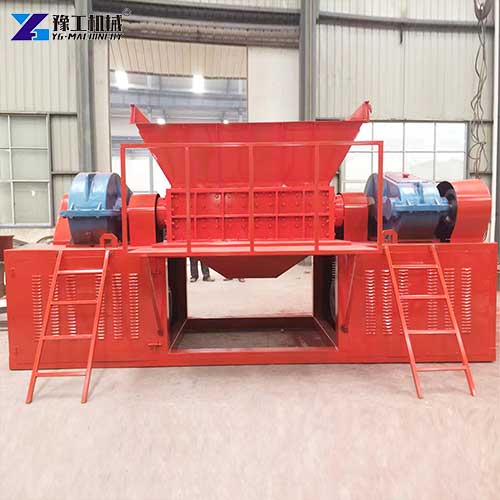
A twin shaft shredder machine is designed for demanding waste-reduction applications where materials are bulky, thick, tough, or difficult to process. With two shafts driven by separate motors and reducers, the machine uses a tearing and shearing action to process materials such as plastic drums, metal, waste tires, wood, cardboard, e-waste, packaging barrels, and pallets. The PLC control system also supports start, stop, forward/reverse operation, and automatic reverse protection under overload conditions.
For different recycling projects, however, the same shredder configuration cannot always meet the required production conditions. Material type, required output size, and target capacity all affect the suitable model and blade configuration. This is reflected in the following two export cases. The Poland project focused on industrial waste processing, while the Australia project required a solution for passenger tire shredding. By matching the machine model to the specific working requirements, YG provided practical shredding solutions for both applications.
Case Study 1: Double Shaft Crusher for Industrial Waste Recycling in Poland
Customer Background
The Polish customer was a medium-sized recycling company processing different types of industrial waste, including waste plastics, wood, packaging materials, and other bulky solid materials. The company needed to reduce the size of incoming waste before sorting, transportation, or further recycling.
The customer needed a shredder with sufficient capacity for its daily workload while avoiding an oversized machine that would increase the initial investment and operating requirements.
Customer Requirements
The customer provided several key requirements:
- Processing capacity: The target capacity was around 5–8 T/H.
- Material flexibility: The machine needed to handle different types of bulky and difficult industrial waste.
- Stable shredding: The customer wanted a two-shaft structure that could continuously pull and tear materials.
- Overload protection: The equipment needed automatic reverse protection when oversized material entered the shredding chamber.
- Controlled output: The customer required a relatively uniform primary shredded size for subsequent processing.

YG’s Solution and Customer Feedback
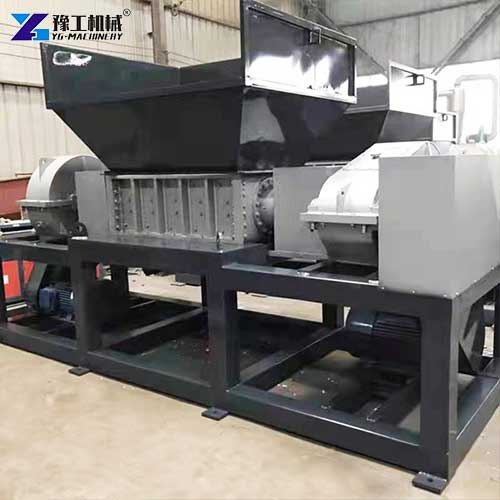
Based on the customer’s material type and target capacity, YG recommended the YG-1000 twin shaft shredder machine.
The YG-1000 is rated at 5–8 T/H, matching the customer’s expected processing range. Its configuration includes two motors, with the power selected within the supplied model range, and a spindle speed of 18–35 r/min. The hopper size is 1200 × 1000 mm, while the listed broken size is 3–10 cm.
| Customer Requirement | YG-1000 Solution |
| 5–8 T/H capacity | Rated capacity of 5–8 T/H |
| Bulky industrial waste | Large 1200 × 1000 mm hopper |
| Continuous primary shredding | Twin-shaft cutting structure |
| Overload protection | PLC automatic reverse |
| 3–10 cm target size | Listed broken-size range of 3–10 cm |
The machine uses two motors and two reducers to drive the two shafts. The PLC control system provides start, stop, reverse, and automatic reverse functions. When excessive or oversized material enters the chamber, the machine can reverse or stop to protect the equipment.
For the customer, the main measurable result was that the selected YG-1000 configuration matched the planned 5–8 T/H processing range without moving directly to a larger model.
The customer’s feedback focused on model selection and operating stability:
“The YG-1000 fits our planned processing capacity well. We did not need to choose a larger machine just to handle our daily industrial waste volume.”
Case Study 2: Twin Shaft Shredder Machine for Waste Tire Recycling in Australia
Customer Background
The Australian customer was engaged in waste tire collection and recycling. Its main feedstock consisted of discarded passenger-car tires, with most tires measuring approximately 14–16 inches.
The customer wanted to reduce whole tires into manageable rubber pieces before further recycling. The main concerns were processing capacity, tire size, output size, and the ability to operate continuously with a suitable primary shredder.
Customer Requirements
The customer specified the following requirements:
- Tire size: Most incoming passenger-car tires were approximately 14–16 inches.
- Processing capacity: The customer required approximately 6–10 T/H.
- Primary shredding: The main objective was to turn whole tires into manageable rubber pieces.
- Suitable output size: The customer required primary shredded material rather than finished rubber powder.
- Further recycling: The shredded rubber would be used as feedstock for subsequent recycling or size-reduction processes.
For tire projects, tire dimensions, required capacity, and final output size are the key factors used to select the shredder model.

YG’s Solution and Customer Feedback
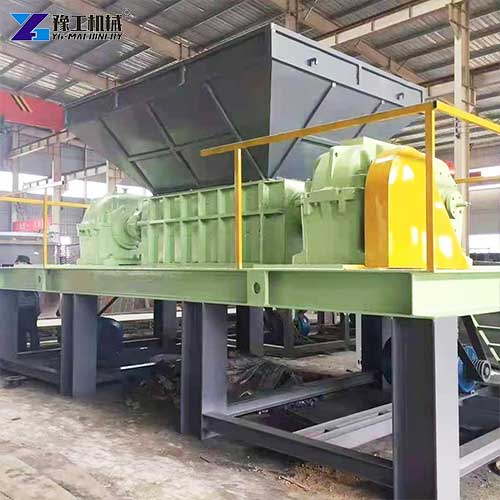
Based on the customer’s 14–16 inch tire size and required processing capacity, YG recommended the YG-1200 dual shaft shredder machine.
The YG-1200 is specifically suitable for this application because the product information recommends the 1200 model for passenger-car tires in the 14–16 inch range. Its listed capacity is 6–10 T/H, which also matches the customer’s target production range.
| Customer Requirement | YG-1200 Solution |
| 14–16 inch passenger tires | 1200 model recommended |
| 6–10 T/H capacity | Rated capacity of 6–10 T/H |
| Whole-tire primary shredding | Twin-shaft tearing structure |
| 3–10 cm primary output | Listed broken-size range of 3–10 cm |
| Continuous tire processing | Two-motor, two-reducer drive system |
| Overload protection | PLC automatic reverse |
The YG-1200 uses a 1400 × 1000 mm hopper, with a listed spindle speed of 18–35 r/min and a broken-size range of 3–10 cm. These specifications provide a suitable configuration for the customer’s primary tire-shredding application.
The customer did not initially require a complete tire recycling line. Therefore, YG supplied the YG-1200 as the primary shredding equipment rather than adding unnecessary downstream machinery.
If the customer later expands the project to produce smaller rubber particles or rubber powder, the shredded material can be transferred to subsequent processing stages such as screening, magnetic separation, fine crushing, and grinding.
The customer’s feedback highlighted the direct match between the tire size and the selected model:
“The 1200 model was recommended specifically for our 14–16 inch tires, and its 6–10 ton capacity is also close to what we planned for the project. That made the equipment selection much clearer for us.”

Twin Shaft Shredder Machine For Sale
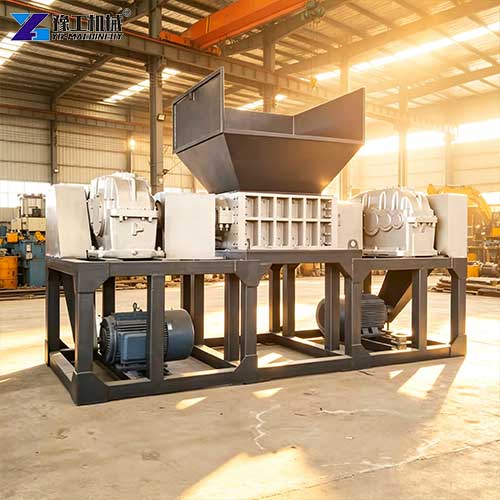
The Poland and Australia cases show why twin shaft shredders need to be selected according to the actual material and processing requirements rather than simply choosing a larger machine. For industrial waste, the model should provide suitable capacity, feeding space, and stable operation for mixed materials. For waste tires, tire size, output size, and required throughput are especially important factors when determining the configuration. The YG product range covers multiple models, while blade specifications can also be adjusted according to the material and required discharge size.
Whether the project involves industrial waste, plastic, wood, rubber, tires, or other difficult-to-process materials, the right twin shaft shredder machine starts with understanding the material and production target. If you can provide the material type, input size, required output size, and expected capacity, YG can recommend a suitable model and configuration for your recycling project.